
GST reconciliation is a crucial process for businesses of all sizes in India. It involves comparing GST data from various sources, such as invoices, purchase orders, and bank statements, to ensure that it is accurate and complete. This process can be complex and time-consuming, especially for businesses with large volumes of transactions.
However, GST reconciliation is essential for ensuring compliance with GST regulations and avoiding hefty penalties. It also helps businesses to track their finances accurately and identify any potential errors or discrepancies.
In this blog, we will discuss the importance of GST reconciliation, the challenges that businesses face, and how Suvit can help. We will also provide best practices for GST reconciliation and common mistakes to avoid.
Let's get started!
What is GST reconciliation?
GST reconciliation is like making sure your financial paperwork matches up correctly. It's all about comparing the info you're supposed to submit to the GST portal with what's actually in your books. This helps catch any mistakes or omissions so you can fix them.
The goal is to make sure your invoices and purchases in your books match what you're telling the GST folks. This way, you can claim all the tax credits you're supposed to without any hiccups. Keeping everything in sync avoids mix-ups when filing returns and ensures you get the full benefit of input tax credits.
Why is GST Reconciliation Important?
GST reconciliation is important for a number of reasons, including:
- Compliance: GST reconciliation helps businesses to ensure compliance with GST regulations. This is important because businesses can face hefty penalties for non-compliance.
- Accuracy: GST reconciliation helps businesses to ensure that their GST data is accurate and complete. This is important for both financial reporting and tax purposes.
- Fraud prevention: GST reconciliation can help businesses to detect and prevent fraud. For example, businesses can use GST reconciliation to identify invoices that have been duplicated or invoices that have been issued by unauthorized suppliers.
- Input tax credit (ITC) optimisation: GST reconciliation helps businesses to claim the correct amount of ITC. ITC is a credit that businesses can claim for the GST that they have paid on their purchases. Claiming the correct amount of ITC can help businesses to reduce their overall GST liability.
- Improved financial management: GST reconciliation can help businesses to track their finances more accurately. This can help businesses to make better financial decisions and improve their profitability.
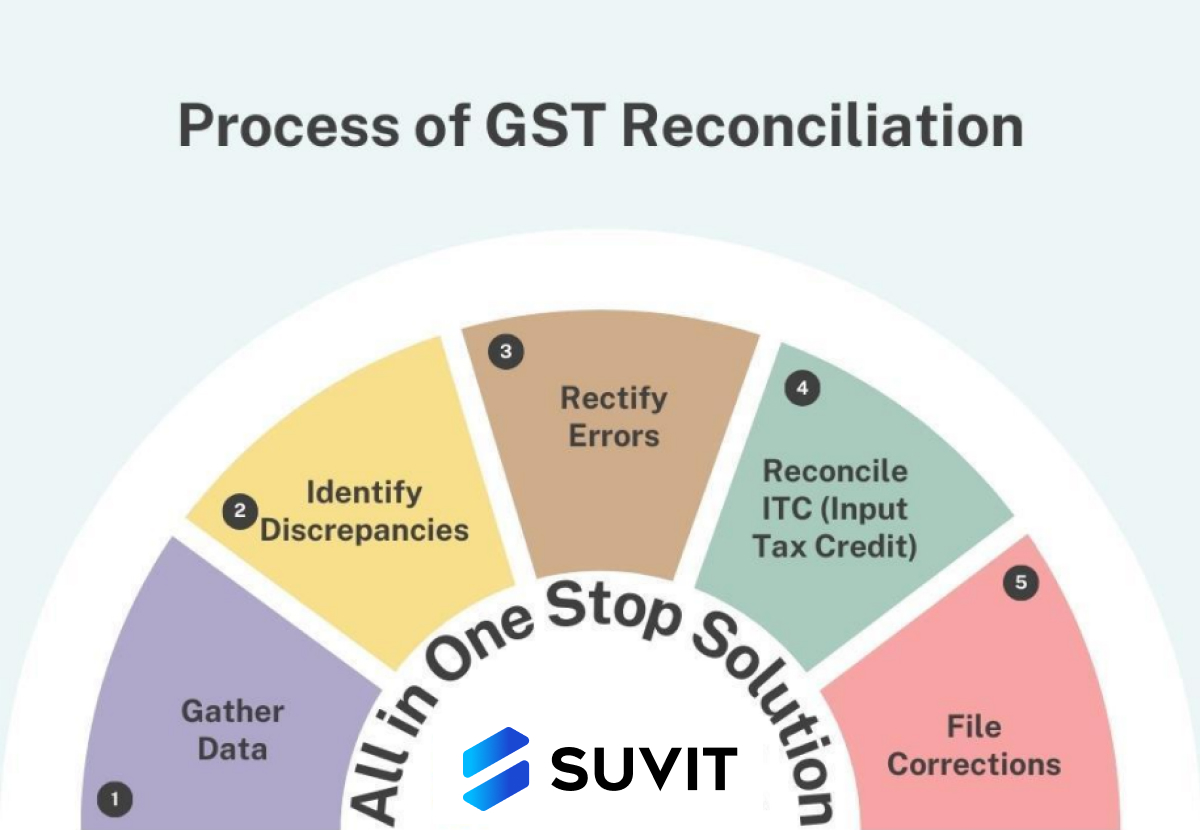
Problems with GST Reconciliation
GST reconciliation can be a real pain in the neck for accountants and businesses. It's a complex and time-consuming process, especially for businesses with large volumes of transactions. And even the smallest mistake can lead to costly penalties.
Here are some of the most common problems that accountants and businesses face with GST reconciliation:
- Manual reconciliation: Most businesses still reconcile their GST returns manually. This is a tedious and error-prone process, especially if you have a lot of invoices to match.
- Data silos: GST data is often stored in different systems, such as accounting software, e-commerce platforms, and ERP systems. This can make it difficult to get a complete and accurate view of all your GST transactions.
- Matching invoices: One of the most challenging aspects of GST reconciliation is matching invoices from suppliers with the corresponding ITC claims in your GST return. This can be a time-consuming process, especially if you have a lot of invoices to match.
- Compliance tracking: GST compliance is complex and ever-changing. It can be difficult to keep track of all the latest regulations and requirements.
- Lack of visibility: Manual reconciliation can make it difficult to get real-time visibility into your GST data. This can make it difficult to identify and correct errors early on.
Let's take a simple scenario:
Rahul is an accountant for a small business. He spends hours every month manually reconciling the business's GST returns. It's a tedious and error-prone process. One month, Rahul made a mistake on his GST return and was fined by the government. Rahul is frustrated and stressed. He knows that he needs to find a better way to reconcile his GST returns.
If you're facing any of the problems listed above, you're not alone. GST reconciliation is a challenge for businesses of all sizes. In the next section, we'll discuss some strategies for overcoming these challenges and making GST reconciliation easier and more efficient.
How Suvit Can Help With GST Reconciliation
If you're struggling with GST reconciliation, Suvit can be your best bud! Suvit is a cloud-based GST reconciliation software that automates the entire process, from matching invoices to generating reports. Suvit also provides real-time visibility into your GST data and helps you to track compliance.
Here are some of the specific ways that Suvit can help you with GST reconciliation:
- Automated invoice matching:Suvit automatically matches invoices from suppliers with the corresponding ITC claims in your GST return. This saves you a significant amount of time and effort, and it also helps to reduce the risk of errors.
- Real-time visibility:Suvit provides real-time visibility into your GST data. This means that you can see exactly what's happening with your GST returns at any time. This helps you to identify and correct errors early on, and it also gives you peace of mind knowing that your GST compliance is up to date.
- Compliance tracking:Suvit automatically tracks your GST compliance and alerts you to any potential issues. This helps you to stay on top of the latest regulations and requirements, and it also reduces the risk of penalties.
- Error detection and prevention:Suvit uses advanced algorithms to detect and prevent errors in your GST data. This helps you to avoid costly penalties and interest charges.
- Cost savings and improved efficiency:Suvit can help you save time and money on GST reconciliation. It can also help you to improve the efficiency of your accounting team.
Tips for Avoiding Common GST Reconciliation Mistakes
GST reconciliation is a complex process, and it's easy to make mistakes. But by following these tips, you can reduce the risk of errors and make the process easier and more efficient:
- Be careful when entering data: Even a small typo can lead to a big mistake on your GST return. Double-check all of your data carefully before submitting your return.
- Use a consistent format: When reconciling your GST returns, use a consistent format for entering data. This will make it easier to identify and correct errors.
- Keep good records: Keep good records of all of your GST-related transactions. This will help you to reconcile your returns more easily and accurately.
- Reconcile regularly: Don't wait until the end of the quarter or year to reconcile your GST returns. Reconcile them regularly, such as once a month or even once a week. This will help you to identify and correct errors early on.
- Use GST reconciliation software: A GST reconciliation software like Suvit can automate the process and reduce the risk of errors.
- Match invoices to ITC claims: Make sure that all of your invoices are matched to the corresponding ITC claims in your GST return. This is one of the most common mistakes that businesses make.
- Pay attention to reverse charge: If you are liable for reverse charge on any of your purchases, make sure to include these transactions in your GST return.
Take The Next Steps!
So, now that you know all about the problems with GST reconciliation and how Suvit can help, it's time to take action!
If you're tired of spending hours reconciling your GST returns man ually, and you're worried about making mistakes that could cost you money, then you need to try Suvit.
Suvit is a cloud-based GST reconciliation software that can automate the entire process, from matching invoices to generating reports. It's easy to use and it's affordable, so there's no excuse not to give it a try.
Just sign up for a free trial of Suvit today and see how it can help you streamline your GST reconciliation process!
You have reached your daily limit of 2 Free Articles
Subscribe to CCI PRO for unlimited access
Why Upgrade to CCI PRO?
- No Ads
- WhatsApp Community
- Daily E-Newsletter
- Unlimited Articles Access
- Profile Visitors
- Link Social Profiles
- Featured Job Posts
- Pro Badge
- Expert GST Guidance
- Unlimited Forum Replies
- Download Content in PDF
Already a PRO member? Login here for an ad-free experience. 011-411-70713







 CAclubindia
