
This creative tax update article draws inspiration from the eternal dialogue between Arjuna and Krishna, blending the vibrant spirit of Holi with key Budget 2026 and GST reforms. Through symbolic Holi colours - pink, green, red, fragrant flowers, and permanent hues, the article explains major tax changes in an engaging, simplified format.
The Pink colour represents MSME-focused benefits, including a Rs 10,000 crore SME Growth Fund and additional capital support for micro enterprises. The Green colour highlights taxpayer-friendly reforms such as PAN-based TDS for property purchases, digital lower TDS certificates, and relaxed PF deduction timelines. The Red colour signals stricter compliance measures like mandatory late fees for delayed tax audit reports and binding CBDT TDS/TCS guidelines.
The article also explores significant GST reforms, including revised GSTR-3B interest calculations that reduce excess interest burden and enhanced ITC utilization flexibility allowing CGST and SGST credits to be used more freely against IGST liabilities.
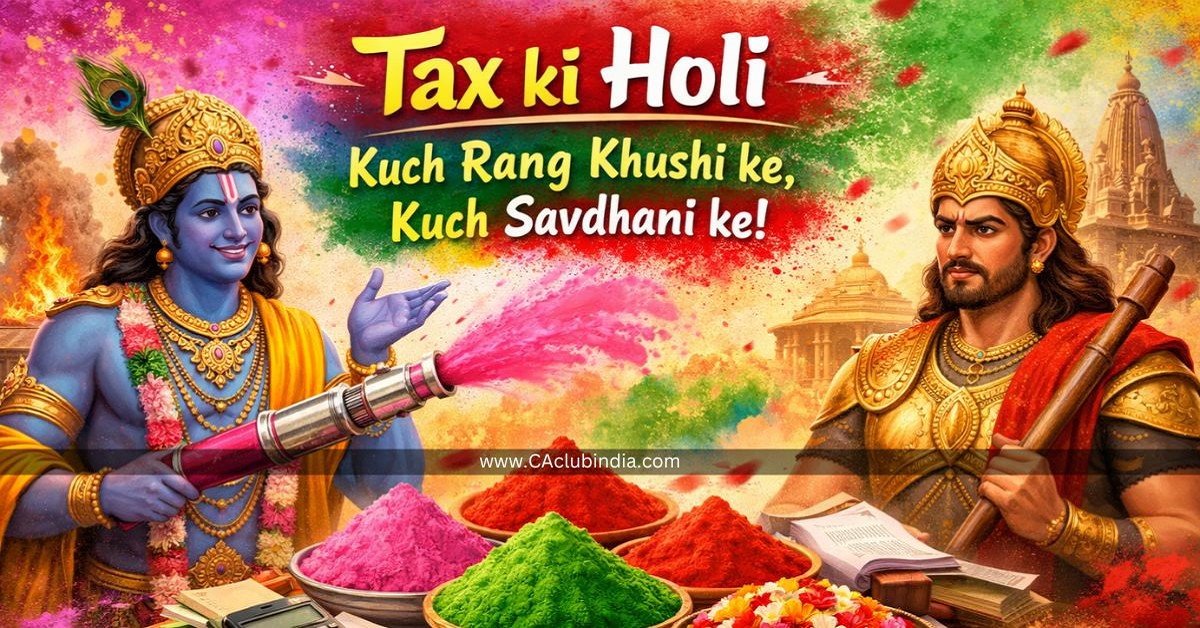
Using the festival of colours as a metaphor, the piece simplifies complex financial changes into an engaging narrative while delivering clear insights into Budget 2026 tax reforms and GST amendments.
Arjuna (Fictional Character): Krishna, Holi is the festival of colours, joy and new beginnings. Every year on the eve of Holi, Holika Dahan burns away all evil and negativity, making way for a brighter tomorrow. This year, government has also brought several new changes.
Krishna (Fictional Character): Arjuna, just as in Holi some colours bring joy, some like a sharp pichkari, and some colours stick for days. New changes brought by government has also spread a colourful mix of changes and colours. Some bring happiness, some carry a warning. Let us play this tax-Holi colour by colour!
Arjuna (Fictional Character): Krishna, Pink Colour is considered a mark of joy and happiness. What changes in this year’s Budget carry the joy of the Pink Colour for taxpayers?
Krishna (Fictional Character): Arjuna, the pink colour this Holi belongs to the MSME sector! Just as pink gulal spreads warmth in every direction, Budget 2026 has spread financial support across the MSME world. A dedicated ₹10,000 crore SME Growth Fund will help promising MSMEs scale up with equity support and become national “Champions.” The Self-Reliant India Fund has also been topped up by ₹2,000 crore for micro enterprises. Small businesses can truly celebrate this Holi with gulal in both hands!
Arjuna (Fictional Character): Krishna, Green Colour is the symbol of purity, clarity and protection. What does the green Colour represent in this year’s tax changes?
Krishna (Fictional Character): Arjuna, the green colour represents the protective ‘shields’ given to honest taxpayers. Just as herbal Holi colours are gentle and safe for the skin, these measures gently protect taxpayers from unnecessary issues:
1.PAN-Based TDS for Property: Resident individuals and HUFs buying property from non-residents can now use PAN alone, removing the burden of a separate TAN.
2.Digital Lower TDS Deduction Certificates: Taxpayers can now apply electronically for lower or nil TDS certificates.
3. Employee contribution to PF: Now it is proposed that taxpayers can claim deduction if employee contribution to PF is deposited after the due date under PF act but deposited up to the income tax return filing due date.
The above changes are like switching from a heavy bucket to a light pichkari same result, far less effort!
Arjuna (Fictional Character): Krishna, Red is the boldest colour of Holi the colour of Lathmar Holi in Barsana, where women wield their lathis with full force! What does the red colour represent in the new tax changes?
Krishna (Fictional Character): Arjuna, the red colour is the bold lath of Lathmar Holi raised against the non-compliant! Just as the fearless women of Barsana chase the men with their lath, the tax department is ready with their lathis:
1. Now delay in filing Tax Audit reports shall mandatorily attract a late fee of Rs 75,000 which can extend upto 1,50,000 if delay is more than 30 days.
2. CBDT guidelines on TDS/TCS will now be statutorily binding on both officers and taxpayers.
The Red Holi warning is unmistakable be prepared and compliant, or the lath will find you!
Arjuna (Fictional Character): Krishna, in Holi there is a special tradition of Phoolon ki Holi played with fragrant flower petals in Vrindavan and Barsana, bringing beautiful joy. Does anything in the GST changes carry that same feeling of gentle, beautiful relief?
Krishna (Fictional Character): Arjuna, the GST interest reform is truly this year’s Phoolon ki Holi. From February 2026, CBIC has updated the GSTR-3B interest formula in case GSTR-3B is filed belatedly. Suppose if net tax liability was ₹50,000 but ₹30,000 was already in ECL, earlier the interest was charged on the full ₹50,000. Now, interest is charged only on the outstanding ₹20,000 i.e after reducing the balance available in the electronic cash ledger. This is like Vrindavan's Phoolon ki Holi which is long awaited, but when it arrives, it fills the air with fragrance!
Arjuna (Fictional Character): Krishna, in Holi some Colours are irremovable they stay for days and become a permanent memory. Which change in GST is like that irremovable colour?
Krishna (Fictional Character): Arjuna, the irremovable colour is the new ITC utilization flexibility in GSTR-3B! From February 2026, taxpayers can use CGST and SGST ITC in any sequence to pay IGST liability, after exhausting IGST credit. Earlier, CGST had to be used before SGST, just like playing Holi with only one colour in one fixed order. Now, remaining IGST liability after IGST ITC Utilisation, the taxpayer can free to use CGST/ SGST ITC balance in any manner to pay such Liability. Like Holi’s most stubborn colour, this flexibility will stay with every taxpayer for years to come!
Arjuna (Fictional Character): Krishna, what should a taxpayer learn from this multicoloured Holi of Tax?
Krishna (Fictional Character): Arjuna, this Holi’s tax palette has something for everyone pink joy for MSMEs, green shields for honest taxpayers, red lath for the non-compliant, fragrant flowers for GST interest relief, and permanent colours for ITC flexibility. Just as Holi teaches us to let go of the old and embrace the new with purity and brightness the taxpayer must disclose true income, pay taxes on time and stay updated. The one who plays with Holi with colour of truth always celebrates the most. Happy Holi!










 CAclubindia
