
Overview
Ganesh Chaturthi is not just a festival of devotion and new beginnings, it also offers important tax lessons for taxpayers, businesses and Ganesh Mandals. This article explains the GST implications on mandap, decoration and sound-light services, GST on sponsorship under RCM, Section 80G deduction rules for donations, tax treatment of CSR expenditure and the approaching 30th September Tax Audit deadline. It highlights how timely compliance can prevent tax-related "vighnas" during the festive season.
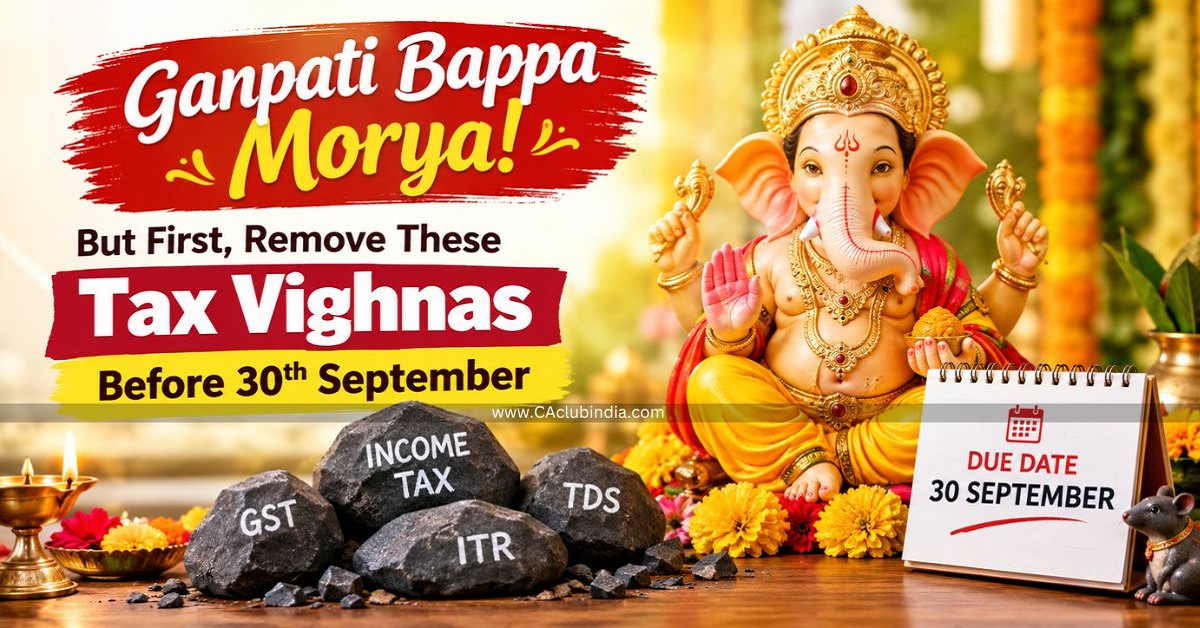
Arjuna (Fictional Character): Krishna, today the whole country will welcome Ganpati Bappa with great devotion. Ganesh Chaturthi is a festival of joy, but as a taxpayer, can we also learn something from Bappa about GST and Income Tax?
Krishna (Fictional Character): Arjuna, absolutely! Lord Ganesha is worshipped as "Vighnaharta" the remover of obstacles and also as the deity of wisdom and new beginnings. Every year, lakhs of Ganesh Mandals are set up, idols are purchased, pandals are erected, sponsorships are collected, and prasad is distributed. Behind all this devotion, GST, Income Tax and Tax Audit quietly follow the festival everywhere and if ignored, they can themselves become "vighna" (obstacles) for Mandals and businessmen alike!
Arjuna (Fictional Character): Krishna, mandaps, decoration, sound and lighting all of these costs lakhs of rupees every year. What about GST on these services?
Krishna (Fictional Character): Arjuna, mandap-keeper services, tent house rentals, decorators, and sound-light contractors are all suppliers of taxable services, generally liable to GST at 18%. Once a contractor's turnover crosses the registration threshold, proper invoices must be issued. Many small decorators and tent-house owners still work informally without GST registration or bills creating risk both for them and for the Mandals or businesses hiring them.
Arjuna (Fictional Character): Krishna, and what about sponsorship? Many companies put up big banners near mandaps during Ganeshotsav in exchange for donations. Is that also taxable?
Krishna (Fictional Character): Arjuna, here lies a big surprise for businessmen! When a company gives money to a Ganesh Mandal and, in return, gets its banner displayed, this is legally treated as a "sponsorship service" provided by the Mandal to the company and not a pure donation. Under GST law, tax on sponsorship services is payable under Reverse Charge Mechanism (RCM) meaning the company receiving the advertisement benefit, and not the Mandal, is liable to pay GST on it! Businessmen often overlook this and later face demand notices with interest and penalty for not discharging RCM liability on such "sponsorship" payments.
Arjuna (Fictional Character): Krishna, now tell me about Income Tax. If someone donates to a Ganesh Mandal, can they claim deduction like other charitable donations?
Krishna (Fictional Character): Arjuna, deduction under Section 80G is available only if the Mandal or Trust running the Ganeshotsav is registered under Section 12A and holds a valid 80G approval and even then, generally only 50% of the donation qualifies, subject to the overall limit. Cash donations above Rs. 2,000 are not eligible for deduction at all, so devotees putting large cash amounts in the collection box lose the tax benefit. And here is the real catch for salaried taxpayers if you have opted for the new tax regime under Section 115BAC, deduction under Section 80G is not available at all! Bappa's blessings are unconditional, but the tax deduction on your donation certainly comes with conditions.
Arjuna (Fictional Character): Krishna, what about companies that spend on Ganeshotsav as part of their CSR (Corporate Social Responsibility)?
Krishna (Fictional Character): Arjuna, this is an important point for corporate taxpayers. CSR expenditure, even if genuinely spent on community welfare during Ganeshotsav, is specifically disallowed as a business expense under Explanation 2 to Section 37(1) of the Income Tax Act. In some cases, if the same contribution also happens to qualify under Section 80G, a separate 80G deduction may be examined but this needs careful case by case verification, since certain notified funds are specifically excluded from this benefit. Many companies get confused between "CSR expense" and "80G donation" and end up either claiming a wrong deduction or missing out on a legitimate one.
Arjuna (Fictional Character): Krishna, and while we are all busy celebrating, hardly 15 days are left for the Tax Audit due date of 30th September! What happens to all these vighnas if they are ignored till then?
Krishna (Fictional Character): Arjuna, that is exactly when the biggest vighna of all arrives the "Vighna of the Tax Audit Notice"! With barely 15 days left before the 30th September due date, if the Tax Audit Report itself is not filed by 30th September, Section 271B imposes a penalty of 0.5% of total sales, turnover or gross receipts, up to a maximum of Rs. 1,50,000! What could easily have been avoided in advance, if ignored in this shrinking window, turns into a costly obstacle the moment the due date passes, along with interest and penalty.
Arjuna (Fictional Character): Krishna, what is the final lesson from this Ganesh Chaturthi for every taxpayer?
Krishna (Fictional Character): Arjuna, just as Bappa is invited home with a proper "sthapana" (installation) and bid farewell through a disciplined "visarjan" (immersion), every taxpayer must welcome the financial year with proper tax planning and bid farewell to it only after complete and correct compliance. Devotion and diligence must go hand in hand. Celebrate Ganeshotsav with full joy and faith but keep your GST registration, TDS deductions, donation receipts, and Tax Audit records equally in order. Only then will Bappa truly remove all "vighnas" both spiritual and financial from your path!








 CAclubindia
