 Ishwarya Keerthi B
Overview
With the new tax regime continuing as the default option, many taxpayers assume that selecting a tax regime is enough while filing their Income Tax Return (ITR). However, taxpayers earning income from a business or profession need to be aware of an important compliance requirement - Form 10-IEA.
Failing to submit this form, when applicable, may result in losing the opportunity to claim deductions available under the old tax regime, potentially increasing the amount of tax payable.
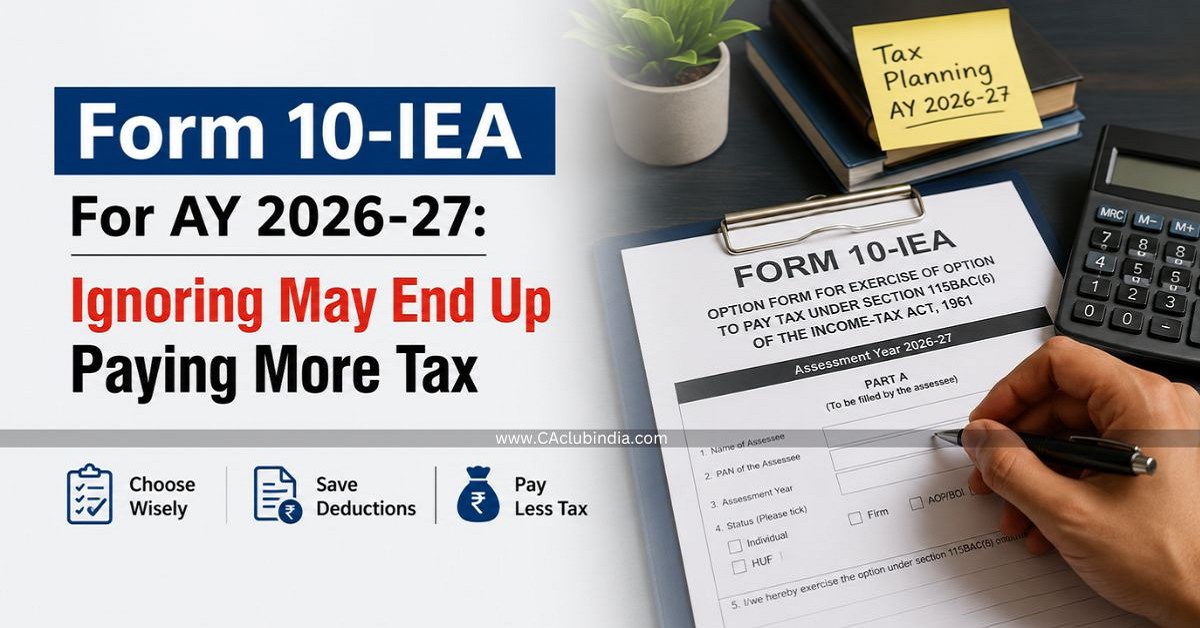
What is Form 10-IEA?
Form 10-IEA is a declaration prescribed under the Income-tax Act that allows eligible taxpayers with business or professional income to opt out of the default new tax regime and choose the old tax regime.
Since the new tax regime is now the default system, filing this form is necessary if an eligible taxpayer wishes to continue claiming deductions and exemptions available under the old regime.
Who Should File Form 10-IEA?
Form 10-IEA is generally applicable to taxpayers who:
- Have income from a business or profession.
- Wish to pay tax under the old tax regime instead of the default new tax regime.
- Are eligible to exercise the option under the provisions of Section 115BAC.
If you earn only salary, pension, capital gains, house property income, or income from other sources without any business or professional income, you generally do not need to file Form 10-IEA. You can choose the applicable tax regime while filing your Income Tax Return.
Important Update - New Column in ITR For AY 2026-27: "Receipts Not in Nature of Income"
Why Is Form 10-IEA Important?
Many deductions and exemptions available under the old tax regime are not available under the new regime. If Form 10-IEA is not filed where required, the taxpayer may automatically be taxed under the new regime.
As a result, deductions such as the following may not be available:
- Investments under Section 80C.
- Health insurance premium under Section 80D.
- House Rent Allowance (HRA), where applicable.
- Certain housing loan interest benefits.
- Other eligible exemptions and deductions available only under the old tax regime.
For taxpayers who rely on these deductions, overlooking Form 10-IEA can significantly increase their tax liability.
Due Date for Filing
Form 10-IEA should be filed on or before the due date prescribed for filing the Income Tax Return under Section 139(1) for the relevant assessment year.
Filing the form after the due date may prevent eligible taxpayers from opting for the old tax regime for that financial year.
Points to Remember
- The new tax regime is the default tax regime.
- Form 10-IEA is primarily relevant for taxpayers having business or professional income.
- Salaried taxpayers without business income generally do not require this form.
- Filing the form within the prescribed timeline is essential if the old tax regime is intended to be chosen.
Also Read: Individual Income Tax Return Filing Last Date For FY 2025-26
Conclusion
Selecting the right tax regime is an important financial decision, but completing the required compliance is equally important. Taxpayers with business or professional income should carefully evaluate which regime is more beneficial and ensure that Form 10-IEA is filed on time if they wish to continue under the old tax regime.
A small compliance step today can help avoid a larger tax liability tomorrow. Before filing your Income Tax Return for AY 2026-27, review your eligibility and confirm whether Form 10-IEA applies to your case.
Click To Know - ITR Processing Time 2026: Know How Long Will It Take and What Each Status Message Means
Frequently Asked Questions (FAQs)
1. Is Form 10-IEA mandatory for salaried employees?
No. Salaried taxpayers who do not have business or professional income are generally not required to file Form 10-IEA. They can select their preferred tax regime while filing their Income Tax Return (ITR), subject to the applicable provisions.
2. What happens if I do not file Form 10-IEA?
If you are required to file Form 10-IEA but fail to do so within the prescribed time, you may be taxed under the default new tax regime and could lose the benefit of deductions and exemptions available under the old tax regime.
3. What is the due date for filing Form 10-IEA for AY 2026-27?
Form 10-IEA should generally be filed on or before the due date specified under Section 139(1) for filing the Income Tax Return for the relevant assessment year.
4. Can I switch between the old and new tax regimes every year?
Taxpayers without business or professional income can generally choose either tax regime each year while filing their ITR. However, taxpayers with business or professional income are subject to specific conditions and restrictions for switching between the two regimes.
5. Can Form 10-IEA be filed after the due date?
The option to choose the old tax regime through Form 10-IEA is generally linked to the due date prescribed under Section 139(1). Missing the deadline may affect your eligibility to opt for the old tax regime for that assessment year.











 CAclubindia
