
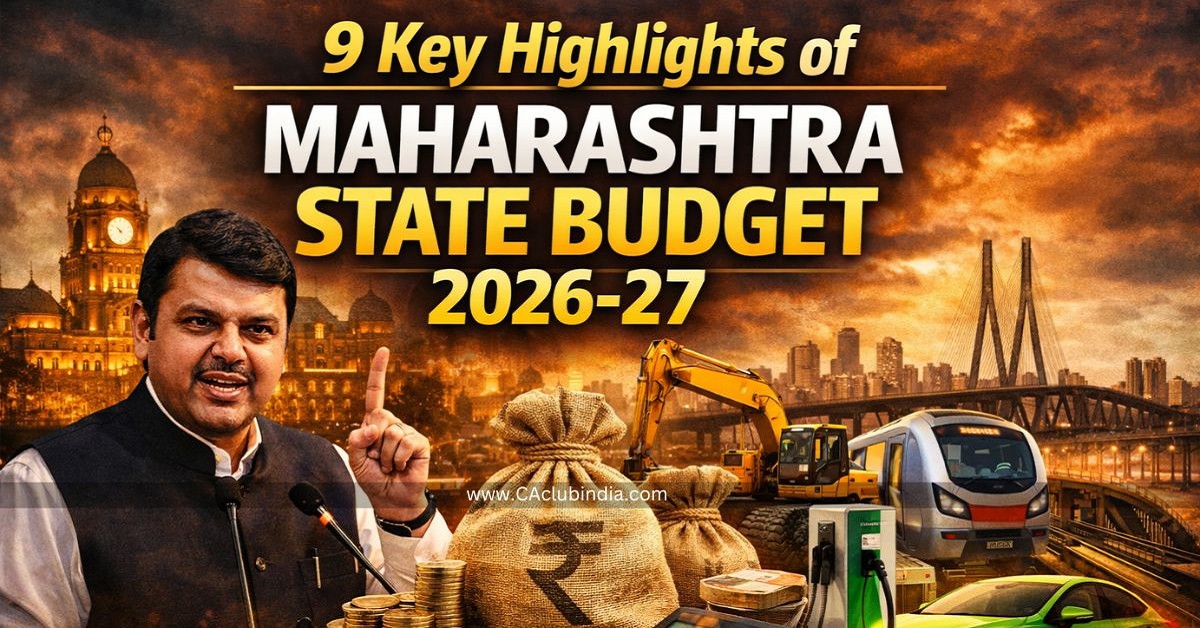
Through an engaging dialogue between Arjuna and Krishna, the article explains the key highlights of the Maharashtra State Budget 2026–27 presented by Devendra Fadnavis. It covers major announcements such as the continuation of the Mukhyamantri Ladki Bahin Yojana for women's welfare, Rs 20,000 crore electricity bill waiver for farmers, large investments in infrastructure, including the Mumbai Metro Expansion and Mumbai Coastal Road Project, along with spending on rural development, education, healthcare, and water conservation. The discussion also highlights the state's rising debt and policy focus on EV adoption and GST reforms, explaining what the budget means for citizens and businesses.
Arjuna (Fictional Character): Krishna, I heard about the Maharashtra State Budget for the FY 2026-27. Can you explain the key highlights and what they mean for businesses and citizens?
Krishna (Fictional Character): Arjuna, every budget is like a roadmap for the state's future. Devendra Fadnavis, chief minister of Maharashtra, presented the State Budget for 2026-27 on Friday. The Maharashtra Budget 2026-27 focuses on welfare, infrastructure, agriculture, and sustainable growth. Let me explain the important points of the budget in a simple way:
1. Support for Women - Mukhyamantri Ladki Bahin Yojana
The government has decided to continue the Mukhyamantri Ladki Bahin Yojana, which provides financial support and welfare benefits for women. The aim is to improve education, health, and financial independence of women, which ultimately strengthens families and society.
2. Relief for Farmers - Power Bill Waiver
A major relief has been announced for farmers. The government has allocated Rs 20,000 crore to waive electricity bills for farmers who are using 7.5 HP motor pumps. This will reduce the financial burden on farmers and support agricultural productivity.
3. Growing State Debt
While welfare spending is important, one must also look at financial discipline. Maharashtra's total debt has reached around Rs 9.3 lakh crore, the highest so far. This means the government must carefully balance development spending and financial stability in the coming years.
4. Major Focus on Infrastructure
The budget has allocated Rs 20,000 crore for infrastructure projects, including Expansion of Mumbai Metro, Improvement in suburban rail networks, Development of roads and highways, Progress of projects like the Mumbai Coastal Road.
This will help reduce traffic and make it easier to travel around the state.
5. Improvements in Education
The government plans to invest more in scholarships, smart schools, and digital classrooms. The goal is to ensure that students from all backgrounds get better education and digital learning opportunities.
6. Reforms in Tax and Revenue Systems
To increase revenue, the government plans to streamline GST systems and expand the tax base. At the same time, incentives are expected to encourage small businesses and entrepreneurship.
7. Promotion of Electric Vehicles (EVs)
The future belongs to green energy. The government is offering subsidies and tax benefits for electric vehicles and planning to develop EV charging infrastructure across the state. This will help reduce pollution and promote sustainable transportation. Electric vehicle registrations in Maharashtra fell 19% in 2024-25 but rebounded and increased by 13% in 2025-26, economic survey report shows, even as the overall vehicle base kept rising.
8. Rural Development
For rural areas, about Rs 30,000 crore has been allocated to improve Rural roads, Water supply systems, Healthcare centres, Agricultural support programs. This aims to strengthen villages and reduce the urban-rural gap. Out of total around Rs 10,000 crore has been allocated to improve healthcare facilities, especially in rural areas where access to medical services is limited.
9. Focus on Water Conservation
Water scarcity is a serious issue in many parts of Maharashtra. The government has allocated Rs 5,000 crore for irrigation projects, rainwater harvesting, and water conservation initiatives.
Arjuna (Fictional Character): Krishna, what lesson should citizens of Maharashtra and businesses take from this budget?
Krishna (Fictional Character): Arjuna, the message is clear. The government is trying to balance social welfare, infrastructure development, and environmental sustainability. Businesses should stay aware of new opportunities in infrastructure, renewable energy, and technology, while citizens should benefit from welfare schemes.









 CAclubindia
