
The GST Council met for the 55th time under the Chairmanship of Honourable FM Nirmala Sitharaman. Some key changes were recommended regarding availability of ITC and date of availability of ITC. Let's discuss -
1. Clarification on availability of Input Tax Credit as per section 16(2)(b) of CGST Act, 2017 in respect of goods that have been delivered by the supplier at his (supplier's) place of business
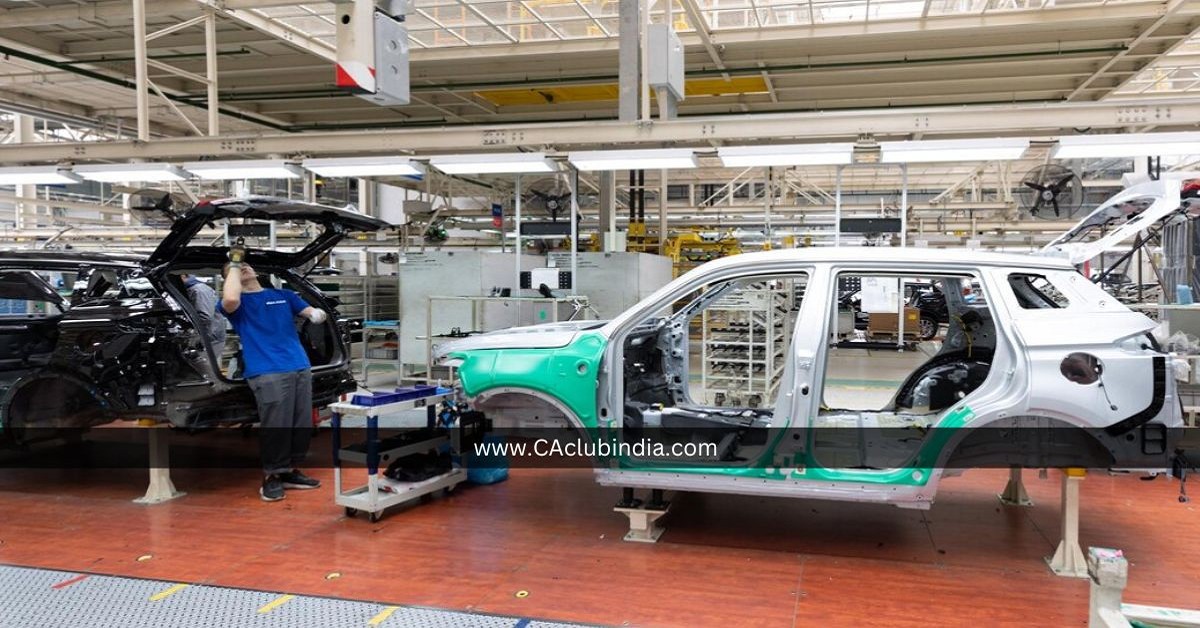
It has been seen that in automobile sector, the contract between the automobile dealers and the Original Equipment Manufacturers (OEMs) is generally an Ex-Works (EXW)contract, and as per the terms of the contract, the property in goods (i.e. vehicles) passes to the dealer at the factory gate of the OEM, when the goods are handed over to the transporter at the instance of the dealer, and the delivery on the part of the OEM is complete at his factory gate.
Based on the GST Council's recommendation, circular no. 241/35/2024-GST dated 31st Dec, 2024, has been issued to clarify that in an Ex-Works contract, where goods are delivered by the supplier to the recipient or a transporter at the supplier's place of business, and the property in goods transfers to the recipient at that point, the goods are considered to be "received" by the recipient under section 16(2)(b) of CGST Act, 2017 and the recipient may claim Input Tax Credit (ITC) on such goods, subject to the conditions outlined in Sections 16 and 17 of the CGST Act, 2017.
2. Amendment in section 17(5)(d) of CGSTAct, 2017
Recently in a landmark ruling by the Hon'ble Supreme Court in the case of Safari Retreats, the court ruled that there is a difference between "Plant and Machinery" as mentioned in Sec 17(5)(c) and Explanation to Sec 17 and "Plant or Machinery" as mentioned in Sec 17(5)(d).
The Supreme Court concluded that the explanation defining "Plant and Machinery" in Sec 17 does not apply to the term "Plant or Machinery" in Sec 17(5)(d).
The court highlighted that the benefit of ITC will be given in case an immovable property, can be classified as either "plant" or "machinery".
With respect to the scope of the term "plant", the SC relying on its previous decisions in the Income Tax law, held that the hotels and cinema theatres cannot be said to be a "plant". However, the applicability of these decisions has been held to be limited to the extent of hotels, cinema theatres and not on other immovable properties.
Accordingly, for other cases involving malls, warehouses etc., the SC has propounded the application of functionality test to ascertain -
- Whether the immovable property has been constructed to suit assessee's special technical needs; and
- Whether immovable property is essential to carry out the business activities of the assessee.
Now the government is set to replace the words "Plant or Machinery" as mentioned in Sec 17(5)(d) with "Plant and Machinery". It has been proposed to bring this amendment retrospectively w.e.f. 1-7-2017.
It remains to be seen whether this retrospective amendment will pass judicial scrutiny as there are past judgements to the effect that retrospective amendment is usually presumed to be unjust and oppressive unless the statute expressly or impliedly provides for such retrospective effect. (Case - Commissioner of Income Tax, New Delhi vs. Vatika Township Private Limited, Civil Appeal No. 8750 of 2014)











 CAclubindia
