
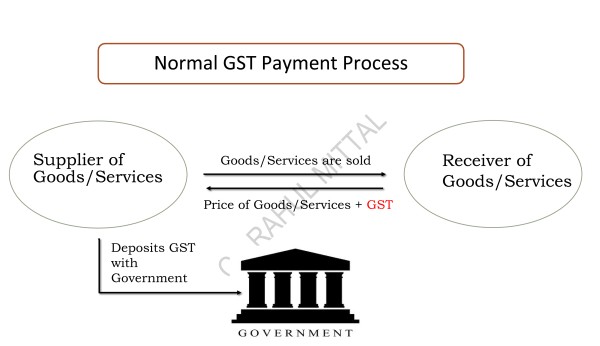
BACKGROUND OF REVERSE CHARGE MECHANISM
- Reverse Charge Mechanism was first introduced in Service Tax Law.
- Now, the Government has incorporated RCM in GST.
- Government has notified not only supply of certain services but also supply of certain goods under RCM.
OBJECTIVE OF REVERSE CHARGE MECHANISM
- Safeguard the interest of Revenue
- Administrative convenience of Government
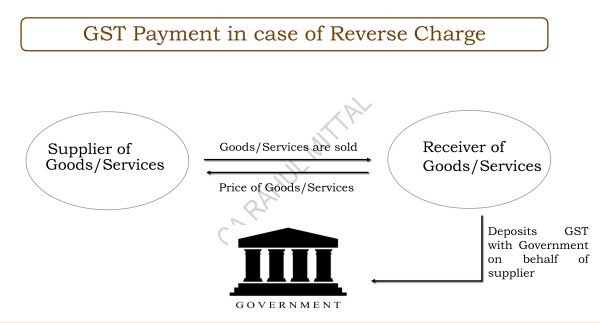
Statutory Provision
Section 2(98) of the CGST Act, 2017
"reverse charge" means the liability to pay tax by the recipient of supply of goods or services or both instead of the supplier of such goods or services or both under sub-section (3) or sub-section (4) of Section 9, or under sub-section (3) or sub-section (4) of Section 5 of the Integrated Goods and Services Tax Act.
Section 9(3) of the CGST Act, 2017
The Government may, on the recommendations of the Council, by notification, specify categories of supply of goods or services or both, the tax on which shall be paid on reverse charge basis by the recipient of such goods or services or both and all the provisions of this Act shall apply to such recipient as if he is the person liable for paying the tax in
relation to the supply of such goods or services or both.
Section 5(3) of the IGST Act, 2017
The Government may, on the recommendations of the Council, by notification, specify categories of supply of goods or services or both, the tax on which shall be paid on reverse charge basis by the recipient of such goods or services or both and all the provisions of this Act shall apply to such recipient as if he is the person liable for paying the tax in relation to the supply of such goods or services or both
Comprehend two types of reverse charge scenarios in GST
| Section 9(3) of the CGST/SGST/UTGST Act and Section 5(3) of the IGST Act | Section 9(4) of the CGST/SGST/UTGST Act and Section 5(4) of the IGST Act |
| On the nature of supply and/or nature of supplier | On the nature of supply |
| Supply received by a class of registered persons | |
| Supply made by unregistered supplier |
To read the full article, click here











 CAclubindia
