
Overview
When filing an Income Tax Return (ITR), taxpayers often focus on income, deductions, and tax-saving investments. However, one document that plays a crucial role in ensuring accurate tax compliance is Form 26AS. It is a consolidated tax statement linked to a taxpayer's Permanent Account Number (PAN) that records details of Tax Deducted at Source (TDS), Tax Collected at Source (TCS), tax payments, refunds, and certain specified financial transactions.
With increased data matching by tax authorities, reviewing Form 26AS before filing an ITR has become more important than ever. It helps taxpayers verify tax credits, identify discrepancies, avoid reporting errors, and reduce the chances of receiving notices from the Income Tax Department.
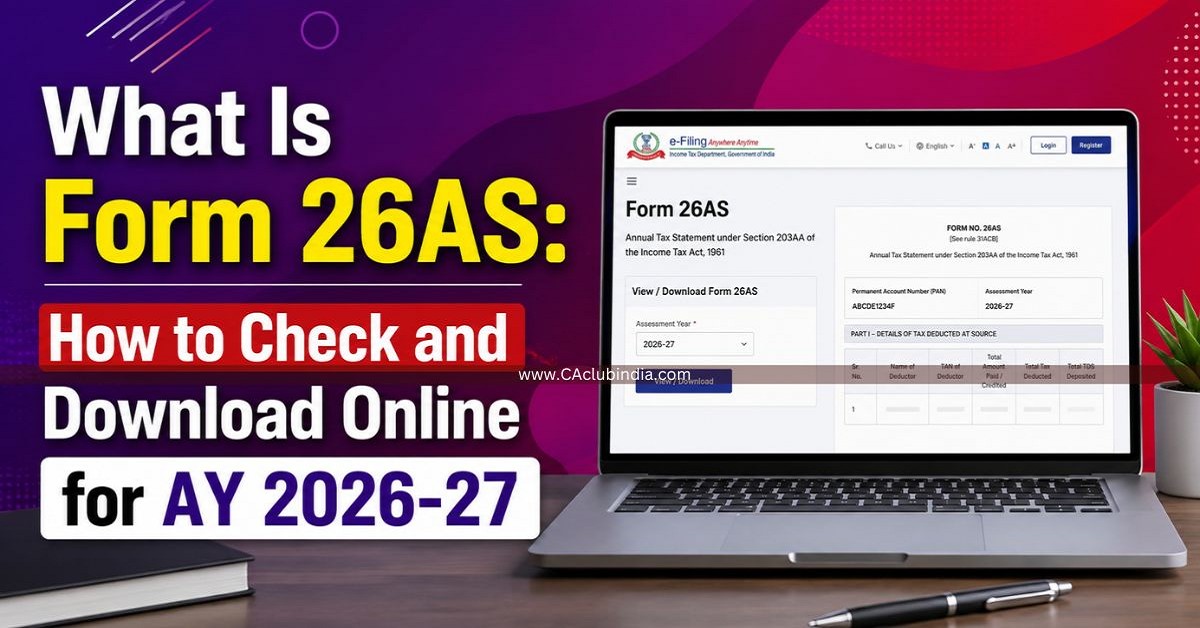
What Is Form 26AS?
Form 26AS is an annual tax statement generated by the Income Tax Department that contains details of taxes deducted or collected against a taxpayer's PAN. It provides a comprehensive record of tax credits available during a financial year and is often referred to as a taxpayer’s tax passbook.
Why Is Form 26AS Important for Taxpayers?
- Verifies Tax Credits: Form 26AS helps taxpayers confirm that TDS, TCS, and other taxes have been correctly deposited against their PAN.
- Ensures Accurate ITR Filing: By cross-checking tax payments and deductions, taxpayers can file their returns accurately and avoid errors.
- Helps Claim Correct TDS Credit: Only the TDS reflected in Form 26AS can generally be claimed while filing an ITR, making it an essential document for claiming tax credits.
- Identifies Errors and Mismatches: It helps detect issues such as incorrect PAN details, missing TDS entries, or reporting errors, allowing timely corrections.
- Tracks High-Value Transactions: Form 26AS may contain details of specified financial transactions reported to tax authorities, helping taxpayers ensure proper disclosure.
- Reduces the Risk of Tax Notices: Reviewing Form 26AS before filing returns helps avoid mismatches and minimizes the chances of receiving notices from the Income Tax Department.
Information Available in Form 26AS
| Particulars | Description |
| TDS (Tax Deducted at Source) | Tax deducted by employers, banks, tenants, customers, etc. |
| TCS (Tax Collected at Source) | Tax collected by sellers on specified transactions |
| Advance Tax | Advance tax deposited by the taxpayer |
| Self-Assessment Tax | Tax paid before filing the return |
| Refund Details | Income tax refunds issued during the year |
| High-Value Transactions | Specified financial transactions reported to tax authorities |
| Demand and Collection Information | Outstanding tax demands and collections, if any |
How to View and Download Form 26AS Online?
Taxpayers can access Form 26AS through the Income Tax e-Filing portal by following these steps:
- Log in to the Income Tax e-Filing portal using your PAN/Aadhaar and password.
- Navigate to e-File > Income Tax Returns > View Form 26AS.
- Read the disclaimer and click Confirm.
- You will be redirected to the TRACES portal.
- Select View Tax Credit (Form 26AS).
- Choose the relevant Assessment Year and preferred format.
- View or download the statement for future reference.
It is advisable to review Form 26AS before filing your Income Tax Return to ensure all tax credits are correctly reflected.
Structure and Parts of Form 26AS
- Part-I Details of TDS
- Part-II TDS for 15G/15H Details
- Part-III Details of Transactions under Proviso to section 194B/First Proviso to sub-section (1) of section 194R/ Proviso to sub-section(1) of section 194S
- Part-IV TDS u/s 194IA/ 194IB / 194M/ 194S Details (For Seller/Landlord of Property/Contractors or Professionals/ Seller of Virtual Digital Asset)
- Part-V Details of Transactions under Proviso to sub-section(1) of section 194S as per Form-26QE (For Seller of Virtual Digital Asset)
- Part-VI TCS Details
- Part-VII Details of Paid Refund (Source is CPC TDS. For other details can be view through AIS at E-filing portal)
- Part-VIII TDS u/s 194IA/ 194IB /194M/194S Details
- Part-IX Details of Transactions/Demand Payments under Proviso to sub-section(1) of section 194S as per Form 26QE
- Part-X TDS/TCS Defaults (Processing of Statements)
Form 26AS vs AIS vs TIS: Key Differences
| Particulars | Form 26AS | AIS | TIS |
| Purpose | Tax credit statement | Comprehensive financial information statement | Summary of AIS |
| TDS/TCS Details | Yes | Yes | Yes |
| Tax Payments | Yes | Yes | Summary only |
| Financial Transactions | Limited | Detailed | Summarises the transactions reflected in AIS |
| Income Information | Limited | Comprehensive | Summary |
| Used for ITR Filing | Yes | Yes | Yes |
AIS (Annual Information Statement) provides detailed information about income, taxes, investments, securities transactions, foreign remittances, and other financial activities. TIS (Taxpayer Information Summary) is a simplified version of AIS that presents summarized taxpayer information for easier return filing.
Who Should Check Form 26AS?
| Taxpayer Category | Importance |
| Salaried Employees | Verify salary TDS deducted by the employer |
| Freelancers and Professionals | Confirm TDS deducted by clients |
| Business Owners | Reconcile tax payments and collections |
| Investors | Verify TDS on interest, dividends, and other income |
| Senior Citizens | Check TDS deducted by banks and financial institutions |
| Property Sellers | Verify TDS deducted on property transactions |
Benefits of Reviewing Form 26AS Before Filing ITR
- Ensures accurate tax credit claims.
- Helps identify TDS mismatches and errors.
- Assists in reconciling tax payments.
- Reduces the chances of defective returns.
- Facilitates smoother ITR processing.
- Minimizes the risk of tax notices.
- Enhances overall tax compliance.
Common Issues Found in Form 26AS
Common discrepancies include:
- Missing TDS entries.
- Incorrect PAN quoted by the deductor.
- Duplicate tax entries.
- Incorrect tax payment records.
- Mismatch between Form 16 and Form 26AS.
- Delay in TDS reporting.
Taxpayers should promptly contact the deductor and request correction of the records if any discrepancy is observed.
Key Takeaway
Before filing your Income Tax Return, always compare your tax credits, TDS details, and tax payments with Form 26AS. Identifying mismatches early can help avoid notices, refund delays, and filing errors.
Conclusion
Form 26AS is a vital record of tax deductions, payments, refunds, and financial transactions linked to a PAN. Reviewing it before filing an ITR helps taxpayers claim accurate tax credits, identify errors, and ensure smooth tax compliance.
Spending a few minutes checking Form 26AS can prevent notices, refund delays, and unnecessary disputes. Taxpayers should review Form 26AS along with Form 16 and AIS to ensure complete and accurate reporting of income and taxes.
FAQs
1. Is it mandatory to check Form 26AS before filing an ITR?
No, it is not mandatory. However, it is highly recommended to verify tax credits and avoid mismatches while filing returns.
2. Can I claim TDS if it is not reflected in Form 26AS?
Generally, TDS credit can be claimed only when it appears in Form 26AS. Taxpayers should contact the deductor to rectify missing entries.
3. What should I do if there is a mismatch in Form 26AS?
If any discrepancy is noticed, taxpayers should immediately contact the deductor and request that the reported details be corrected.
4. What is the difference between Form 16 and Form 26AS?
Form 16 contains salary and TDS details issued by an employer, whereas Form 26AS is a consolidated tax statement showing all taxes deducted, collected, and paid against a PAN.
5. Should Form 26AS be checked along with AIS?
Yes. Taxpayers should review both Form 26AS and AIS before filing their Income Tax Return to ensure complete and accurate reporting of income and tax credits.









 CAclubindia
