
UPI Charges on payment above ₹2,000 was scheduled to be introduced from 15th October 2026. However, National Payments Corporation of India (NPCI) postponed the implementation due to the festive season but there is no confirmation yet about the revised date.
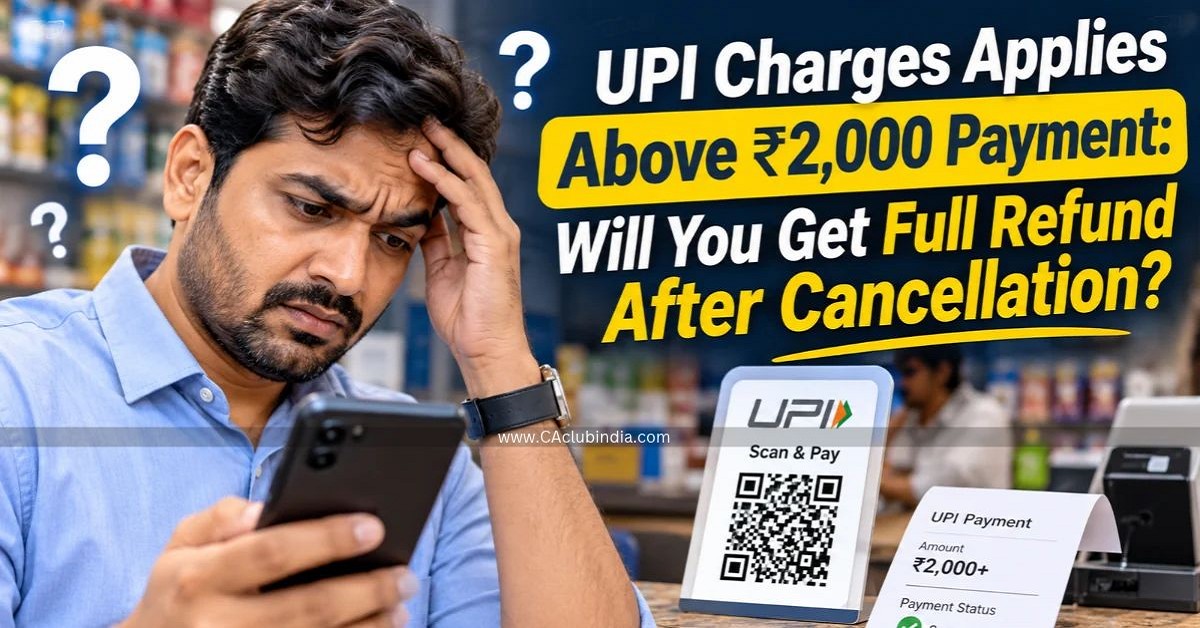
UPI MDR Rules for Payments Above ₹2,000
NPCI has introduced a revised Merchant Discount Rate (MDR) on selected merchant transactions. The charges include:
| Transaction Category | Proposed MDR |
| Merchant payments (P2M) up to ₹2,000 | Nil |
| Merchant payments (P2M) above ₹2,000 | 0.40% |
| Payments of ₹75,000 and above | Maximum ₹300 |
| Railways, fuel, telecom, insurance etc. Above ₹2,000 | Flat ₹5 |
| Mutual funds, securities and stockbroking Above ₹2,000 | 0.02%, capped at ₹300 |
| Small Merchants (P2PM Category) Up to ₹1 Lakh per month | Nil |
Explore More in Details - New UPI Rules 2026: Complete Fee Structure for Transactions
Who will pay the UPI MDR charges: customers or merchants?
The proposed MDR will be borne by eligible merchants and not the customers. Merchants cannot charge from customers as a UPI transaction fee.
Will The Customer Get a Full Refund After Cancelling a UPI Payment?
Customers are generally expected to receive the full amount paid, subject to the merchant's applicable cancellation and refund terms.
For example: If a customer purchase a Mobile Phone amounting: ₹50,000
- Applicable MDR at 0.4%: ₹200
- Amount paid by customer: ₹50,000
- Expected customer refund: ₹50,000
As MDR will be borne by eligible merchants, it should not be deducted from the customer's refund.
Will Merchants Get the MDR Amount Back?
This is where the issue becomes complicated.
If a customer cancels an order after successful payment, the merchant may have to refund the entire purchase amount while absorbing the original MDR.
The current framework does not clearly explain whether MDR will be reversed in cases of full refunds or partial refunds.
For businesses dealing with frequent cancellations and product returns, this could increase payment processing costs.










 CAclubindia
