Abstract
Internal Financial Controls over Financial Reporting (ICFR) represent one of the most consequential compliance obligations introduced by the Companies Act, 2013. Under Section 134(5)(e), the Board of Directors is required to state that it has laid down internal financial controls and that such controls are adequate and operating effectively. Concurrently, Auditors under Section 143(3)(i) must evaluate and report on the adequacy and operating effectiveness of ICFR. This article examines the structural and practical dimensions of ICFR, drawing on the ICAI Guidance Note on Audit of Internal Financial Controls over Financial Reporting (Revised 2019) and field observations from statutory audits. It analyses persistent control deficiencies, root causes, financial reporting impact, and actionable recommendations to bridge the gap between design and execution.
1. Introduction
The Companies Act, 2013 marked a paradigm shift in Indian corporate accountability. Under Section 134(5)(e), the Board must confirm in its Directors’ Responsibility Statement that adequate internal financial controls exist and are operating effectively. Separately, under Section 143(3)(i), Auditors are mandated to report on whether the company has adequate internal financial controls and whether such controls are operating effectively. This dual obligation—imposed on both management and auditors—elevated ICFR from a governance aspiration to a legally enforceable standard.
The ICAI Guidance Note on Audit of Internal Financial Controls over Financial Reporting (Revised 2019), read alongside SA 315 (Revised 2019), provides the procedural framework. It draws from the COSO Internal Control — Integrated Framework (2013), adapted to the Indian context, and stipulates that an ICFR system cannot be deemed effective if one or more material weaknesses exist.
In practice, a sharp divergence exists between large corporates with mature governance structures and companies operating with constrained resources, limited automation, and poorly defined control ownership. Controls routinely fail at the execution stage—the very dimension that determines audit outcomes and financial reporting credibility. This article examines that gap.
2. Understanding ICFR - A Process-Oriented Framework
ICFR is defined under the Companies Act, 2013 and the ICAI Guidance Note as a process designed to provide reasonable assurance regarding (i) reliability of financial reporting, (ii) preparation of financial statements in accordance with GAAP, and (iii) maintenance of records that accurately reflect transactions. Section 134(5)(e) places the primary responsibility for designing, implementing, and maintaining this process on the Board of Directors.
2.1 ICFR Is a Process, Not a Product
ICFR is not a static document or a one-time compliance exercise. It is a dynamic process that must evolve with changes in business operations, accounting standards, technology, and risk profile. Many organizations treat it as a documentation exercise preparing Risk and Control Matrices (RCMs) and flowcharts for auditors—and then leave them static. This fundamentally misunderstands ICFR as a living governance tool.
2.2 Reasonable Assurance
No control system can eliminate misstatement risk entirely. The ICAI Guidance Note emphasizes that the objective is risk reduction to an acceptable level, not elimination. Auditors evaluating IFC under Section 143 must apply this standard when classifying deficiencies as control deficiencies, significant deficiencies, or material weaknesses.
3. Components of the Internal Control Framework
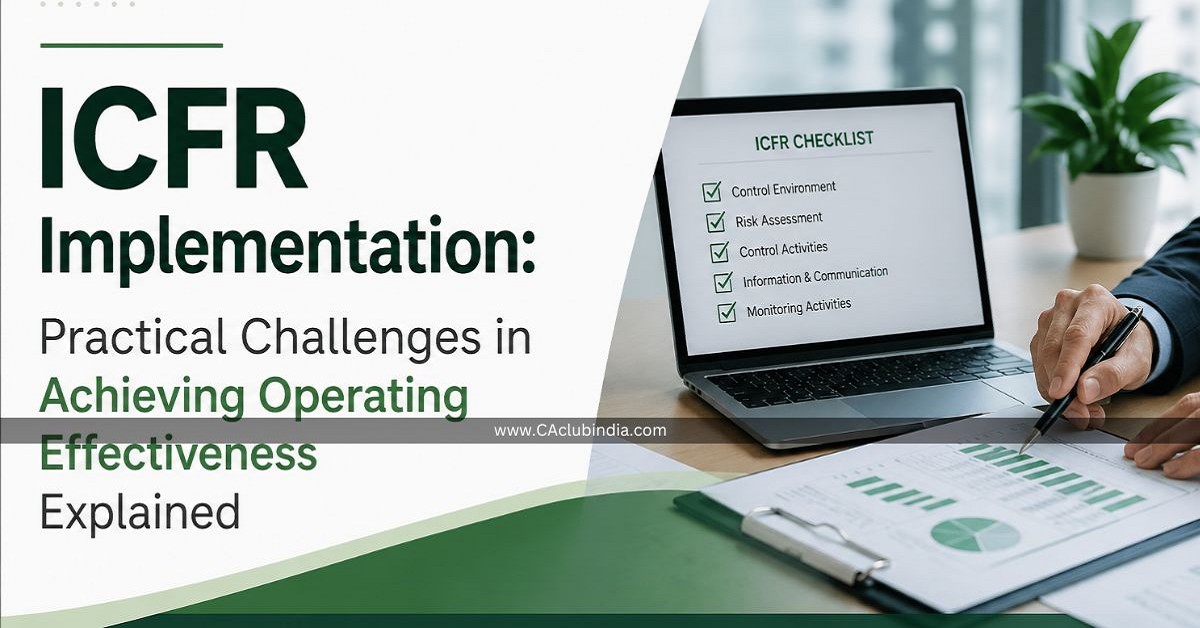
SA 315 (Revised 2019) and the ICAI Guidance Note adopt the COSO five-component model. Deficiency patterns within each component are examined below.
3.1 Control Environment
The control environment is the bedrock of effective internal controls. It encompasses the values, ethics, governance structures, and management philosophy that collectively determine how seriously an organization treats internal controls. In many organizations, governance structures—audit committees, whistle-blower policies, codes of conduct—are constituted for compliance purposes without substantive engagement. Senior management frequently views ICFR primarily as an audit requirement rather than a management tool, leading to reactive rather than proactive engagement. Key deficiencies include: absence of defined control owners with explicit accountability; ethical tone communicated verbally but not reinforced through written policies or consequence frameworks; and limited Board/Audit Committee reporting on ICFR status, weaknesses, and remediation progress. A weak control environment cannot be compensated by well-designed process-level controls—the environment determines whether controls are taken seriously and executed consistently.
3.2 Risk Assessment
Effective ICFR requires comprehensive and dynamic risk assessment covering financial statement-level risks, assertion-level risks (occurrence, completeness, accuracy, cut-off, classification), fraud risks including management override, and risks from regulatory or business model changes. In practice, RCMs are typically prepared once at ICFR implementation and never revisited. This creates a growing misalignment between documented risks and actual exposures, particularly as companies grow, add product lines, enter new markets, or change technology platforms. A static RCM is a silent control deficiency—the risks it was designed to address may no longer reflect the organization’s actual risk profile.
3.3 Control Activities
Control activities are the policies and procedures that mitigate identified risks. They are classified by nature (preventive vs. detective), execution (manual vs. automated), and level (entity vs. process). Common deficiencies include: preventive controls functioning as detective in practice—such as approvals granted after the fact rather than prior to transaction execution; generic control descriptions that do not specify the operator, frequency, population, sampling methodology, or exception criteria; absence of defined materiality thresholds in review controls; and compensating controls not formally documented where SoD cannot be achieved.
|
Dimension |
Category |
Examples |
|
By Nature |
Preventive |
Authorization limits, SoD, system access controls |
|
Detective |
Reconciliations, variance analysis, management reviews |
|
|
By Execution |
Manual |
Human-executed approvals, physical counts |
|
Automated |
System-based approvals, ERP edit checks |
|
|
By Level |
Entity-Level |
Policies, tone at top, Audit Committee oversight |
|
Process-Level |
Controls within O2C, P2P, Payroll cycles |
3.4 Information and Communication
The reliability of ICFR is critically dependent on the quality of information flowing through an organization. The ICAI Guidance Note places particular emphasis on Information Produced by the Entity (IPE)—reports, schedules, and data outputs generated by management and used as inputs to controls. The completeness and accuracy of IPE must be independently validated before it can be relied upon in control execution. Common IPE risks include: aging reports pulled from the ERP without verifying all transactions have been posted (completeness risk); payroll computation sheets reviewed by the HR manager without independent validation of source data or formula logic (accuracy risk); and inventory valuations based on system data unreconciled with physical counts (reliability risk). Beyond IPE, effective communication structures are essential—control owners must clearly understand their responsibilities, the risks they manage, and the escalation pathways for exceptions. Across many organizations, this communication remains informal and oral, creating significant inconsistency in control execution.
3.5 Monitoring
Monitoring activities ensure that internal controls continue to operate effectively over time through ongoing evaluations embedded in business processes and separate evaluations such as internal audits and management reviews. Without structured monitoring, controls erode as personnel change and institutional memory is lost; deficiencies arising during the year go undetected until the year-end audit; and the control framework falls out of step with business changes. Monitoring is frequently the weakest of the five components. Internal audit functions, where they exist, often lack the independence, technical expertise, or scope to conduct meaningful ICFR evaluations. Management self-assessments are rare. The result is that auditors under Section 143 become the primary—and sometimes only—source of control deficiency identification, which is a reactive rather than proactive approach and one that the ICAI Guidance Note explicitly cautions against.
4. Design Effectiveness vs. Operating Effectiveness
One of the most consequential distinctions in the ICAI Guidance Note is between design effectiveness and operating effectiveness. This distinction determines audit procedures and ultimately the opinion under Section 143.
|
Dimension |
Design Effectiveness |
Operating Effectiveness |
|
Definition |
Control appropriately designed to prevent/detect a risk |
Control operates consistently as designed throughout the period |
|
Testing |
Walkthrough; review of control documentation |
Sample testing; re-performance; inspection of evidence |
|
Common Failure |
Controls designed for a different business model |
Inconsistent execution; lack of evidence; key-person dependency |
|
Audit Implication |
Deficiency = significant deficiency or material weakness |
Deficiency in operation = adverse finding even if design is adequate |
A well-documented control that is inconsistently executed offers the illusion of control without its substance. Auditors reporting under Section 143 treat inconsistent execution as a deficiency regardless of documentation quality.
5. Key Deficiencies Observed in Practice
5.1 Absence of Evidence of Control Performance
Controls executed without contemporaneous documentation are indistinguishable from controls not executed at all. Examples: bank reconciliation sign-offs obtained only at year-end; journal entry approvals granted in bulk within seconds; vendor master changes verbally confirmed but not documented. The evidentiary standard in ICFR auditing under SA 315 and the ICAI Guidance Note is exacting—if it is not documented, it did not happen.
5.2 Inadequate Segregation of Duties
SoD conflicts arise when incompatible functions—authorization, custody, recording, and reconciliation—are concentrated in one individual. High-risk patterns include: the same person creating vendors, raising POs, receiving goods, and initiating payments; and the HR executive maintaining payroll master data also processing and transferring payments. Where SoD cannot be achieved, compensating controls must be explicitly designed, documented, and tested—they do not arise by default.
5.3 IT General Control (ITGC) Weaknesses
ITGC weaknesses—across the four domains of Change Management, Access Controls, Computer Operations, and Program Development—undermine the reliability of every automated control and IPE report. Common observations: shared user IDs; privileged access granted without business need; access not terminated on role change; password policies not technically enforced; developers with direct production access. When ITGCs are deficient, auditors under Section 143 must treat all automated controls and system-generated reports as unreliable, materially increasing audit scope.
5.4 Ineffective Review and Approval Controls
Review controls are among the most common in any ICFR framework, yet the most difficult to execute effectively. Indicators of ineffectiveness: no documentation of what was reviewed, exceptions identified, or conclusions reached; reviewer is the same person who prepared the document; reviews performed on full population without risk focus; exceptions not tracked to resolution. The ICAI Guidance Note requires auditors to assess the rigour—not merely the existence—of review controls.
5.5 Disconnect Between Documentation and Actual Practice
The most pervasive observation is the systematic disconnect between documented controls and actual practice: frequency mismatch (daily controls performed monthly); ownership mismatch (named control owners unaware of their responsibilities); and scope mismatch (controls documented for 100% coverage applied to a sample without documented methodology). Documentation that does not reflect reality provides no assurance and, when discovered during audit testing, triggers a full reassessment of the control framework.
6. Process-Level Impact of Control Deficiencies
|
Business Cycle |
Key Controls at Risk |
Financial Reporting Impact |
Assertions Affected |
|
Order-to-Cash |
Revenue cut-off, credit note authorization, customer reconciliations |
Incorrect revenue recognition; overstatement of receivables |
Occurrence, Cut-off, Valuation |
|
Procure-to-Pay |
Vendor authorization, three-way match, payment approval |
Unauthorized payments; liability misstatement |
Completeness, Accuracy, Occurrence |
|
Payroll |
Headcount reconciliation, salary master authorization |
Ghost employees; incorrect accruals; tax errors |
Occurrence, Accuracy, Cut-off |
|
Fixed Assets |
Capitalization authorization, depreciation review |
Incorrect asset values; understated impairments |
Existence, Valuation |
|
Financial Close |
Journal entry controls, account reconciliations |
Material misstatement in financial statements |
All assertions |
7. Root Causes of Persistent ICFR Deficiencies
A structured root cause analysis of the deficiencies documented above reveals several systemic themes that recur across organizations of varying size and sector.
Compliance-driven mindset. The most fundamental root cause is a compliance-first orientation—treating ICFR as a statutory obligation to be satisfied rather than a governance tool that adds genuine business value. This produces a focus on documentation for the benefit of auditors rather than execution for the benefit of the organization, resulting in frameworks that are paper-compliant but operationally fragile.
Resource and capacity constraints. Many organizations operate with lean finance and operations teams where the same individuals hold multiple functions. Limited bandwidth for control execution, documentation, and monitoring—combined with restricted investment in automation and training—creates structural vulnerability in the ICFR framework.
Limited ICFR literacy among control owners. Control owners—the operational staff responsible for executing specific controls—often lack a clear understanding of why a given control exists, what risk it mitigates, what the procedure requires, and what evidence of performance is needed. Without this understanding, controls are treated as administrative tasks rather than risk management activities, leading to inconsistent execution and inadequate documentation.
Fragmented technology environment. Many organizations operate with a mix of legacy systems, standalone applications, and spreadsheet-based processes. This fragmentation makes it difficult to implement automated controls, maintain comprehensive audit trails, and enforce access restrictions. The resulting reliance on manual processes increases both the risk of error and the difficulty of demonstrating control effectiveness to auditors under Section 143.
Absence of effective internal audit. Where internal audit functions exist, they often lack the independence, technical expertise, or scope to perform rigorous ICFR evaluations. Without periodic internal assessment, control deficiencies are not identified and remediated until the external audit cycle, entrenching a reactive compliance culture.
8. Practical Recommendations
The following recommendations are aligned with the ICAI Guidance Note and the obligations of the Board under Section 134(5)(e) and auditors under Section 143.
- Re-engineer ICFR as a business process: Management must communicate that ICFR serves the organization’s own interests by reducing financial error risk and supporting credible reporting. Boards and Audit Committees should receive regular ICFR status reports and hold management accountable for control effectiveness—consistent with the Board’s responsibility under Section 134(5)(e).
- Align RCMs with actual processes: RCMs should be developed or updated through direct observation of actual workflows—not from templates or prior-year documentation. Each control must specify the risk mitigated, control operator, frequency, population covered, exception criteria, and required evidence of performance. RCMs must be revisited whenever there is a significant change in operations, systems, or personnel.
- Institutionalize control evidence: Establish clear documentation standards for each control—what evidence is required, where it is stored, and how long it is retained. Control execution checklists, digital sign-off workflows, and structured exception logs can materially improve evidence quality. Auditors evaluating IFC under Section 143 must find auditable evidence; the absence of documentation is treated as a control failure regardless of verbal assurances.
- Address SoD systematically: SoD analysis should be conducted across all significant business processes to identify conflicts. For ERP environments, role-based access control matrices should be developed to prevent assignment of conflicting system privileges. Where SoD conflicts cannot be eliminated due to organizational constraints, compensating controls—such as enhanced supervisory review or exception-report scrutiny by an independent party—must be formally designed, documented, and tested.
- Strengthen ITGC hygiene: Enforce individual (non-shared) user accounts for all system access; implement role-based access controls aligned with job functions; conduct periodic access reviews (at least annually) and terminate access promptly upon role change or departure; separate development and production environments; and implement a formal change management process for all system modifications.
- Build structured monitoring: Establish an annual ICFR calendar scheduling key control testing activities throughout the year. Management self-assessments—where control owners certify operating effectiveness on a quarterly basis—provide an early warning mechanism for emerging deficiencies. ICFR testing should be formally incorporated into the internal audit plan, with findings reported to the Audit Committee.
- Invest in control owner training: Each control owner should receive role-specific training covering the financial reporting risk the control addresses, the precise procedure (including frequency, population, and exception criteria), documentation requirements, and the escalation pathway for significant exceptions. This training should be conducted upon role assignment and refreshed whenever the control framework is updated.
9. The Auditor's Perspective
Under Section 143(3)(i) of the Companies Act, 2013, Auditors must report whether the company has adequate internal financial controls over financial reporting and whether such controls are operating effectively. The ICAI Guidance Note on Audit of IFC (Revised 2019)—the applicable standard for this engagement—prescribes the following procedures:
- Risk Assessment: Identifying significant accounts and assertions susceptible to material misstatement.
- Control Identification: Mapping entity-level, process-level, and IT controls to identified risks.
- Walkthrough Procedures: Tracing transactions from origination to financial reporting to confirm controls operate as documented.
- Testing of Design Effectiveness: Evaluating whether the control, as designed, can prevent or detect the identified risk.
- Testing of Operating Effectiveness: Sampling control instances to test for timely and appropriate execution—the sample size varies with control frequency, per ICAI Guidance Note norms.
A material weakness identified through these procedures results in an adverse ICFR audit opinion under Section 143—a significant consequence for the company’s financial reporting credibility and stakeholder confidence.
10. Conclusion
ICFR sits at the intersection of regulatory compliance, organizational governance, and financial reporting integrity. The Board’s obligation under Section 134(5)(e) and the auditor’s reporting mandate under Section 143 together create a robust accountability framework—but one that requires active, ongoing engagement to be meaningful.
The essential transformation is cultural: from viewing ICFR as an auditor’s requirement to embracing it as a management tool that protects the organization, delivers reliable financial information, and builds institutional credibility. As the ICAI Guidance Note emphasizes, the standard is discipline—consistent, evidence-supported execution of well-designed controls by informed owners operating within a governance culture that takes financial integrity seriously.
Effective ICFR is not the absence of deficiencies — it is the presence of a system that identifies, addresses, and learns from them.
The author is a CA Finalist with over three years of intensive experience spanning statutory audit, internal audit, risk advisory, ICFR/IFC implementation and review, ERP audits, PSU bank audits, business valuation, and due diligence engagements. His practice has encompassed diverse industries including manufacturing, trading, financial services, and the public sector, providing him with broad exposure to the spectrum of control environments across organizational sizes. His work on ICFR has involved end-to-end engagements from RCM development and control testing to deficiency evaluation and management communication.











 CAclubindia