
Overview
For AY 2026-27, there has been significant changes in the ITR filing process related to bank account. Under this new changes, taxpayers are now required to report all active bank accounts in ITR as of March 31, 2026 whether it is saving, current, cash credit, overdraft or NRO. Failure to comply with these reporting requirements may result in penalties of ₹10,000 for each bank account.

Why Reporting Has Become Mandatory?
The IT Department already receives information about your interest income or high-value transactions as it appears in AIS. So, taxpayers must ensure that all active bank accounts are correctly disclosed while filing their income tax returns.
Reporting Business Bank Balances in ITR-4
If you have a small business and want to file your return under presumptive taxation, you can opt ITR-4.
Form AY 2026-27, onwards, ITR-4 filers must disclose the closing balance of every business bank account as of 31st March 2026.
The reporting requirement applies to accounts used for:
- Business receipts
- Professional income
- Commercial transactions
Note: Any account related with business transactions must be disclosed, if there is no business transactions then no need to report in ITR-4.
Also Read - Income Tax Bank Balance Disclosure Rules in ITR-4 For AY 2026-27
How to Check Active Bank Accounts in Income Tax Portal?
- To check first you need to log in to the Income Tax e-Filing Portal.
- Navigate to "My Profile."
- Select "My Bank Account" to view all bank accounts currently listed in the portal
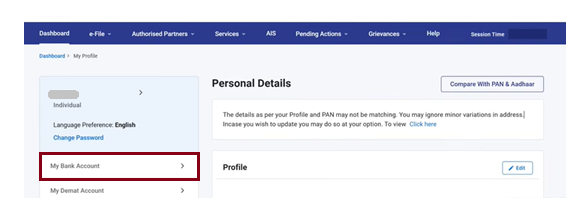
You must ensure that all the active bank accounts, including joint accounts and non-resident accounts are correctly reflected. If any account is missing, update the information immediately along with the correct account number and IFSC code.
How to Add Bank Accounts on the Tncome Tax Portal?
If an active bank account from the relevant years is missing, you can use the option "Add Bank Account" and provide the account number, account type (savings, current, cash credit, overdraft, NRO) and holder type (primary or joint).
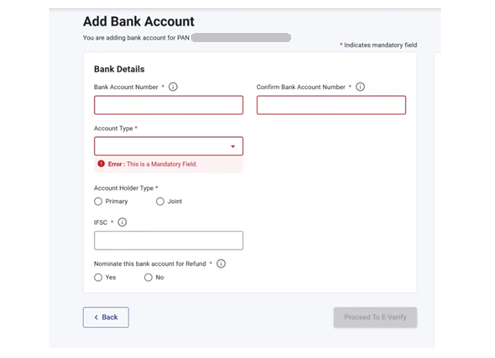
If required, you can nominate this bank for refund purpose and then click on proceed to e‑verify with your Aadhaar OTP.
For Foreign Bank Accounts
Indian residents who hold foreign bank accounts must disclose them in Schedule FA with accurate details to avoid Black Money Act penalties.
How to Report Negative Balances (Overdrafts and Cash Credit) in ITR‑4?
If a current account shows zero but a cash credit or overdraft account linked to the business is negative, then report the bank balance as zero and report the negative Overdrafts and Cash Credit amount under liabilities.
Penalties and Consequences for Non‑Reporting
Failure to list required Indian bank accounts can make your ITR “defective” and attract penalty of ₹10,000 per missing bank account.
The government receives information about foreign financial accounts through international information-sharing agreements such as FATCA and CRS. Non‑reporting of foreign bank accounts can attract penalty of ₹10,00,000.
Conclusion
So, before filing your Income Tax Return for AY 2026-27, you must review all domestic and foreign accounts carefully to avoid penalties, defective returns and compliance issues.











 CAclubindia
