
Indian residents earning income abroad and non-residents earning in India may face double taxation. To avoid this, double taxation avoidance agreements exist. Tax residency certificates are required to prove residency and claim benefits.
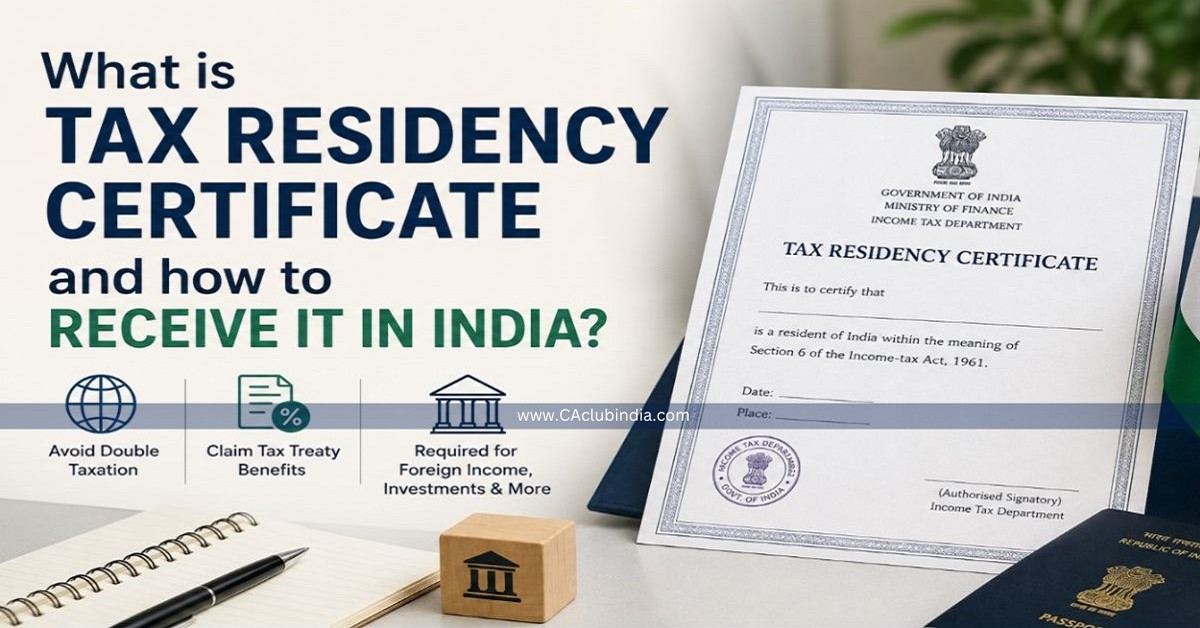
A Double Taxation Avoidance Agreement (DTAA) helps prevent the same income from being taxed in both countries. To claim DTAA benefits, taxpayers must prove their country of tax residence through a Tax Residency Certificate (TRC). In India, the Income Tax Department issues the TRC, confirming that a person is an Indian tax resident for a specific financial year.
Who pays taxes in India?
In India, taxes are paid by individuals, businesses, and other entities that earn income or make taxable transactions. Indian residents pay tax on their global income, while non-residents are taxed only on income earned or received in India. Individuals such as salaried employees, professionals, freelancers, and business owners pay income tax based on their earnings. Companies and firms also pay corporate taxes on their profits. In addition, people pay indirect taxes like Goods and Services Tax (GST) when purchasing goods and services. The taxes collected by the government are used to fund public services such as infrastructure, healthcare, education, and defense.
How to apply for a tax residency certificate in India?
To apply for a Tax Residency Certificate (TRC) in India, a taxpayer must submit an application to the Indian Income Tax Department.
Residents of India can apply online through the Income Tax e-Filing portal by filing Form 42 (previously 10FA) and providing details such as nationality, PAN, residential status, and the purpose for which the certificate is required. After verification of the information and supporting documents, the Income Tax Department issues the TRC in Form 43 (previously 10FB). The certificate serves as proof that the applicant is a tax resident of India for a particular financial year and can be used to claim benefits under Double Taxation Avoidance Agreements (DTAAs) with other countries.
How can NRIs claim relief under a DTAA?
Non-Resident Indians (NRIs) can claim relief under a Double Taxation Avoidance Agreement (DTAA) by proving that the same income has been taxed in both India and another country. To claim this benefit, NRIs must provide documents such as a Tax Residency Certificate (TRC) from the country where they are residents, along with details of foreign income and taxes paid abroad. They can then claim tax relief while filing their income tax return in India, either through exemption or by claiming a credit for taxes already paid in the foreign country. This helps reduce or eliminate double taxation on the same income.
Form 41 (previously 10F) is the form prescribed for providing these details. It must be filed when a non-resident wants to claim relief under a DTAA as provided in section 159 of the Income tax Act.
Filing Form 41 ensures that the supporting information required is properly furnished so that the claim for relief can be made correctly. Form 41 is available on the e-filing portal and can be submitted online, according to the information available on the income tax portal.
Details NRIs require to obtain a residency certificate in their residence country
Non-Resident Indians (NRIs) who want to obtain a Tax Residency Certificate (TRC) from their country of residence must provide certain personal, tax, and residency-related details to the local tax authority. The certificate serves as proof that they are tax residents of that country and is often required to claim benefits under a Double Taxation Avoidance Agreement (DTAA). The specific requirements may vary from country to country, but generally include the following details:
- Full name and nationality
- Passport details and visa or immigration status
- Tax Identification Number (TIN) or equivalent tax number
- Residential address in the foreign country
- Period for which tax residency is claimed
- Proof of residence, such as utility bills or rental agreements
- Employment or business details in the foreign country
- Copies of tax returns or proof of taxes paid, if required
- Bank statements or other supporting financial documents
After verification of these documents, the foreign tax authority issues the Tax Residency Certificate confirming the NRI’s tax resident status for a specific period.
Conclusion
In conclusion, a Tax Residency Certificate (TRC) is an important document for NRIs to claim benefits under Double Taxation Avoidance Agreements (DTAAs) and avoid paying tax on the same income in two countries. To obtain the certificate, NRIs must provide accurate personal, tax, and residency-related details to the tax authorities of their country of residence. Proper documentation and compliance with local tax rules help ensure a smooth process and enable NRIs to benefit from tax relief provisions effectively.









 CAclubindia
