 Niyati
India’s rapid digital transformation over the past decade has established the country as one of the world's most dynamic software and technology markets. Driven by widespread 5G rollout, affordable smart devices, and high-performance cloud networks, modern web applications in India are handling unprecedented levels of real-time traffic. From high-frequency fintech platforms to real-time interactive entertainment systems, backend software development has shifted toward high-concurrency microservice architectures capable of serving millions of concurrent requests with sub-millisecond latency.
Building software that remains resilient under extreme traffic spikes requires sophisticated load balancing, distributed caching, and real-time data streaming engines.
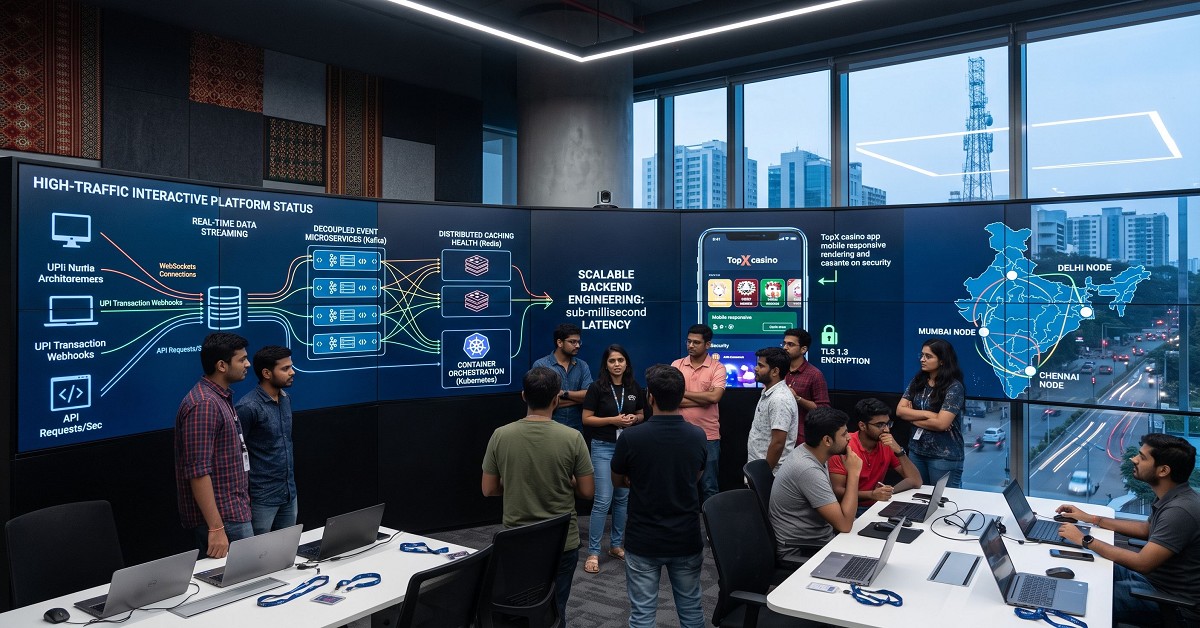
Architectural Frameworks of High-Traffic Interactive Platforms
In modern web development, particularly within interactive entertainment and real-time gaming engines, maintaining uninterrupted session state and deterministic state updates is critical. When thousands of users interact with a digital platform simultaneously, backend engineers rely on asynchronous I/O frameworks, event-driven microservices, and WebSockets to process transactions in real time.
When evaluating contemporary software architectures that combine responsive UI frameworks with robust data security, platforms like TopX casino showcase how modern digital entertainment portals leverage edge caching and optimized server-side rendering to deliver ultra-fast response times for Indian users. These platforms integrate low-latency API gateways that dynamically route database queries, ensuring smooth performance even across constrained mobile networks.
By deploying distributed server infrastructure across regional cloud data centers in India, software engineering teams effectively eliminate single points of failure while optimizing network routing for low-latency client connections.
Core Technologies Driving Scalable Web Development
To build software capable of handling continuous high-volume throughput, enterprise application architects rely on several core infrastructure components:
- Event-Driven Architecture: Utilizing tools like Apache Kafka or RabbitMQ to decouple services and handle high-throughput event processing asynchronously.
- In-Memory Caching: Deploying Redis or Memcached clusters to cache session data and frequently accessed database queries, drastically reducing server CPU load.
- Container Orchestration: Deploying containerized microservices managed via Kubernetes to auto-scale server instances based on real-time traffic demands.
Data Protection, Cryptography, and Mobile Integration
With the implementation of strict data security frameworks across South Asia, end-to-end encryption has become mandatory in modern software engineering. Any interactive web platform handling user credentials or financial interactions must adhere to rigorous cybersecurity standards.
Essential security protocols built into modern software solutions include:
- Transport Layer Security (TLS 1.3): Encrypting all data packets in transit to prevent packet sniffing and man-in-the-middle (MitM) attacks.
- Automated Identity Verification: Integrating secure REST APIs for multi-factor authentication (MFA) and automated identity checks.
- Seamless Payment Integration: Utilizing secure API webhooks to connect smoothly with local Indian payment rails such as Unified Payments Interface (UPI) and digital wallets.
The Future of Software Architecture in South Asia
As technologies like edge computing, machine learning algorithms for real-time fraud detection, and serverless computing become more accessible, the software landscape in India will continue to evolve. Engineering teams that prioritize cloud-native scalability, zero-trust security architecture, and optimized mobile interfaces will lead the next wave of digital platform innovation.
Conclusion
The expansion of India's tech ecosystem highlights the vital role that advanced backend engineering plays in powering modern digital experiences. By combining event-driven microservices, certified cryptographic security, and low-latency network optimization, modern software platforms deliver secure and reliable performance at scale. As user demand continues to grow, robust and scalable web architecture will remain the foundation of successful digital services.










 CAclubindia