
Set against the festive backdrop of Makar Sankranti, this fictional conversation between Arjuna and Krishna creatively compares taxpayers' ambitions to kites soaring in the sky. Through relatable kite-flying metaphors, Krishna explains how modern tax administration, especially GST and Income Tax departments, now firmly controls the "chakri" using advanced technology.
The dialogue explores key regulatory developments such as automated GST registration for small taxpayers, locking of GSTR-3B Table 3.2, the introduction of GST 2.0 with a simplified two-slab structure, revised MSME classification thresholds, and expanded exemptions for small companies. Each reform is symbolically linked to aspects of kite flying-dheel, control, balance, and katakati-making complex tax concepts engaging and easy to understand.
The narrative concludes with a timeless lesson: just as reckless kite flying can cause injury, non-compliance with tax laws can harm taxpayers themselves. The message encourages awareness, discipline, and lawful conduct, reminding readers that sustainable growth comes from flying high while staying within the rules.
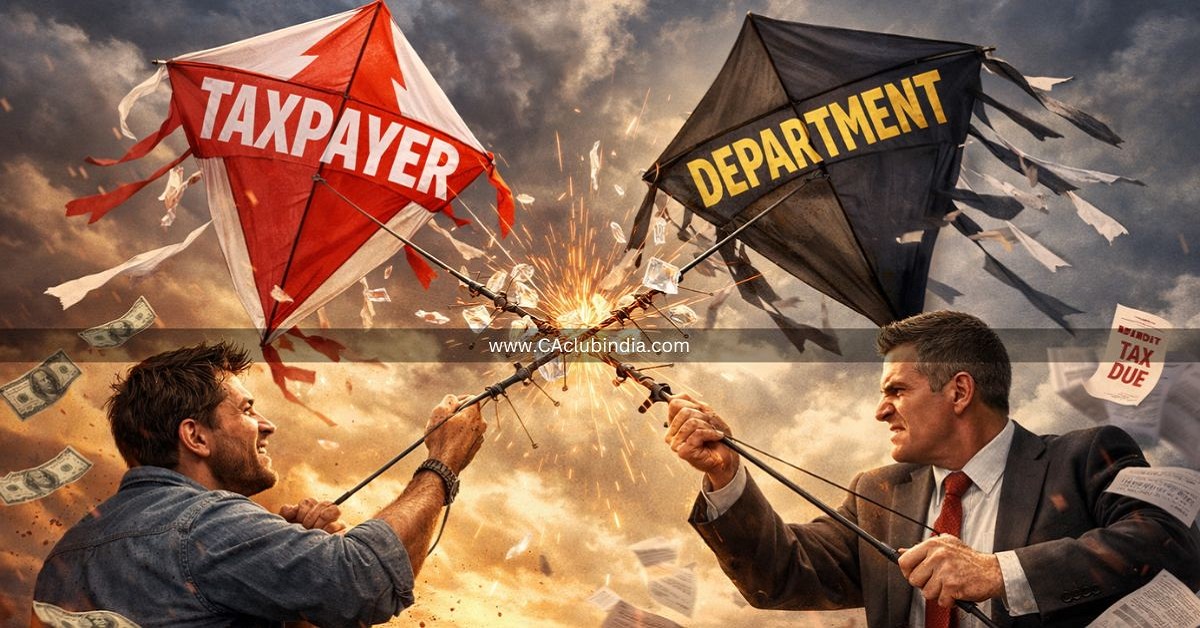
Arjuna (Fictional Character): Krishna, Makar Sankranti is around the corner, and everyone are getting ready to fly their kites in the sky. From children to elderly, everyone is seen having fun flying their Kites. Krishna, how high do you think the Taxpayers Kite will fly this year?
Krishna (Fictional Character): Arjuna, indeed excitement is seen in everyone's eyes on Makar Sankranti. People wait whole year to enjoy this beautiful event with their friends and families. Also, you rightly said about the taxpayer's wish to fly high their kites, but the flight of Taxpayers kite is actually controlled by the department by taking hold of the 'Chakri'. With the use of technology, the department have obtained a firm grip on the 'Chakri' and the Taxpayers kite.
Arjuna (Fictional Character): Krishna, how has the GST department fight the flight of GST kites flown by taxpayers?
Krishna (Fictional Character): Arjuna, the GST department by use of technology have brought in various measures to control the flight of GST kites. Few measures adopted by the department to control the Taxpayers' GST Kites are as below:
1. Automated GST Registration for Small Taxpayers: As small kites are loved by small children to help small taxpayers a new automated GST registration process is implemented to benefit taxpayers with output tax liabilities up to Rs 2.5 lakh per month. This registration will be provided within three working days, benefiting 96% of new applicants and allowing businesses to start their operations smoothly, and has given "Til Gul" to the small taxpayers.
2. Locking GSTR-3B Table 3.2: Just like fierce kite fight unfolds between two competitors, from November 2025, the GST Department will lock certain parts of GSTR-3B, particularly Table 3.2, which will now be auto-populated and cannot be manually changed. This change will help avoid discrepancies between GSTR-1 and GSTR-3B, making the filing process smoother and more accurate, just like the steady control of a kite's flight with the right strings.
3. Introduction of GST 2.0: The new two-slab GST system replaces the previous four slabs, with 5% for essential items and 18% for others. This change is like a kite soaring effortlessly in the wind after being given "Dheel" (ease), allowing businesses to glide smoothly through the simplified tax structure.
Arjuna (Fictional Character): Krishna, how is government keeping check on the Taxpayers' Kites?
Krishna (Fictional Character): Arjuna, just like the GST department the other government departments has brought in various changes for keeping check on the flight of Income Tax Kites which are as follows:
1. Revised MSME Criteria: The thresholds for Micro, Small, and Medium Enterprises (MSMEs) have been updated, with investment limits of Rs 2.5 crore, Rs 25 crore, and Rs 125 crore, and turnover limits of Rs 10 crore, Rs 100 crore, and Rs 500 crore. This allows more businesses to qualify for MSME benefits, reducing compliance burdens and providing smoother growth opportunities, like adjusting the height of a kite for a better flight.
2. Exemption Limits for Small Companies: The paid-up share capital limit has been increased from Rs 4 crore to Rs 10 crore, and the turnover limit has risen from Rs 40 crore to Rs 100 crore. This change lets more small companies benefit from reduced compliance requirements, avoiding "katakati" (cutting of Kites) under regulatory compliances.
Arjuna (Fictional Character): Krishna, what should we learn from this?
Krishna (Fictional Character): Arjuna, these changes are like the winds guiding a kite as they require understanding, preparation, and direction. The key lessons are to stay informed about the new GST and Income Tax changes. Flying kite with string coated with glass has threat of cutting hand, there may be scratch on hand. Therefore, the taxpayers should follow the rules. They should not take the law in hands. Else they may get in trouble and hurt themselves.










 CAclubindia
