 CA Umesh Kumar Jethani
Many people assume that filing an Income Tax Return (ITR) is relevant only for salaried employees or business owners. However, this is not always true. A homemaker may also have taxable income arising from investments, rent, interest, or other financial activities. In such cases, understanding whether an ITR needs to be filed becomes important.
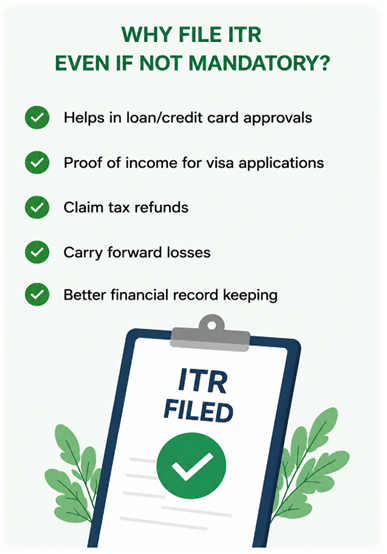
Even if filing is not mandatory, submitting an ITR can provide several financial advantages, such as easier loan approvals, carrying forward certain losses, claiming tax refunds, and establishing proof of income.
Is Filing an ITR Mandatory for a Housewife?
A housewife is required to file an Income Tax Return if her total income exceeds the basic exemption limit prescribed under the Income Tax Act.
For Financial Year 2025-26 (Assessment Year 2026-27), the basic exemption limits are as follows:
Under the New Tax Regime
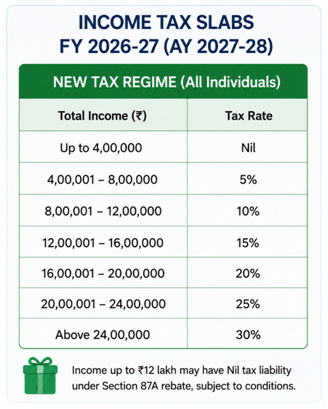
Under the new regime, individuals having total income up to Rs 12 lakh may effectively have no tax liability due to the rebate available under Section 87A, subject to prescribed conditions. However, filing requirements may still apply if the total income exceeds the basic exemption limit or other specified conditions are triggered.
Under the Old Tax Regime
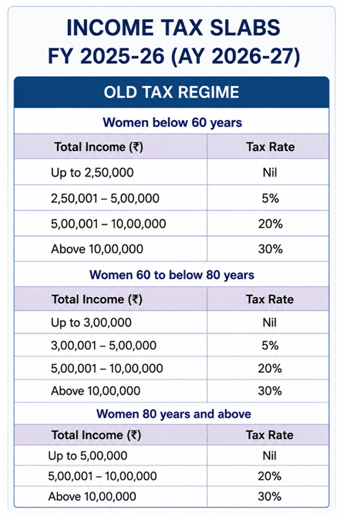
Situations Where a Housewife May Need to File an ITR
Apart from crossing the exemption limit, filing may also become mandatory in certain situations prescribed under the Income Tax Act, including:
- Depositing more than the specified amount in one or more current accounts during the financial year.
- Incurring high-value expenditure on foreign travel.
- Paying electricity bills exceeding the prescribed threshold.
- Having tax deducted at source and seeking a refund.
- Owning foreign assets or having signing authority in overseas accounts.
- Meeting any other conditions notified by the Income Tax Department.
Common Sources of Income for Homemakers
Although homemakers may not receive a regular salary, they can earn income from several sources.
1. Interest on Bank Deposits and Fixed Deposits
Interest earned from savings accounts, recurring deposits and fixed deposits held in the homemaker's own name is taxable in her hands.
2. Rental Income
Income earned from letting out a residential or commercial property is taxable under the head "Income from House Property" after claiming eligible deductions.
3. Dividends and Capital Gains
Returns from mutual funds, shares and other investments may generate dividend income or capital gains, which are taxable according to applicable provisions.
4. Freelancing or Home-Based Activities
Income earned through tuition classes, online work, consultancy, handicrafts, baking, tailoring, content creation or any other home-based activity is taxable as business or professional income.
5. Gifts Received
Gifts received from specified relatives, including spouse, parents, siblings and children, are generally exempt from tax. However, gifts received from non-relatives may become taxable if their aggregate value exceeds Rs 50,000 during a financial year.
What About Household Expenses Given by the Husband?
Money given by a husband to his wife for meeting normal household and family expenses is generally treated as a personal arrangement and is not regarded as taxable income in the hands of the wife.
However, if the husband transfers money as a gift and that amount is invested, the tax treatment requires careful consideration because of the clubbing provisions under the Income Tax Act.
Understanding Clubbing Provisions
Under Section 64(1)(iv) of the Income Tax Act 1961, if a husband transfers assets or money to his wife without adequate consideration and the wife earns income directly from such transferred assets, the income may be clubbed with the husband's income.
For example, if a husband gifts Rs 10 lakh to his wife and she invests the same amount in a fixed deposit, the interest earned on that fixed deposit may be taxable in the husband's hands.
However, income earned from reinvestment of such interest or income generated from subsequent accretions may be taxable in the wife's hands. Due to the complexity of these provisions, professional advice may be helpful in specific cases.
Tax Deductions Available to Homemakers
Homemakers can also claim eligible deductions under the Income Tax Act, subject to the tax regime opted for and fulfilment of prescribed conditions.
Section 80D - Health Insurance Premium
Deduction can be claimed for medical insurance premiums paid for self, spouse, dependent children and parents, subject to the prescribed limits.
Section 80G - Donations
Donations made to approved charitable institutions qualify for deduction, depending upon the category of the institution and conditions specified.
Section 80TTA - Savings Account Interest
Individuals below 60 years of age can claim deduction of up to Rs 10,000 on interest earned from savings accounts.
Section 80TTB - Senior Citizens
Senior citizens can claim deduction of up to Rs 50,000 on eligible interest income from deposits with banks, post offices and specified institutions.
Why Should a Housewife File an ITR Even If It Is Not Mandatory?
Voluntary filing of an ITR can be beneficial in several ways:
How to Calculate Taxable Income
To determine taxable income, a homemaker should:
- Calculate income from all taxable sources.
- Identify income covered under clubbing provisions, if applicable.
- Claim eligible deductions and exemptions.
- Choose between the old and new tax regimes after comparing the benefits.
- Compute the final tax liability and file the appropriate ITR form.
Using an income tax calculator or seeking professional assistance can simplify this process and help avoid errors.
Conclusion
Being a homemaker does not automatically exempt a person from income tax compliance. If income exceeds the prescribed limits or specific reporting conditions are met, filing an Income Tax Return becomes mandatory. Even where there is no legal obligation, voluntary filing can offer long-term financial benefits.
Understanding the nature of income, the availability of deductions, and the impact of clubbing provisions can help homemakers remain compliant while managing their finances efficiently.











 CAclubindia