
What is GST?
The GST is a type of tax that applies to every product you see. It is a multi-stage, destination-based tax imposed on every value addition and applicable to the entire country. It has superseded chiefly other indirect taxes in India, such as excise duty, VAT, and services.
Types of GST
There are four types of GST available in India. They are:
- Integrated Goods and Services Tax (IGST)
- State Goods and Services Tax (SGST)
- Central Goods and Services Tax (CGST)
- Union Territory Goods and Services Tax (UTGST)
What is the GST Return?
A GST Return is a document including statistics concerning the profits/sale or fee and purchase, which a taxpayer need to file with administrative tax government. This is used to calculate the internet tax legal responsibility by the authorities.
Under GST, a ordinary taxpayer is required to provide month-to-month returns and an annual return. Moreover, there are returns for the taxpayer registered under diverse schemes such as composition scheme, taxpayer registered as Input Service Distributor, non-resident taxpayer, a accountable individual to deduct or gather tax (TDS or TCS), and a person granted Unique Identification Number.
Who has to file a GST return?
Every registered person need to file the GST return, monthly, quarterly, and annually based on their business type.
Moreover, firms established under intra state whose turnover is more than 40lakhs or 20 lakhs in some states or doing inter state supply are liable to complete the filing for GST returns as mentioned by the GST council and Income Tax Department.
GSTR-1 (Outward Supply Return)
GSTR-1 is the return that businesses are required to file to report all details of outbound supplies of goods and services. This includes invoices and notes issued for sales transactions during the tax period. All GST registered normal taxpayers including casual taxable persons are required to file GSTR-1.
Frequency of Return filing
- Monthly: By 11th day of every month for businesses with annual total turnover exceeding Rs. 5 million or those not covered by the QRMP scheme.
- Quarterly: By the 13th day of the month following each quarter for businesses under the QRMP scheme.
Steps to file GSTR-1
- Login to the GST Portal: Visit https://www.Gst.Gov.In/ and input your login credentials.
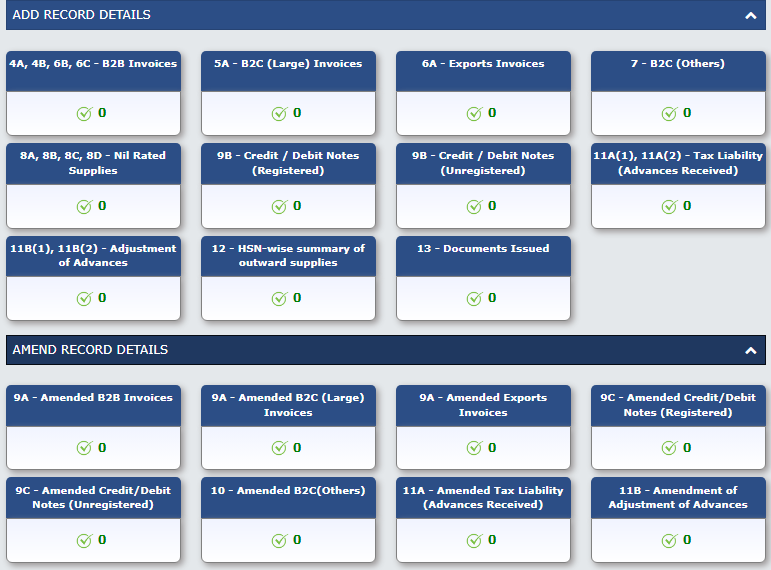
- Navigate to GSTR-1: Go to Services = Returns = Returns Dashboard. Click PREPARE ONLINE in the GSTR-1 section.
- Add your outward supplies: Regular filing: Enter information of all your income invoices, debit notes, and credit notes issued for the duration of the applicable tax period. Nil submitting: If you had no outward materials, surely click on Nil File GSTR-1.
- Review and finalize: Verify all information: Double-take a look at for mistakes and inconsistencies. Generate precis: Click GENERATE GSTR1 SUMMARY at the lowest. Preview and verify: Review the generated GST return and confirm its accuracy.
- File your return: Choose your option: Click File with DSC or File with EVC (relying to your desire). Authenticate: Enter your DSC PIN or EVC code to digitally sign the return. Confirmation: You'll obtain a confirmation message with a reference variety.
Conclusion
GST return is important for businesses registered under the Goods and Services Tax (GST) Act. They are like report card of your business summarizing your sales, purchases, input tax credit claimed, and overall tax liability for a specified period.
The author is an Income Tax, Accounting and GST Practitioner











 CAclubindia
