
On March 13th, there is a looming possibility of yet another bank collapse, potentially surpassing the severity of the Silicon Valley Bank crash.
Here's a comprehensive overview
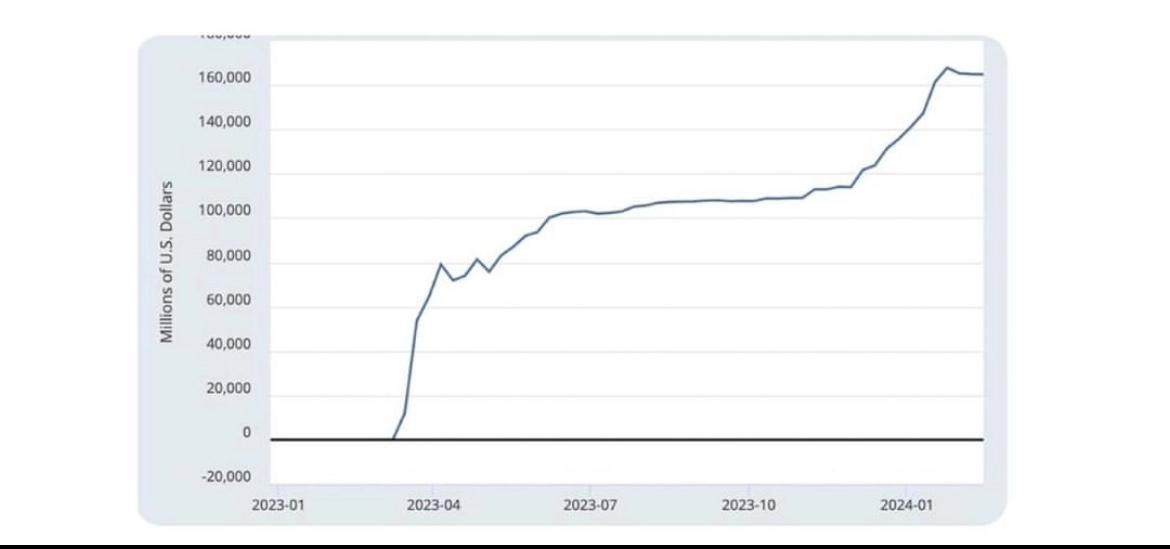
Following the SVB collapse, the FED introduced the Bank Term Funding Program (BTFP) to facilitate easy cash access for banks, ensuring they could meet depositor demands. This bailout initiative concluded on March 11th, 2024.
The predicament arises when observing the graph depicting continuous borrowing from this fund by banks. The crucial question emerges: did these banks genuinely require the funds, or were they simply exploiting the FED's favorable terms? The answer remains elusive.

The ramifications are significant for the economy, as banks might lose access to these cash reserves, potentially jeopardizing customer safety and triggering another bank run.
My anticipation is that the FED will announce a preemptive measure, although they may avoid labeling it as a "Bailout." This step becomes imperative, as small and regional banks find themselves in dire straits without the support of the funding program.
To understand their plight, these banks invested in US government bonds when interest rates were near 0%. As rates rise, bond values plummet. For instance, a 10-year bond purchased at 0% interest becomes worth half if rates soar to 5%. Compounding the issue, these smaller banks are also the primary lenders to US commercial real estate, which has seen a substantial decrease in value since the approval of mortgages.
Factors like post-pandemic remote work and the rise of e-commerce have diminished the need for offices and stores. The options facing these banks are limited to shutting down, continuous government bailouts, or merging with major institutions like JP Morgan or Bank of America. Consequently, the latter option would contribute to the further enlargement of big banks.
For individuals with funds in small banks, it's crucial to note that deposits are insured by the FDIC up to $250,000. If your account exceeds this limit, taking precautions and managing your funds accordingly is advisable.











 CAclubindia
