
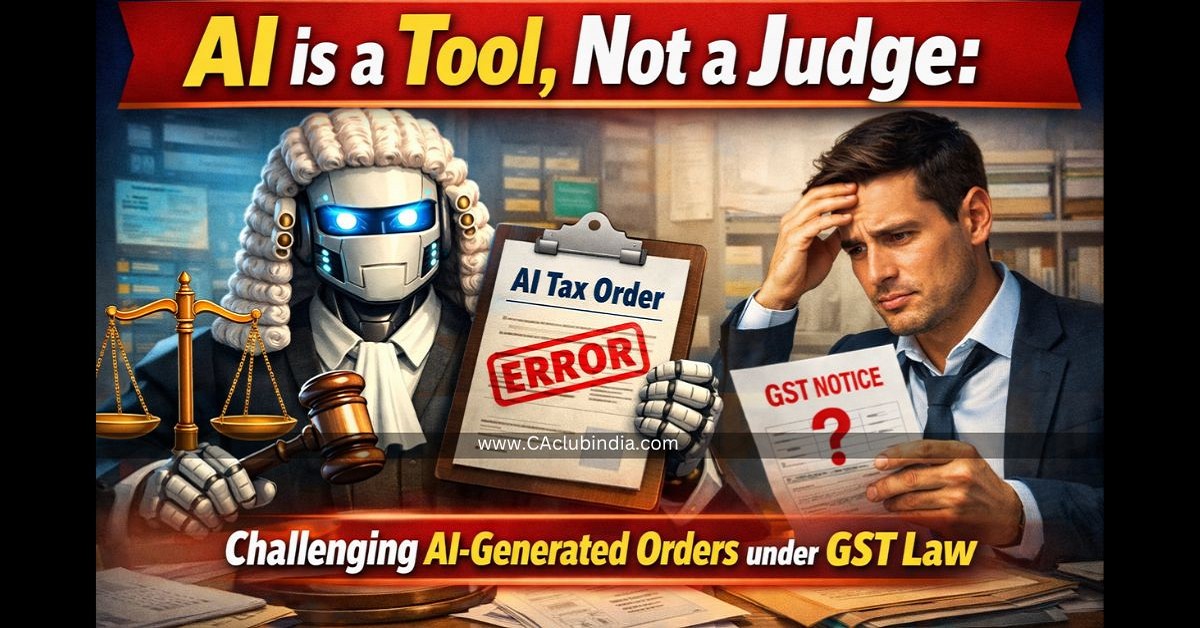
The Gujarat High Court essentially flagged a dangerous shortcut: authorities relying on AI-generated citations without verifying whether those judgments were even relevant to the matter at hand.
That’s not just sloppy; it undermines the integrity of quasi-judicial proceedings. Here are the key operational takeaways and the way taxpayers can contest such Orders:
Practical Implications
- Verification is non-negotiable: Any AI-generated case law or citation must be cross-checked against the actual judgment text. Blind reliance is legally indefensible.
- Parameters for reliance: Courts are signalling the need for prescribed standards, quasi-judicial authorities may soon be required to document how they validated citations before using them.
- Risk of flawed orders: Orders based on irrelevant or incorrect judgments can be challenged and set aside, leading to delays, reputational damage, and litigation costs. Taxpayers may use these grounds to contest such cases.
Compliance Checklist for Businesses
1. Scrutinize citations in orders
- Always check whether the cited judgments actually relate to your facts.
- Flag discrepancies early in defense submissions.
2. Maintain a verified case law repository
- Use AI tools for discovery, but store only human-validated judgments for operational reliance.
3. Document objections
- If authorities rely on irrelevant citations, record this in your submissions—it strengthens grounds for appeal or writ petitions.
4. Prepare for new standards
- Anticipate directions from courts prescribing parameters for reliance on judgments.
- Train teams to distinguish between AI-suggested references and authoritative case law.
This case is a wake-up call: AI can accelerate research, but in law, authority comes only from verified judgments. Courts are likely to push for a hybrid model—AI for discovery, human validation for reliance. For tax professionals, that means building processes where AI is a tool, not a substitute for legal reasoning.











 CAclubindia