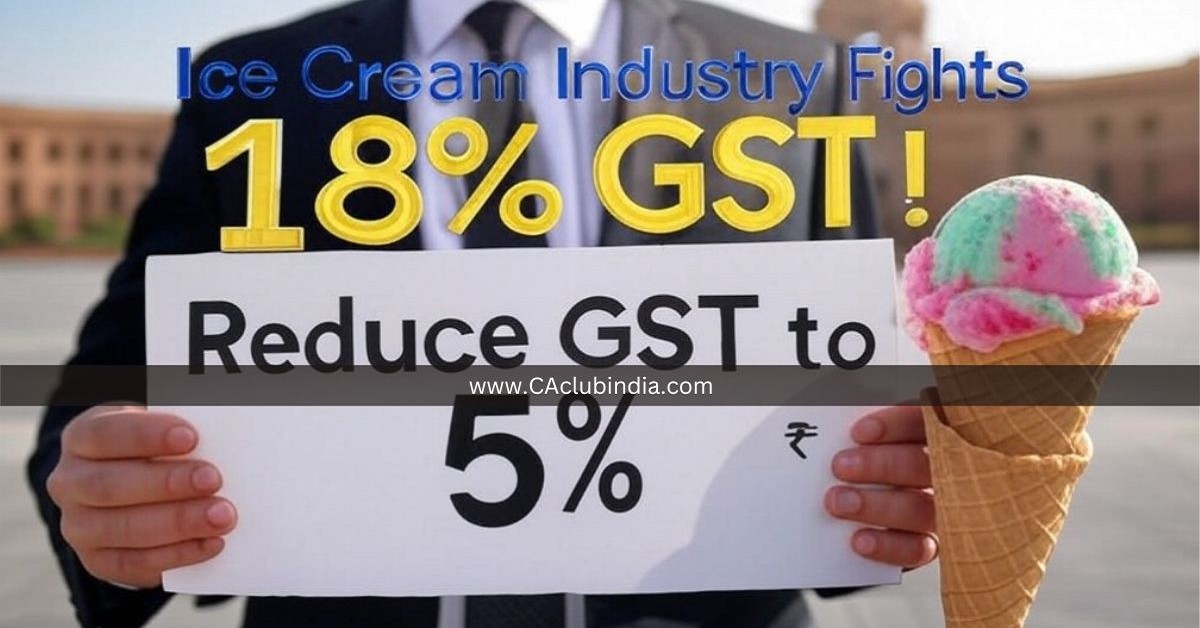
In a unique and persuasive pitch to the government, the Indian Ice-cream Manufacturers' Association (IICMA) invoked a quote famously attributed to Steve Jobs - "If you want to make everyone happy, don't be a leader, sell ice cream" - to make a case for reducing the GST on ice cream from 18% to 5%.
During a recent meeting with Finance Minister Nirmala Sitharaman, IICMA representatives argued that ice cream should not be taxed at a higher rate than similar dairy products. The association pointed out that milk-based sweets attract only 5% GST and flavoured milk falls under 5% or 12%, despite having nearly identical ingredients - fat, milk solids-not-fat (SNF), and sugar - with the only difference being the physical form.
Led by industry veteran Sudhir Shah, IICMA submitted a detailed representation to the finance ministry, highlighting that the 18% GST slab not only misrepresents ice cream as a luxury item but also discourages consumption and fuels tax evasion. According to their estimates, the current GST collection from ice cream sales amounts to ₹3,600 crore annually.
A Case for Affordability and Accessibility
Refuting the perception of ice cream as a luxury good, the association emphasized that over 80% of ice cream sold in India is priced below ₹30 per serving - with many products available for as little as ₹5 or ₹10, even in remote rural areas. "The luxury tag is often based on premium parlours that charge for ambience rather than the ice cream itself," said Shah.
The association warned that maintaining an 18% GST risks burdening both manufacturers and consumers, especially smaller players catering to mass markets. They further argued that lowering the tax could actually increase consumption, improve compliance, and minimize evasion - offsetting any potential revenue loss.
Nutrition Over Indulgence
Taking the conversation beyond taxation, IICMA pitched ice cream as a supplementary source of nutrition. "Ice cream offers essential nutrients like proteins, fats, and energy, especially for children and undernourished populations," said the association. "It shouldn't be viewed merely as an indulgence, but as an accessible nutritional food."
The industry also stressed the psychological benefits of ice cream, noting its popularity during extreme weather conditions. "A reduced tax rate can help promote emotional well-being and upliftment," the association added, linking their appeal to both economic and public health dimensions.
Potential Revenue Impact
While the CBIC had earlier clarified - based on a 2021 GST Council recommendation - that ice cream sold through parlours would attract 18% GST, IICMA argued that bringing it under the 5% bracket would result in an estimated revenue loss of ₹2,600 crore. However, they maintained that increased consumption and reduced tax evasion could significantly offset this loss over time.
As the government considers pre-budget industry inputs and reviews GST classifications, IICMA's unusual but heartfelt plea could reopen discussions around what constitutes a luxury in a rapidly evolving consumption landscape.











 CAclubindia
