The Goods and Services Tax Network (GSTN) has released the IMS Offline Utility (Version 1.0) . This Excel-based tool allows taxpayers to conveniently take action on the IMS (Invoice Management System) dashboard without requiring continuous internet access.
The newly launched utility is expected to significantly benefit taxpayers dealing with large volumes of data, offering flexibility and efficiency in handling IMS-related tasks offline.
Key Highlights of IMS Offline Utility v1.0
- Excel-Based Functionality: The utility is designed in a familiar Excel format, making it easy to use for taxpayers and professionals.
- Offline Access: Users can download and work on IMS data offline, reducing dependency on real-time portal access.
- Efficient Data Handling: Particularly useful for bulk actions and data reconciliation, improving overall productivity.
Download and File Safety Instructions
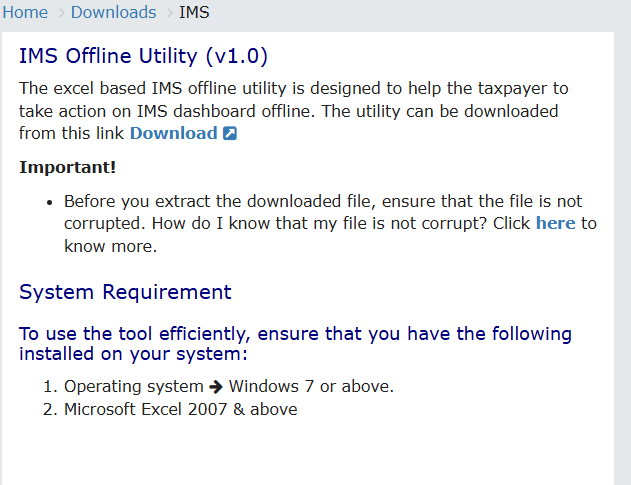
Taxpayers can download the IMS Offline Utility from the official GST portal. However, users are advised to verify the integrity of the downloaded file before extracting it.
Important Tip: Ensure the file is not corrupted before use. The GST portal provides guidance on how to check file integrity to avoid operational issues. Click here to know more.
System Requirements for Smooth Usage
To ensure optimal performance, users must meet the following system requirements:
| Component | Requirement |
|---|---|
| Operating System | Windows 7 or above |
| Software | Microsoft Excel 2007 or above |
Why This Matters for Taxpayers
The introduction of the IMS Offline Utility marks another step toward digitization with flexibility. By enabling offline functionality, GSTN addresses common issues such as slow portal access, connectivity challenges, and bulk data processing limitations.
Tax professionals and businesses can now streamline their workflow, reduce turnaround time, and improve accuracy in compliance-related tasks.
Conclusion
The IMS Offline Utility v1.0 is a practical addition to the GST ecosystem, especially for taxpayers seeking efficiency and convenience. As compliance requirements continue to evolve, such tools play a crucial role in simplifying processes and reducing operational friction.











 CAclubindia