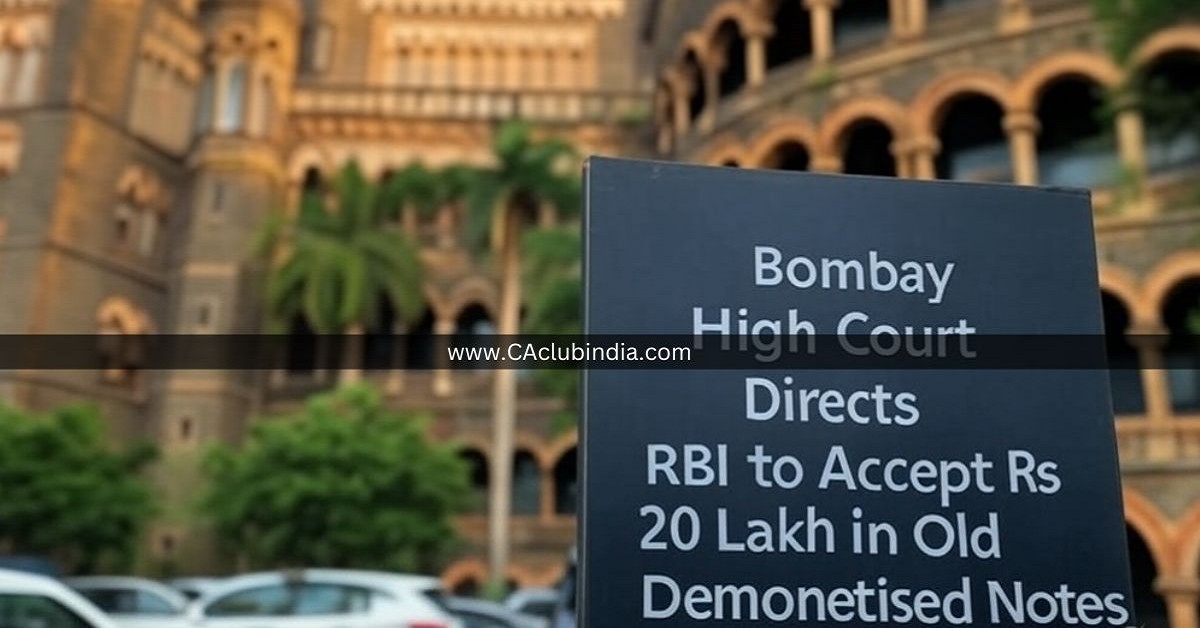
The Bombay High Court has directed the Reserve Bank of India (RBI) to accept Rs 20 lakh in old demonetised Rs 500 and Rs 1000 currency notes that were confiscated from a group of Kolhapur residents during an Income Tax raid on December 26, 2016.
The court found it unjust to penalize the petitioners, as the cash was in government custody when the deadline for depositing old notes (December 31, 2016) expired. The petitioners, represented by advocate Udaya Sankar Samudrala, received the confiscated amount back on January 17, 2017, but the RBI refused to accept the deposit, citing the Specified Bank Notes (Cessation of Liabilities) Act, 2017.
Key Highlights of the Case
- Demonetisation Background: The government demonetised ₹500 and ₹1000 notes in November 2016, setting a deadline of December 31, 2016, for deposits.
- IT Raid & Confiscation: The petitioners' money was seized during an IT raid on December 26, 2016, just days before the cut-off date.
- Delayed Return of Money: The confiscated cash was released to them on January 17, 2017, after the deadline, making it impossible to deposit.
- RBI's Rejection: The RBI refused their deposit request, arguing that deposits beyond the deadline required submission of serial numbers, which the authorities had failed to record.
- Court's Verdict: The division bench of Justices A.S. Chandurkar and M.M. Sathaye ruled on February 27, 2025, that the petitioners were not at fault and ordered the RBI to accept the ₹20 lakh deposit within a week.
Legal Implications & Precedent
This ruling sets an important precedent for cases where citizens were unable to deposit demonetised currency due to circumstances beyond their control. It also highlights procedural lapses in handling seized currency during tax investigations.
With this verdict, the Bombay High Court has reinforced fairness in financial regulations, ensuring that innocent citizens are not deprived of their rightful money.












 CAclubindia