
We see a deluge of Startups coming everyday. Most of them follow a business model, wherein
- A group of youngsters come up with an idea,
- Present That idea to a VC (Venture Capitalist) to get Funding.
- Use the VC money to offer discounts to gain customers at a fast pace.
Most of the Startups you see grow their business by offering discounts as compared to your neighbourhood vendor.
But they are doing so, at the cost of burning VC money. They are incurring huge losses. Interestingly, many a times their purpose is not to run the business. Most of them just want to build customer database, sell away the business to someone and run away.
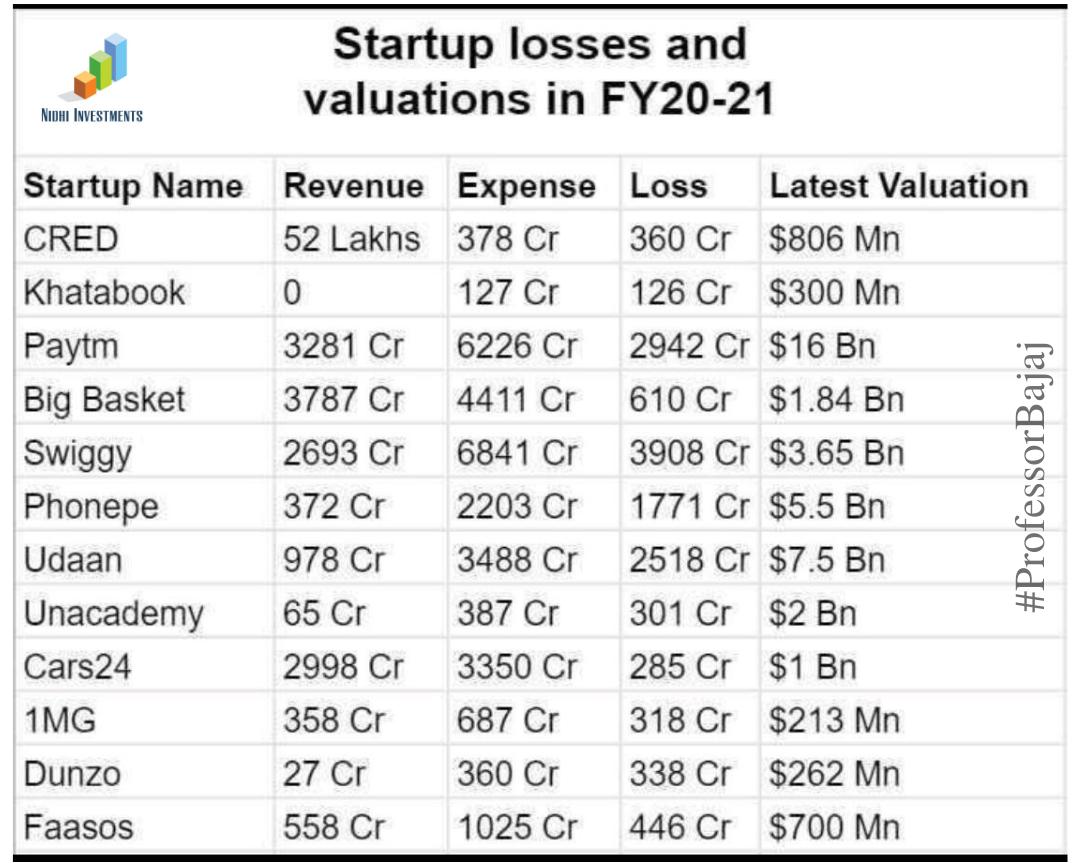
The reason for failing is very simple. They are not gaining customers because of better quality of products or services. They are gaining customers by offering artificial discounts, which cannot be offered lifelong.
The day they remove discounts and start offering at market price, they start losing customers. Their only hope is, your neighbourhood vendor doesn’t survive till that time, so that they can monopolize.
Now the question is, whether this situation will be desirable for customers and investors.
Sane Customers and Investors will always look out for businesses that follow a sustainable business model.
Other than this, there are few more reasons, why most of these Startups fail?
1. Chaar Din Ki Chaandni
Their importance grows during particular crisis situation (Example Demonetisation, Lockdown etc). But once things are normal, their importance diminishes.
2. No Customer Service
Many of them don't really bother about serving their customers well. This is because they see new customers coming in every day. This ignorance to customer service deprives them of loyal customers.
3. Backstabbing the Customer
Some of them try to lure customers by offering freebies or low costs. But behind the scenes, they sell the crucial data of the customers which results in fraudulent transactions. This bursts their image overnight. Most of the discount brokerage houses fall in this category.
4. Copy Cats with No Sharp Claws
Most of them just want to copy someone else and try to gain customers by selling at loss. But they do not have any competitive edge, and thus they fail.
5. Doing it Just for Fun
It sounds counterintuitive, but many of them DON’T WANT to build a successful business. They just do it for thrill at the cost of VC money.
6. Looking For Shortcuts
Some of them want to be an overnight success. There are companies that have become successful over 10-15-20 years. But if you look for shortcuts, you are most likely to fail.
It is definitely encouraging to see that the youth of India wants to become entrepreneurs. We need more entrepreneurs in the country. But to become a successful entrepreneur, you need some basic skills, a long-term mindset and proper guidance. It could be a good idea to look out for an entrepreneurship mentor who can handhold you in your journey to build a successful business.
We look forward to your valuable comments and feedback.
The Author Prof. Saurabh Bajaj (BE, MBA, FRM, CFGP, AFGP) is CEO with Nidhi Investments, Mumbai. His articles have a readership from 78 Countries across the Globe.
The author can also be reached at CEO@nidhiinvestments.com
(The views mentioned in the article are personal opinion of the author)










 CAclubindia
