
Rule 14A: The Simplified GST Registration That Isn't So Simple?
Here is an expanded, detailed articulation of the flaws and operational nuances in the newly introduced CGST Rule 14A, integrating official notification details and expert commentary for deeper insight.
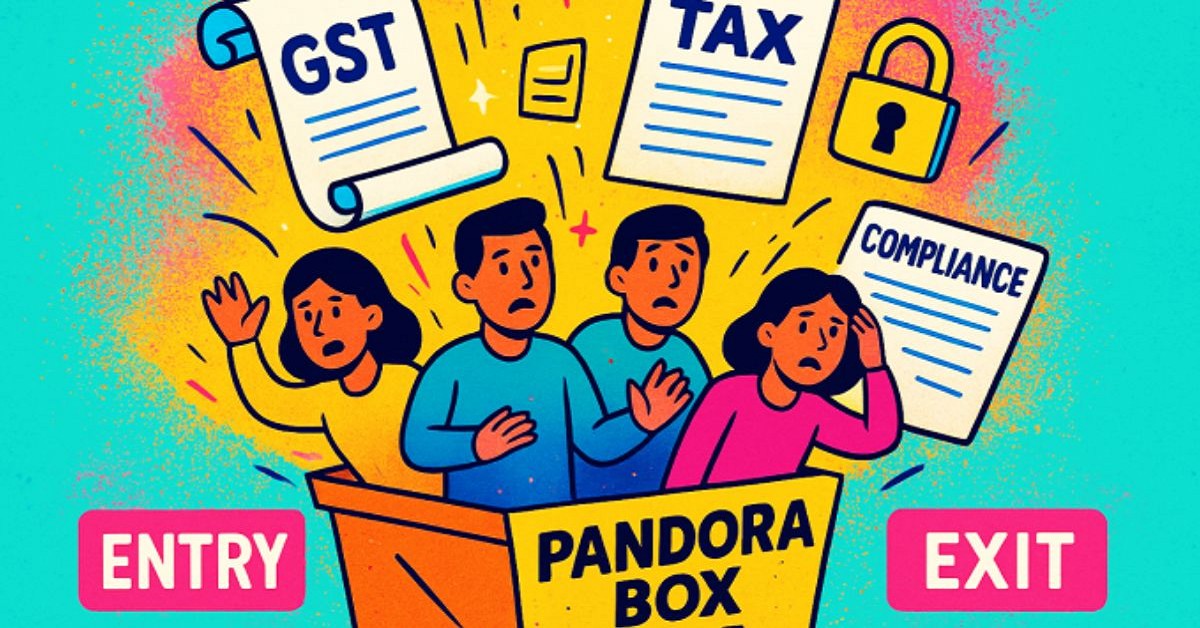
How the System Operates
Rule 14A establishes an optional, electronic registration channel for small taxpayers whose monthly output tax liability on supplies made to registered persons (B2B) does not exceed ₹2.5 lakh.
Key features:
- Registration requires Aadhaar authentication for the primary signatory and one promoter/partner.
- The GSTIN is intended to be issued within three working days, automatically through the GSTN portal, if the applicant clears risk parameters prescribed under Rule 9A.
- Withdrawal is voluntary, via Form REG-32, with the officer's approval issued in Form REG-33.
Operational Details
- Form Changes: REG-01 now includes an opt-in for Rule 14A; REG-02-05, REG-32, and REG-33 are amended to integrate its workflow.
- Exit Conditions: Withdrawal is permitted (using REG-32) only if minimum returns are filed three months before 1 April 2026 or at least one tax period thereafter. No pending cancellation, amendment, or return backlogs are allowed.
- Registration Limitations: Only one registration per State/UT per PAN under Rule 14A.
- Automation & Risk Profiling: Rule 9A empowers the GSTN to apply data analytics and risk scoring. However, high-risk applicants may still face physical verification despite Aadhaar authentication.
Deep Dive - Core Structural Flaws
Complexity for Small Taxpayers
- Output Tax Liability vs. Turnover: The ₹2.5 lakh ceiling is defined in terms of output tax, not sales. Applicants must therefore compute estimated liability in advance, factoring in rate slabs of 5 %, 12 %, 18 %, or 28 %. This technical framing alienates micro-enterprises, who typically plan in terms of turnover, not tax math.
- B2C Omission Risks: The threshold only considers supplies to registered persons (B2B). A trader with low B2B but large B2C sales can still qualify creating asymmetric eligibility and confusion for mixed-supply businesses. Further, the rule is silent on aggregation should sporadic B2B invoices across months be cumulatively tracked? The absence of explicit aggregation logic increases interpretational risk.
The Withdrawal & Compliance Trap
- No Auto-Migration, No Grace Period: The scheme has no built-in tenure or automatic conversion to a regular registration when growth occurs. The taxpayer must self-monitor and file REG-32 immediately upon exceeding the threshold. A delay of even one return period constitutes contravention under Section 29(2)(e), enabling direct cancellation and potential ITC reversal for customers.
- Portal Silence: The GST portal provides no warning or alert when output tax nears ₹2.5 lakh. Micro-enterprises relying on basic accounting tools risk breaching limits unknowingly.
Officer Discretion and Systemic Inequality
Despite the "electronic" label, human discretion remains central. Officers retain final say during withdrawal review and risk-based scrutiny under Rule 9A.
This reintroduces variability and potential bias for instance, applicants from Tier-2 or Tier-3 regions, or those without professional assistance, may face longer delays or additional queries.
Worse, no statutory timeline binds the officer to act on a REG-32 application. A taxpayer can file correctly, stay compliant, and yet remain "trapped" under Rule 14A until an officer issues REG-33.
Technical and Practical Hazards
- Form Dependencies: Each stage (REG-01 → REG-03 → REG-04 → REG-32 → REG-33) is interlocked. If any link stalls in the GSTN workflow or at the officer's end, the registration hangs mid-process, leaving the applicant in legal limbo.
- Audit Trail Exposure: Inconsistent responses to REG-03 notices or delayed withdrawal orders can snowball into prolonged audit trails. Small taxpayers with limited documentation capacity are especially vulnerable.
- Digital Literacy Gap: Aadhaar-based authentication and online-only filing, though efficient for urban applicants, may alienate rural entrepreneurs. Language barriers and limited portal usability amplify exclusion risks.
Amplified Consequences
- Section 29 - Immediate Cancellation: Exceeding the B2B tax cap or failing to withdraw can trigger direct cancellation, often without a remedial window.
- Collateral Damage: Once cancelled, the dealer's customers lose ITC eligibility on their purchases, causing ripple effects across the supply chain.
- Compliance Reputation: GST behaviour now influences fintech credit models and business scoring systems. Frequent lapses can hinder loans, vendor onboarding, and digital credit access.
Recommendations for User-Centric Reform
- Use Turnover as the Threshold Metric, not tax liability aligns with the language of composition schemes.
- Automate Alerts: Introduce real-time portal warnings as taxpayers approach 80 % of the limit.
- Define Tenure: Establish an annual review or auto-migration trigger to prevent indefinite stays under Rule 14A.
- Fix Officer Timelines: Mandate 15-day disposal for REG-32/33 actions; enable deemed approval if delayed.
- Improve Accessibility: Offer multilingual, pictorial guides and calculator widgets to help applicants self-assess eligibility.
- Transparency Dashboard: Publish anonymized data on approvals, delays, and rejections to enhance accountability.
Final Perspective
Rule 14A is a well-intentioned attempt to accelerate business onboarding but its execution reflects regulatory half-design. The language assumes digital literacy, compliance maturity, and constant self-monitoring traits most small businesses do not yet possess.
In essence, Rule 14A promises "registration in three days," but offers no clarity for the 300 days that follow. Until its operational ambiguities are resolved, it risks becoming not a "simplified scheme," but a simplified entry point into complex compliance.
The author can also be reached at Adv.sunilsharma@outlook.com











 CAclubindia