
Detailed information in revised Form DPT-3 for exempted deposits
Ministry of Corporate Affairs (MCA) has vide notification dated 29th August, 2022 amended the Companies (Acceptance of Deposits) Rules, 2014 and a new format of Form DPT-3 & DPT-4 was introduced.
The revised part of Form DPT-3 mainly deals with Deposit accepted from Public. One significant change in respect of exempted deposits has also been made in the Form.
Point No 15 of the Form DPT-3 requires information about Particulars of receipt of money or loan by a company but not considered as deposits, at the end of financial year, in terms of clause (c) of sub-rule 1 of rule 2 of the Companies (Acceptance of Deposits) Rules, 2014 also called as "Exempted Deposits”

Under the old Form DPT-3, category of exempted deposit and amount of exempted deposit outstanding at the year-end was required to be given.
However, the new Form DPT-3 required following details
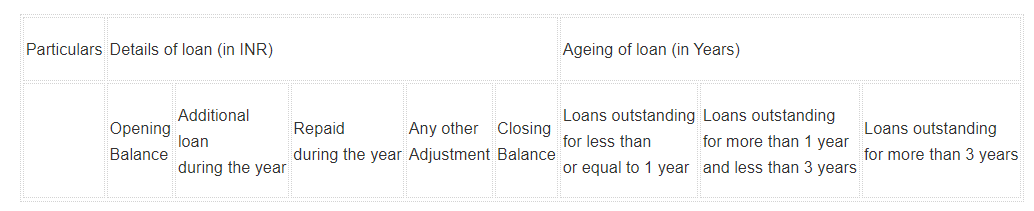
The new form requires opening balance of amount of exempted deposits, any addition thereof, any repayment, any other adjustment and closing balance.
Under the old form only closing balance as on 31st March was required to be disclosed but new Form will capture all the transaction made during the year in relation to the exempted deposits/loans.
Further, the ageing of deposits should also be given. Outstanding for one year, three years and five years should be disclosed.
In the Point no 15 of the Form DPT-3, it uses the word "Details of loan". This creates confusion whether only information of loans to be given or all the types of exempted deposits should be given such as advance from customer, security deposit.
As per my view, we have to disclose the complete details of all types of deposits and word Loan should be construed in contest of exempted deposits.
Further, all the fields of point No 15 of Form DPT-3 are mandatory. Therefore, it appears the that MCA wants information for all types of exempted deposits and not limited Loans.
The new Form DPT-3 is applicable from the date of the publication in the Official Gazette i.e. 29th August, 2022.
Ideally, the Form should be applicable for the financial year 2022-23 onwards but that is not the case here. The web-based form has already been introduced and it requires all the information even if you are filing for the financial year 2021-22.
Though, the filing date of Form DPT-3 for the year 2021-22 is already over, the MCA should have allowed filing under the old form for all the years prior to financial year 2022-23.
Conclusion
Nonetheless, we have new this form DPT-3 which required more data & figures which will create challenges for the companies as well as the professionals to file the form in prescribed time period as the filing date of DPT-3 is 30th June and it is very difficult to get the data as Audits may not be completed till the time and even may not be started for some companies.










 CAclubindia