
Individuals now need to be aware of the rules regarding cash transactions as you cannot accept or give more than Rs 20,000 in cash for loans, deposits or specified sums, as exceeding specified limits can lead to a 100% penalty from the Income Tax Department.
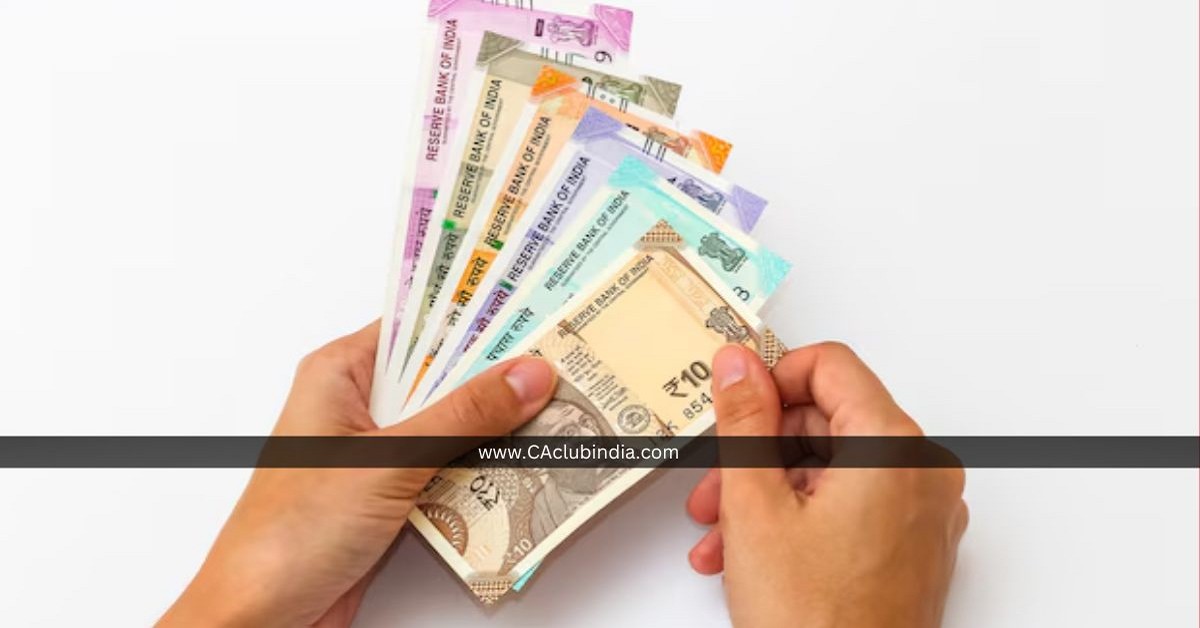
Section 269SS: Restrictions on Receiving Cash Loans, Deposits, or Specified Sums
As per Section 269SS of the Income Tax Act, it is prohibited to accept or take any loan, deposit or specified sum in cash that exceeds ₹20,000.
Simple Examples to Save You from Penalty
| Cash Transaction | Example | Violation |
| Single Cash Loan or Deposit of Rs 20,000 or More | Rs 22,000 cash loan | Yes |
| Total of Unpaid Old Loan + New Cash ≥ Rs 20,000 | Rs.16,000 old + Rs.10,000 new | Yes |
| Current Amount+ Previous Transactions ≥ Rs.20,000 | Rs.11,000 old + Rs.12,000 new | Yes |
Similarly, Section 269T prohibits repaying any loan, deposit, or specified sum (including interest) in cash if the aggregate amount exceeds ₹20,000 from a single person
Modes of Receipt u/s 269SS
| Transactions More Than Rs. 20,000 | Allowed |
| Account Payee Cheque | Yes |
| Account Payee Bank Draft | Yes |
| Electronic Transfer - IMPS, NEFT, RTGS, UPI, BHIM Aadhar Pay | Yes |
| Cash Amount | No |
| Credit Card/Debit Card | Yes |
| Net Banking | Yes |
| Govt, Bank, Post Office, Co-operative Bank & Farmers (All are Excluded) | Yes |
Penalty for Violation
100% penalty u/s271D for violation of Section 269SS (if more than ₹20,000 cash accepted for loan, deposit, or specified sum).
New Income Tax Bill Section Changes
The upcoming Income Tax Bill will update the section numbers for these provisions:
| Section | Limits | Penalty Section |
| Section 269SS will become Section 185 | Rs 20,000 | Section 271D (penalty for 269SS violation) will become Section 450 |
| Section 269T will become Section 188 | Rs 20,000 | Section 271E (penalty for 269T violation) will become Section 453 |
| Section 269ST will become Section 186 | Rs 2,00,000 | Section 271DA (penalty for 269ST violation) will become Section 451 |
All these rules will see changes under the new tax bill from 1st April 2026, with updated section numbers and penalty provisions.
You have reached your daily limit of 2 Free Articles
Subscribe to CCI PRO for unlimited access
Why Upgrade to CCI PRO?
- No Ads
- WhatsApp Community
- Daily E-Newsletter
- Unlimited Articles Access
- Profile Visitors
- Link Social Profiles
- Featured Job Posts
- Pro Badge
- Expert GST Guidance
- Unlimited Forum Replies
- Download Content in PDF
Already a PRO member? Login here for an ad-free experience. 07941056694











 CAclubindia
