 CA Ruby Bansal
Investment in emerging markets is transforming how investors conduct business in financial markets. Over the decades, long-term asset accumulation, unorganized networks of support, and the use of intuitive judgment have influenced how individuals invest in these areas. All these were mainly due to economic instability and the absence of market infrastructure.
However, the paradigm is changing quickly. The internet has made market data, trading software, and trading services more accessible, making investing more organized.
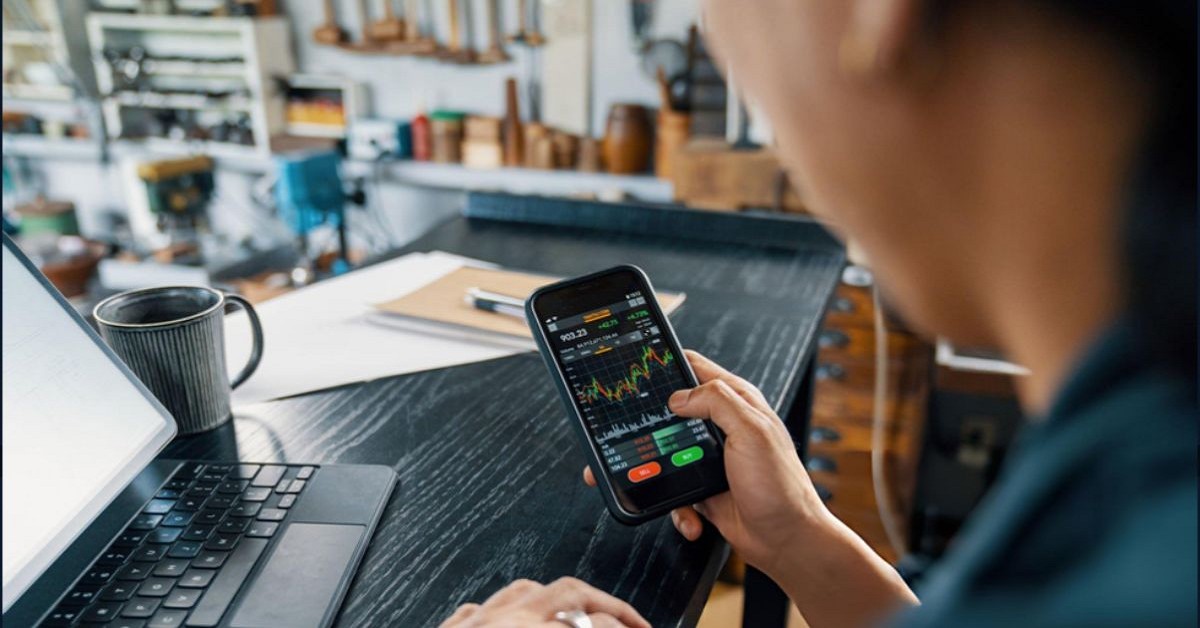
In a sophisticated economy, data-driven trading is no longer just for institutional traders. It is also working to change how investors view opportunities, manage risk, and make other investments in global and emerging markets.
This is more about changing behavior, not to mention the technical changes that also influence the way investors make decisions. At this point, we will plunge into the topic of how data-driven trading is transforming investors' behaviour in emerging markets.
1. The Democratization of Operational Intelligence
Data-driven trading is changing investors' behaviour by making market information more accessible in real time. Live price feeds, company announcements, economic and world news may now be available to investors in emerging markets via web-based and mobile applications.
This accessibility reduces reliance on speculation, slow information, or backdoor advice. The investors will be able to react to the market events, rather than respond to them once price movements have already affected them. Even central bank policy shifts, inflation levels, or commodity prices in global macroeconomics are becoming part of real-time decision-making.
As access to data improves, the informational gap between emerging and developed markets continues to narrow. The investors are able to read market cues without considering geographical boundaries. This influences them regarding their ability to time in and out and to alter their portfolios.
2. The Quantification of Strategy: Replacing Instinct with Evidence
Evidence-based trading has been favored over intuition-based trading due to greater access to information. Rather than making decisions based on intuition and experience, investors use price movements, trend lines, and volatility indicators, then act on them.
The shift has introduced a more organized manner of conducting the trade, where decisions are not influenced by emotions but by the set rules. It is more disciplined and consistent because investors tend to pre-determine entry, exit, and risk levels.
This retreat to an analytical exactness is not only a gain, but also a condition for survival in instruments such as CFD trading, where price movement is the measure of participation rather than possession of a commodity.
3. Risk Prevention by Quantitative Parameters
Since investors have accepted data-driven trading, they have changed how they see emerging markets and risk management. The view of risk in the early days was considered inevitable, particularly during the rough economic times. However, investors are now more focused on measuring risk using quantifiable parameters.
Volatility, drawdown, and correlation tracking tools allow an investor to consider the losses they are likely to incur in a position before taking it. Position-sizing models and stop models promote conservative capital allocation, discouraging excessive exposure to a single trade or asset.
Such a behavioural shift has reinforced the focus on capital preservation. In leveraged environments, where the risk can accrue quickly, data-based risk management is taking a central place in trading behavior rather than being an auxiliary factor.
4. The Rise of the 'Quant-Native' Investor
Younger, digitally native investors are driving the pace of adoption of data-driven trading practices in emerging markets. This generation has been raised in the digital interface. It is thus comfortable with using charts, dashboards, and performance indicators as requirements for its day-to-day decision-making.
While online communities and social media remain strong, data is increasingly becoming a filter through which an idea is evaluated. Investors will likely test the strategies against the historical performance, compare them, and refine strategies based on measurable performance.
This focus on accountability and performance monitoring promotes continuous progress. In the long term, it creates a market culture in which one-time wins are no longer used to gauge success, but consistency and risk-adjusted results are.
5. Cross-Border Integration and Global Capital Mobility
With the development of global communication, investment diversification beyond a domestic economy has broadened. Emerging markets investors use relative data to evaluate commodities, indices, international equities, and forex investments.
Available live indicators of the global economy will allow investors to see and compare relative values worldwide, whether across regions or in response to international events. It has increased transboundary participation and further harmonized global markets.
As the investor transitions to a more diversified portfolio that is no longer focused solely on "local" assets, data analysis becomes crucial for managing currency exposure, geopolitical risk, and macro divergence. This has been changing how emerging-market capital operates in relation to the international financial system.
6. Structural Evolution and the Regulatory Response
Finally, data-driven trading alters the investor behaviour by revealing structural limitations in emerging markets. Access to data is better, though the disparities in analytical literacy, infrastructure quality, and regulatory controls are apparent.
Lack of education and interpretation is more evident in cases where investors are handling large volumes of complex information. This has put pressure on better financial education, platform transparency, and the modernization of regulations.
At the institutional level, market participants and regulators are modifying the structures of data-intensive trading environments. Nevertheless, such changes, although gradual, reinforce the long-term shift in behaviour towards greater organised and responsible engagement in the market.
Towards a New Architecture of Global Participation
Data-driven trading is changing the behaviour of investors in the new markets in an explicit, process-based way. It is altering the way investors think, act, and invest by making information more accessible, replacing intuition with evidence, redefining risk management, and enabling activities and engagement across the globe.
Despite the challenges in the education, infrastructure, and regulation spheres, it is a structural, but not a temporary trend. As knowledge assumes a leading role in commerce, investors in the developing world are following global norms in adopting analytical rigour and risk-taking behaviour.
This development is not just changing individual behaviour but also strengthening the integration of emerging economies into the global financial landscape.











 CAclubindia