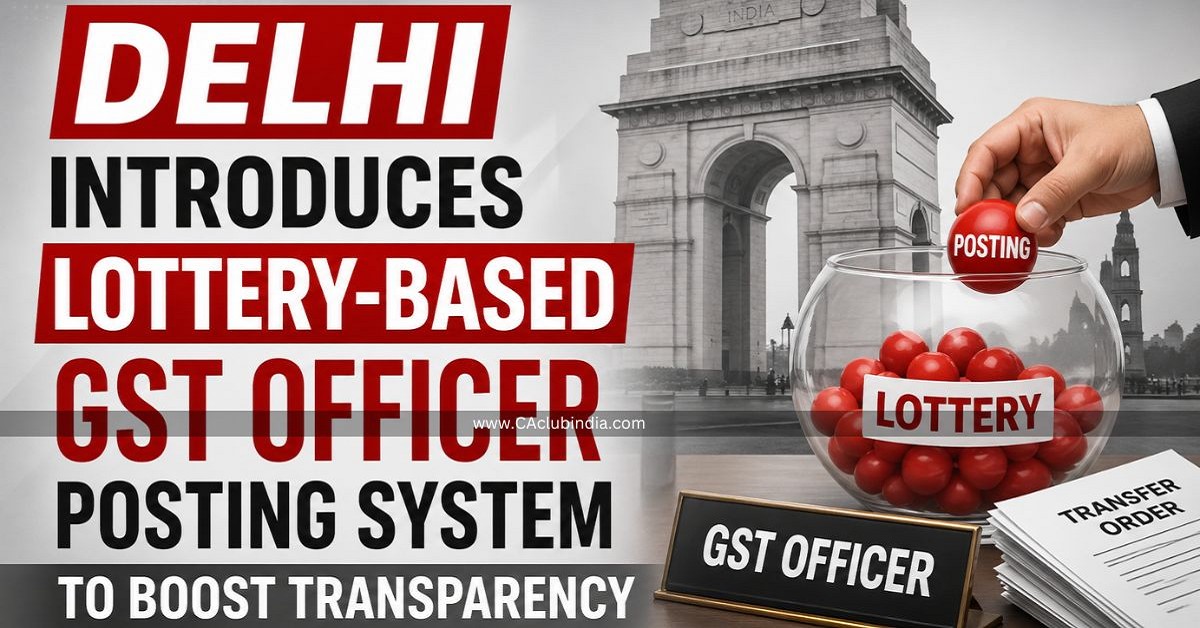
The Delhi government, in a landmark move aimed at strengthening transparency and eliminating discretionary practices, has introduced a lottery-based posting system in the GST Department.
Announced under the leadership of Chief Minister Rekha Gupta, the reform replaces the long-standing recommendation-based system with a process rooted in fairness, neutrality, and public accountability.
A Shift Toward Transparent Governance
The initiative underscores a clear message from the administration - "No influence. No backdoor. No favour." By removing subjective elements in officer postings, the government aims to foster a culture of integrity within the tax department.
Under the new system, 87 GST officers were assigned their respective wards through a self-drawn lottery process, ensuring that no external influence could impact the outcome.
Conducted in Full Public View
The entire exercise was conducted openly at the GST Department's conference hall in Delhi, reinforcing the credibility of the process. The event witnessed the presence of top departmental leadership, including:
- Commissioner
- Special Commissioner
- Joint Commissioner
- Assistant Commissioner
No influence.
— CMO Delhi (@CMODelhi) April 29, 2026
No backdoor.
No favour.
Today, Delhi sets a new benchmark in transparency.
Chief Minister Smt. Rekha Gupta has introduced a lottery-based posting system in the GST Department, replacing recommendation-driven discretion with a process rooted in fairness.
87 GST…
This high-level oversight further ensured that the process remained fair, unbiased, and beyond reproach.
Why This Reform Matters
Traditionally, postings in tax departments have often been associated with discretion, lobbying and recommendations, raising concerns about transparency and fairness. By introducing a lottery-based system, the Delhi government has taken a decisive step toward:
- Eliminating favoritism and undue influence
- Enhancing administrative efficiency
- Boosting morale among officers through equal opportunity
- Strengthening public trust in governance
A Model for Other States?
This move could potentially serve as a benchmark for other states looking to reform administrative processes within tax and revenue departments. If adopted widely, such mechanisms could redefine how postings and transfers are handled across India.
Conclusion
With this reform, Delhi has positioned itself at the forefront of administrative transparency. The lottery-based GST posting system reflects a broader commitment to clean governance and institutional integrity.
As tax systems evolve, such structural reforms could play a crucial role in ensuring that governance is not just efficient, but also fair and accountable.












 CAclubindia