
As advance tax 2nd instalment due date for FY 21-22 is approaching i.e. 15th Sept 2021, let's understand in detail so that compliance can be done in time.
Advance tax is paid on income that one earns during the year, usually in installments.
It's applicable to all assessee except the senior citizens on fulfillment of the below-mentioned conditions:
1. The taxpayer is more than 60 years of age
2. The individual is a resident of India
3. A taxpayer does not hold any income under the head ‘business or profession’
4. The taxpayer is an existing senior citizen at any time during the financial year.
For example- in case you have attained the age of 60 years during the financial year, you will still be exempt from advance tax.

Due Dates of Advance Tax
- 15/06/20xx-15% of Estimated Tax Liability
- 15/09/20xx-45% of Estimated Tax Liability
- 15/12/20xx-75% of Estimated Tax Liability
- 15/03/20xx-100% of Estimated Tax Liability
Who should pay Advance Tax?
If your total tax liability is Rs 10,000 or more in a financial year you have to pay advance tax except for senior citizen do not run a business
The taxpayers who have opted for presumptive taxation scheme under section 44AD/44ADA have to pay the whole amount of their advance tax in one installment on or before 15 March,20xx
How to Calculate Advance Tax Payment?
1. Estimate income to be earned for the PY
Income includes income from all the sources as well as clubbed income and after deductions under chapter VIA
2. Calculate the tax payable
Calculate the tax payable by applying the latest income tax slab that is applicable to you
3. Deduct taxes already paid
- TDS Deducted
- Advance tax installment already paid (if any)
- MAT Credit in case of Company
4. Compute advance tax on net estimated tax liability
WHAT HAPPENS IF YOU FAIL TO PAY ADVANCE TAX INSTALLMENTS ON TIME/ DO NOT PAY ADVANCE TAX?
The taxpayer will be liable for interest under Section 234B and 234C for default in payment of advance tax.
INTEREST UNDER SEC 234B
Interest under Section 234B is levied if the taxpayer has not deposited advance tax or if the advance tax deposited is less than 90% of the total tax liability.
The taxpayer will be liable for interest under Section 234B at 1% per month or part of the month from April till the date of payment of tax.
INTEREST UNDER SEC 234C
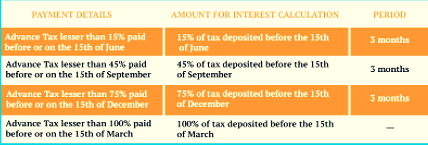
Interest under Section 234C is levied, if the advance tax paid in any installment (s) is less than the prescribed percentage of the installment amount as mentioned below










 CAclubindia
