The GST Council has recommended significant changes to the provisions relating to arrest and prosecution under the Central Goods and Services Tax (CGST) Act, 2017. The proposed reforms aim to strengthen a progressive, trust-based tax system while maintaining effective measures to deter tax fraud and evasion.
One of the key recommendations is the complete withdrawal of arrest powers under GST through the omission of Section 69 of the CGST Act, 2017. The Council has also proposed raising the monetary threshold for prosecution and rationalising provisions dealing with various GST offences.
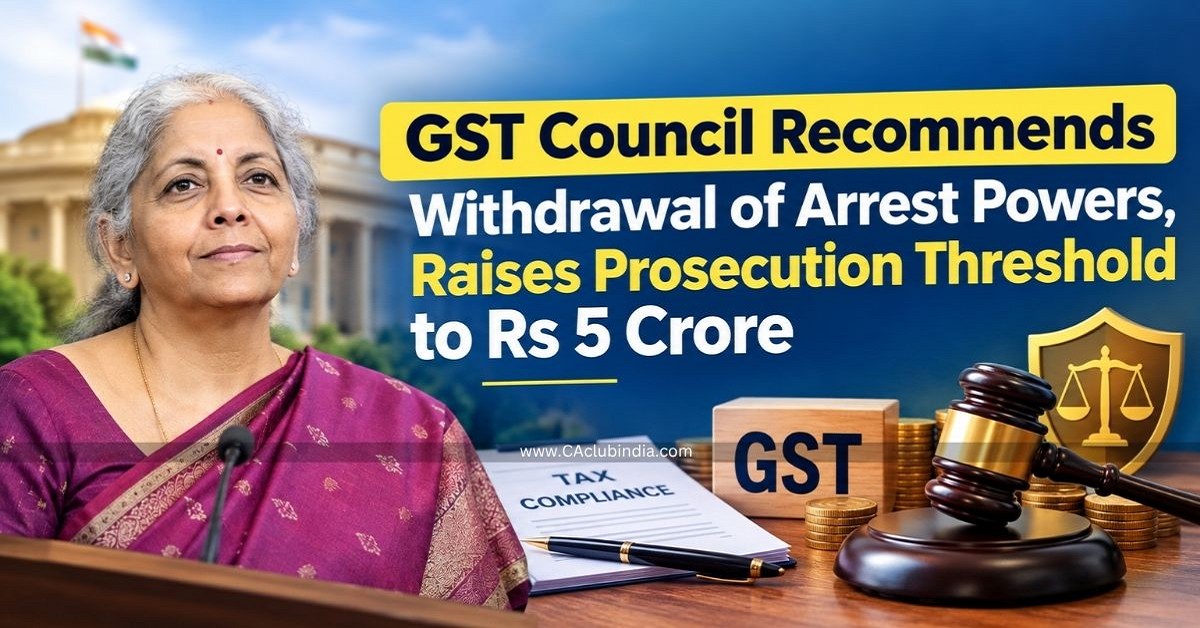
Rationalization of provisions relating to arrest and prosecution
The Council has recommended complete withdrawal of arrest powers under GST by omission of section 69 of CGST Act, 2017.
With a view to further strengthening a progressive and trust-based tax regime, while retaining effective deterrence against fraud and evasion, the Council recommended the following measures:
- The monetary threshold for prosecution to be raised from ₹1 crore to ₹5 crore.
- Omission of clause (i) of section 132(1) of the CGST Act, 2017, deletion of the words "evades tax" in clause (e) of section 132(1) and deletion of words "or in any other manner deals with" in clause (h) of section 132(1) of the CGST Act, 2017.
- Amendment in clause (c) of section 132(1) of the CGST Act, 2017, to cover only offence of fraudulent availment of ITC without receipt of goods or services or without invoice or bill.
- Rationalizing the amount of punishment for various offences under section 132 of the CGST Act, 2017.











 CAclubindia
