In a recent development, the Central Board of Indirect Taxes and Customs (CBIC) has issued a crucial clarification regarding the applicability of Goods and Services Tax (GST) on Gangajal, the holy water from the Ganges. This clarification follows a spate of media reports suggesting that the government had imposed an 18% GST on Gangajal, sparking concerns and debates among the public.

The CBIC's official statement emphatically quashes these reports, affirming that Gangajal remains exempt from GST. The clarification is founded on the recognition of Gangajal as a sacred and religious item, a sentiment deeply ingrained in the cultural and spiritual fabric of India. This exemption falls under Schedule III of the Goods and Services Tax Act, 2017, reaffirming the special status accorded to this revered substance.
Furthermore, to dispel any confusion that may have arisen from the media reports, the CBIC also took the opportunity to underscore the distinction between Gangajal and commercially sold drinking water bottles. While drinking water bottles do indeed attract an 18% GST rate, this rate is not applicable to Gangajal due to its exemption, rooted in its unique religious significance.
This clarifying statement by the CBIC aims to alleviate concerns and misconceptions that had arisen in light of recent media coverage. It reiterates the government's respect for the sanctity of religious items and aims to ensure that no unwarranted taxation is levied on items of such cultural and spiritual importance. The exemption of Gangajal from GST, as reaffirmed by the CBIC, will continue to uphold the cherished traditions and beliefs of millions of Indians.
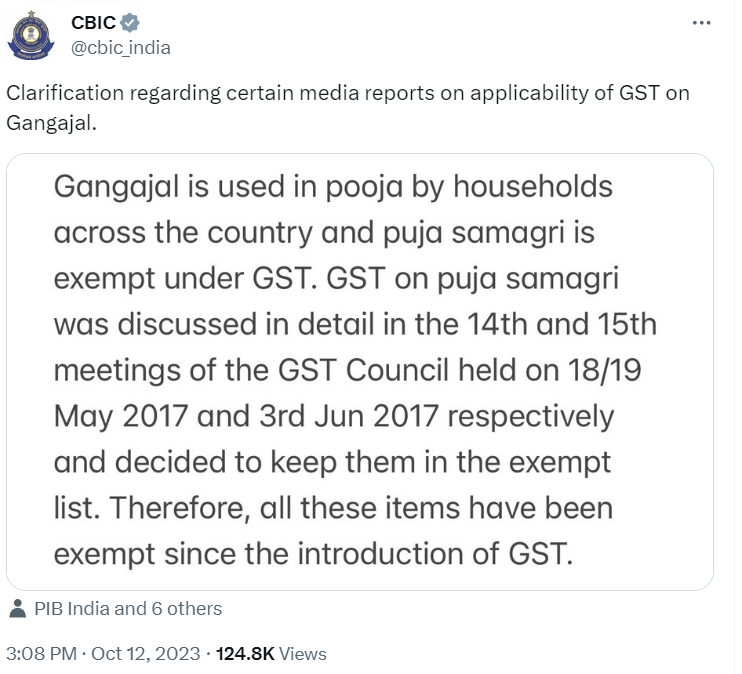
The official clarification by CBIC was made in their Twitter Handle as follows









 CAclubindia
