 Shivani Dundlodia
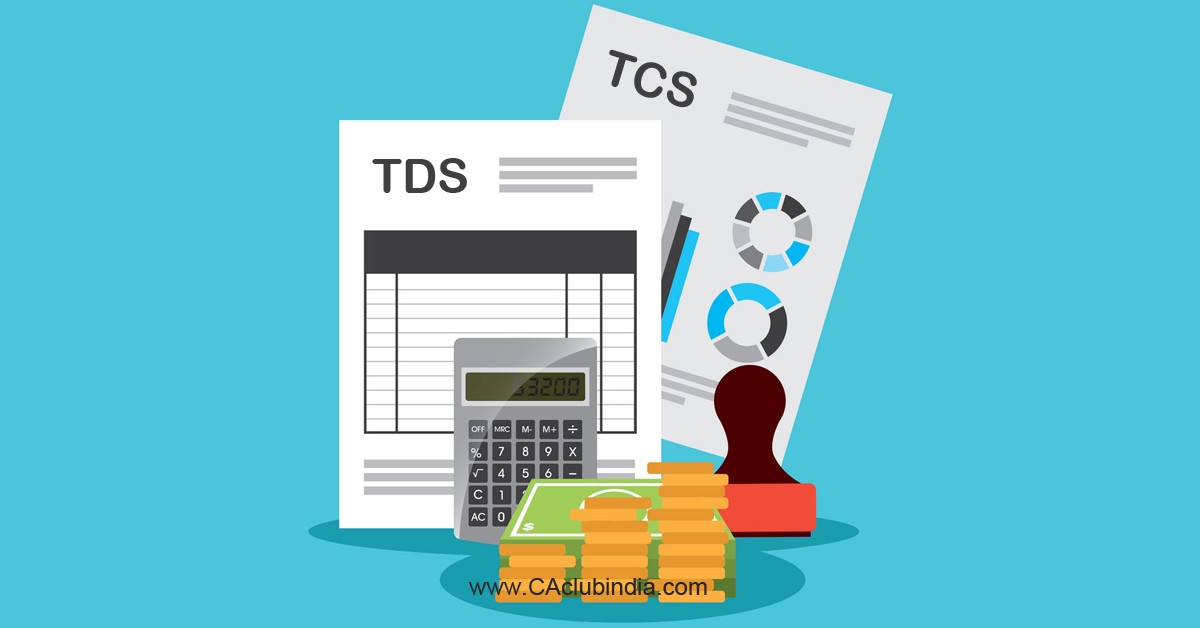
The basic difference between TDS and TCS is that TDS is deducted by the buyer and TCS is collected by the seller.
Learning this with a basic example, suppose you entered into a transaction and bought some goods on which TDS is applicable. It will be your responsibility to deduct the TDS before paying the seller the consideration for the goods/services. Similarly, suppose you enter into a transaction on which TCS is applicable. The seller supplies the goods/ service. While making a payment to the seller of the goods, you are supposed to pay the consideration of the goods/service and with that, the amount of TCS applicable. Therefore, in short, TDS is deducted by the buyer, and TCS is collected by the seller.
Now with the basic understanding of TDS and TCS let's dive into the concept of Section 194Q and 206C(1H).
Section 194Q is a newly added section in Finance Act 2021. It imposes TDS on the purchase of goods @0.1% on the amount of purchase done by a single supplier over RS 50 lakhs. Section 194Q is applicable when the buyer's gross receipts/ turnover of the previous year exceeds Rs 10 crore. In case Sellers PAN is not available the applicable TDS rate will be 5%.
Section 206C(1H) was introduced in the year 2020 was made effective from 01st October 2020. It imposes TCS for the sale of goods on the value exceeding Rs 50 Lakhs @0.1%. It is applicable when the seller's gross receipts/ turnover of the previous year exceeds Rs 10 crore. In the case of buyers, PAN is not available the applicable TCS rate will be 5%
Now primarily both the sections seem similar. Let's understand what will happen if both the seller and buyer's previous year's gross receipt exceeds Rs 10 Cr and the transaction between both the parties exceeds Rs 50 Lakh in the current year. In such a case both section 194Q and Section 206C(1H) are applicable. It is not possible that the buyer deducts TDS and the supplier collects the TCS at the same time on the same transaction.
In such a case, it is mentioned that whenever Section 194Q becomes applicable, Section 206C(1H) is not made applicable. Therefore, in the above case, Section 194 Q is applicable. Section 194Q is a priority section over Section 206C(1H).
Let's get into the insights while discussing more of such scenarios
Scenario 1
Suppose the turnover of the previous year of the buyer and seller are
- Buyer: Rs 8 Crore
- Seller: Rs 15 Crore
The transaction entered between both parties is Rs 55 lakh in the current financial year. In such a case, Section 194Q is not applicable because the turnover of the buyer in the previous FY does not exceed Rs 10 Crore. However, Section 206C(1H) is applicable. TCS @0.1% on the amount of Rs 5 lakhs will be collected by the seller. (Provided the buyer's PAN is available). In the case Buyer's PAN is not available, then TCS will be collected by the seller @1% on Rs 5 Lakhs.
Scenario 2
Suppose the turnover of the previous year of the buyer and seller are
- Buyer: Rs 18 Crore
- Seller: Rs 7 Crore
The transaction entered between both parties is Rs 58 lakh in the current financial year. In such a case, Section 194Q is applicable because the turnover of the buyer in the previous FY exceeds Rs 10 Crore. Section 206C(1H) is not applicable. TDS @0.1% on the amount of Rs 8 lakhs will be deducted by the buyer. (Provided the seller's PAN is available). In the case seller's PAN is not available, then TDS will be deducted by the buyer @5% on Rs 8 Lakhs.
Summarizing the content in a table form we can say that
|
Section 194Q |
Section 206(1H) |
|
|
Section |
Buyer deducted the TDS when the transaction with the supplier exceeds Rs 50 Lakhs. Provided that the buyers previous year turnover or gross receipt has exceeded Rs 10 Cr |
The seller collects the TCS when the transaction to the buyer of the goods exceeds Rs 50 Lakhs. Provided that the sellersprevious year turnover or gross receipt has exceeded Rs 10 Cr |
|
Rate |
In the case where the seller's PAN is - available- 0.1% |
In the case where the buyer's PAN is - available- 0.1% |
|
TDS to be deducted on what amount |
Over Rs 50 lakh |
Over Rs 50 lakhs |
|
Came into effect on |
01st July 2021 |
1st October 2020 |
|
Tax to be deducted/ collected when |
Payment or credit, whichever is earlier |
At the time of receipt |
|
Statement to be filed |
26Q |
27EQ |
|
Certificate |
Form 16A |
Form 27D |











 CAclubindia