
The term 'COVID 19' now is the not-so-new buzzword of the town. Amid restrictions and precautions, let's have a look at how the economy at large is affected. More particularly let's talk about sectors such as Real Estate & Infrastructure, FMCG, IT Sector, etc.
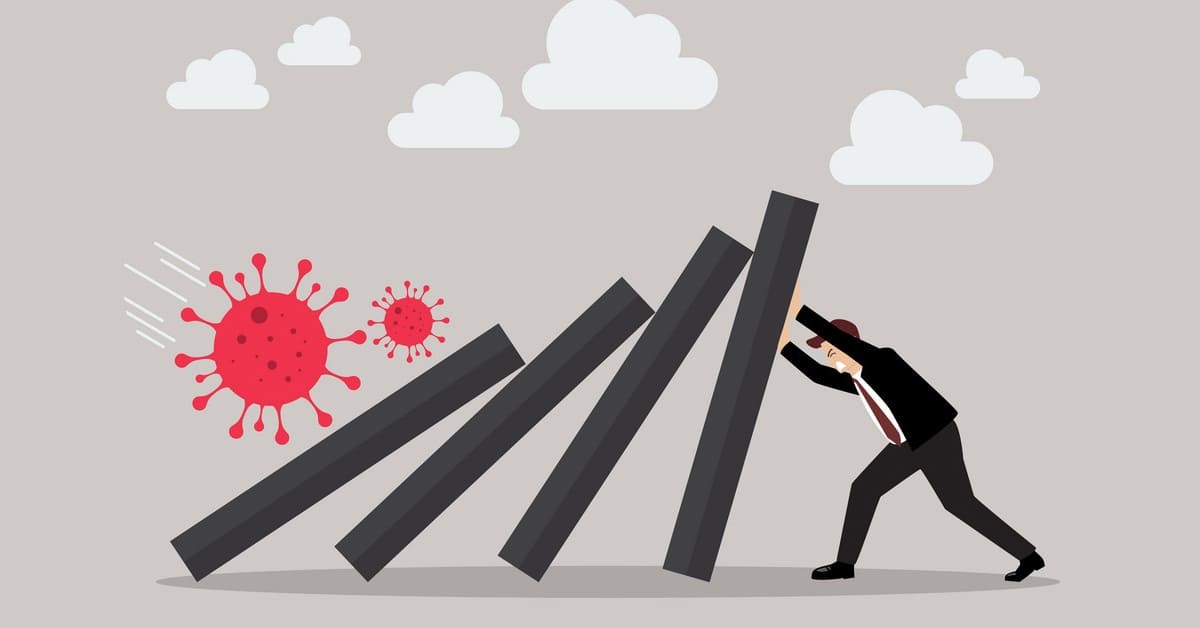
As per the International Monetary Fund - the Indian economy which was predicted to grow at 2% will now wince by 4.5%. This is more a matter of paradox since the Indian economy has not contracted since 1979. The benefits that accrued in the 1990s will undergo a U-turn if the lockdown results in the closing of the economy for nearly three months.
FMCG Sector
Why Rural India is consuming more in these COVID times?
- Government schemes like MGNERGA
- Showerful Monsoon
- Migration backward (To Rural area)
Around 40 million migrants were affected by lockdown. This resulted in unprecedented demand.
Most FMCG has launched Hand Wash & Sanitizers. The ones that will stay, will depend upon-
- Company's Distribution Strength
- Competition from Pvt. labels
- Brand Equity
- Size of the company
E-Commerce & FMCG - The Tie-ups
FMCG went into tie-ups with e-commerce companies like Amazon; Flipkart; Zomato; Bigbasket etc. This ensures the product's reach to fag end. Owing to lockdown, more online grocery shopping is expected by these companies.
Companies are enhancing bottom-line margins by way of following
- Using Digital Marketing
- Cut edge advertising
- Credit Terms - Stricter
Quarter One for the fiscal year 2020-21 - Was a boon for some and bane for others. The staple food segment witnessed very good sales. This owes to augmented home consumption plus piling up.
Biscuit companies (Parle etc.) perceived a sudden spike. Coming back to normal can be expected around July 2020 onwards.
Construction & Real Estate Sector
With changed new requirements, the sector has to re-invent itself. New avenues can be explored with new technologies like AI, Internet of Things, Construction Technology like precast system, formworks system, etc. The transformed plans will be giving space to new normal norms like Social Distancing, Increased Spacing, Health concerns, etc.
The need for Shopping Malls & Warehousing is already captured by the E-Commerce giants. Also, hospitality may see a shrunk demand owing to lesser travelling for work and tourism in general.
The demand will only be differing in the post COVID period, with changed products & factors. Skyscraper townships demand is likely to be more in comparison to populous residential spaces. Also, more open spaces like balconies, etc. in individual homes can act as a favourable factor for the real estate realtors. The concept of an embedded office in the home for self or spouse may be an additional marketing niche. Instead of Biometrics requiring fingertip prints voice-activated controls can be a better replacement with spacious lifts and enhanced public spaces.
IT Sector - COVID is a game-changer?
The $180 billion IT sector had a blessing in disguise with more people working from home which results in cost and efficiency gains (productivity). An association like Nasscom helped its members to transport more than 25 lakh workstations to their homes within a fortnight's time.
The presence of a 100% workforce at the office is not a need anymore. Mr Subramaniam's, TCS's Chief Operating Officer, a new realization of having 25% or less workforce operating from office shall suffice says much about the change.
AadityaPuri, the seasoned banker states his idea of WFH (Working from Home) even post coronavirus times. Though some technical loopholes can be raised later by the Department of Telecom & Commerce Ministry which is allowable presently. These include special phone lines that are demarcated for SEZ areas who avail of taxation and other benefits.
Travel & Tourism
The global travel may fall by 25% resulting in a downsizing of up to fifty million jobs, as per the World Tourism & Travel Council. In India, the losses are expected to the extent of 5 lakh crore with cut of about four to five crore jobs.
In the post-COVID era, Hotels shall be required to provide upgraded technology and also making sure the availability of fundamental protective equipment like masks, infra thermometer, PPE Kits, Gloves, etc.
Prevention is better than cure is the adage that fits best in the current scenario. Thus, being prepared helps to fight this virus.
Courtesy/Sources
- https://economictimes.indiatimes.com/markets/stocks/news/five-trends-that-are-likely-to-play-out-for-the-fmcg-sector-due-to-covid/articleshow/76321451.cms?from=mdr
- https://www.financialexpress.com/money/how-real-estate-in-india-will-change-post-covid-19/1997217/
- https://www.business-standard.com/article/current-affairs/covid-19-impact-more-people-in-services-sector-to-work-from-home-in-future-120042600500_1.html
- https://www.financialexpress.com/industry/travel-tourism-sector-has-emerged-from-many-crises-in-past-heres-what-makes-coronavirus-different/1922357/
- https://economictimes.indiatimes.com/news/economy/indicators/view-indias-economy-is-ailing-from-more-than-covid-19/articleshow/76637162.cms











 CAclubindia
