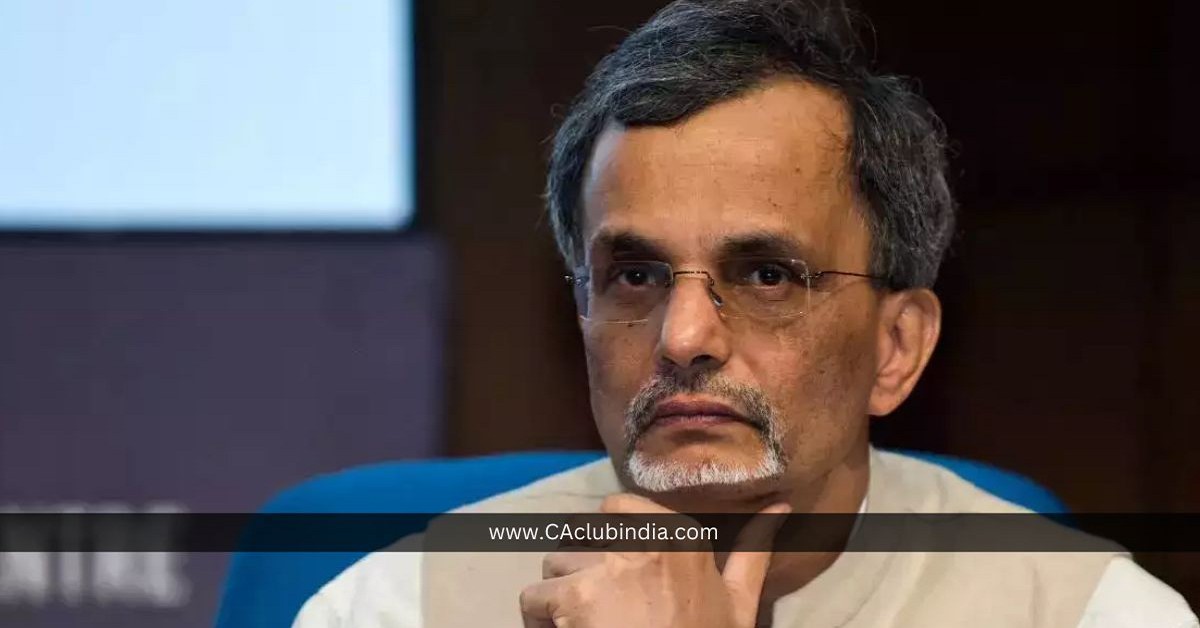
Chief Economic Advisor (CEA) V Anantha Nageswaran emphasized on Friday that taxing capital less may not significantly boost investments, but taxing it more could deter capital flow and harm the economy. Speaking at a discussion on Inequality, Economic Growth, and Inclusion organized by the Research and Information System for Developing Countries (RIS), Nageswaran stated:
"It is easy to drive capital out, but bringing it back is far harder."
CEA Rejects "Billionaire Tax"
The CEA rejected the idea of a “billionaire tax” proposed by noted French economist Thomas Piketty, citing significant challenges in execution, wealth measurement, and equitable redistribution. Nageswaran stressed that problems cannot always be solved through fiat and that India already embraces progressive taxation.
"We agree on the progressivity of taxes. There are multiple ways to ensure contributions towards nation-building by the rich and by all, according to their ability," he added.
Equality of Opportunity Over Outcomes
Highlighting equality of access and opportunity as critical for public policy, Nageswaran argued that enforcing outcome-based equality could stifle micro and small businesses with limited financial and managerial resources.
He warned policymakers about the asymmetric effects of public policies and unintended consequences, stating: "The tyranny of thresholds condemns [small businesses] to remain small."
Nageswaran underscored that poverty reduction, not income inequality, is the ultimate indicator of equitable growth.
Piketty Advocates for Reducing Inequality
Thomas Piketty, however, countered that reducing inequality is essential for faster poverty alleviation. While urging the Indian government to improve data transparency, he argued that India remains a highly unequal country by global standards.
"Countries have grown rich in the 21st century by reducing inequality," Piketty asserted, dismissing criticisms about the quality of Indian data.
"Growth Is Non-Negotiable"
Shamika Ravi, member of the Prime Minister’s Economic Advisory Council (PMEAC), reiterated that economic growth is non-negotiable for India.
"Degrowth in Europe may be acceptable there, but for India, degrowth is immoral. Growth is what has brought us this far," Ravi said, firmly positioning growth as a priority over debates on inequality.











 CAclubindia
