Finance Minister Nirmala Sitharaman on Monday directed the Income Tax Department to withdraw all pending appeals where the disputed tax demand falls below the revised monetary thresholds announced in Budget 2024-25.
As per the updated limits, the government had raised the monetary thresholds for filing departmental appeals to Rs 60 lakh before the Income Tax Appellate Tribunal (ITAT), Rs 2 crore before High Courts and Rs 5 crore before the Supreme Court. These revised thresholds aim to de-clog the judicial system and allow the department to focus on high-value disputes.
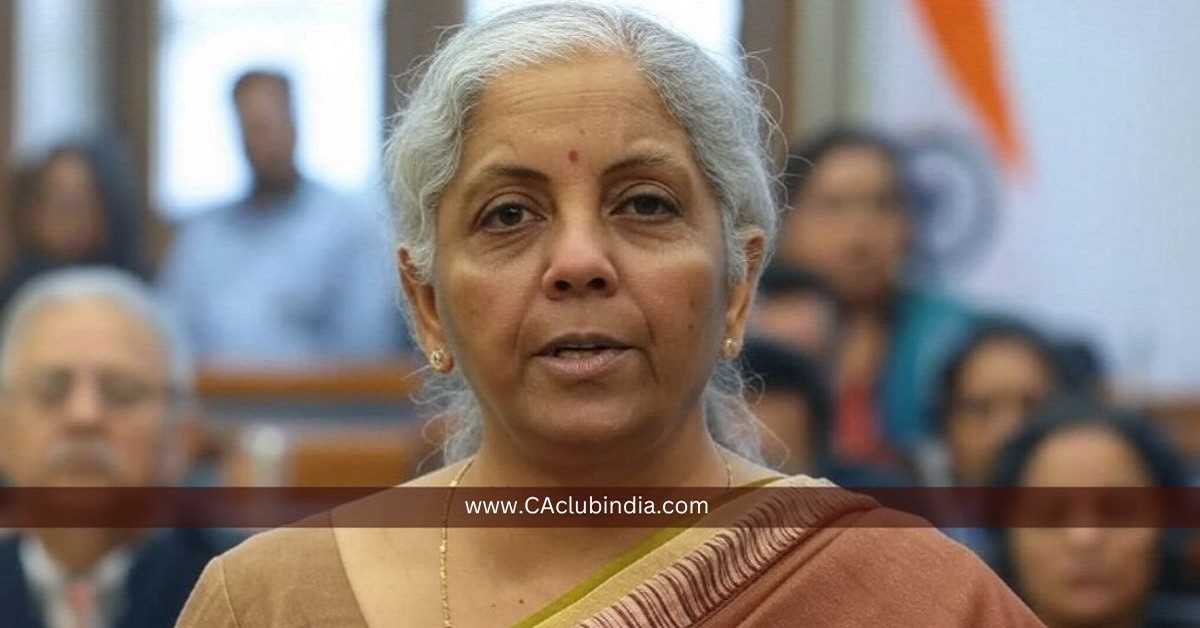
The Finance Ministry revealed that over 4,600 appeals have already been withdrawn and more than 3,100 cases were not pursued due to the new limits. Out of the total 5.77 lakh pending tax appeals, more than 2.25 lakh are targeted for resolution in FY26, potentially settling disputed demands worth over Rs 10 trillion.
In a review meeting held in the national capital, Sitharaman instructed senior officials to ensure all departmental appeals falling below the revised thresholds be identified and withdrawn within three months. She also emphasized speeding up the resolution of tax disputes pending before faceless appellate authorities to boost taxpayer confidence and reduce pendency.
"This is aimed at reducing litigation backlog and ensuring timely resolution, thereby enhancing taxpayer trust in the system," the ministry stated.
Focus on Governance Reforms and Ease of Doing Business
The Finance Minister's directives are part of a broader effort to modernize tax governance, simplify compliance, and improve the ease of doing business in India. Sitharaman reiterated the government's commitment to simplifying tax laws, enhancing transparency, and fostering a voluntary compliance environment.
She also highlighted the progress made by the Central Board of Direct Taxes (CBDT) in taxpayer grievance redressal and refund issuance. As of mid-June, 82% of the 1.6 lakh taxpayer grievances have been resolved and Rs 33,872 crore worth of refunds issued, marking a 58% year-on-year increase in refunds.
To further improve taxpayer services, FM Sitharaman urged Principal Chief Commissioners of Income Tax to:
- Address regional disparities in service delivery,
- Adopt best practices from high-performing zones,
- Monitor online grievance redressal systems,
- Identify recurring issues, and
- Strengthen the resolution mechanisms.
New Income Tax Bill and Awareness Drive
The minister also praised the new Income Tax Bill, calling it a legislative embodiment of Prime Minister Narendra Modi's vision of simplified and clear tax laws. Once passed by Parliament, she directed the department to conduct nationwide awareness and capacity-building campaigns to ensure smooth implementation.
The finance ministry continues to prioritize litigation management, taxpayer facilitation, and technology-driven reforms, all of which are integral to unlocking India's economic potential.












 CAclubindia