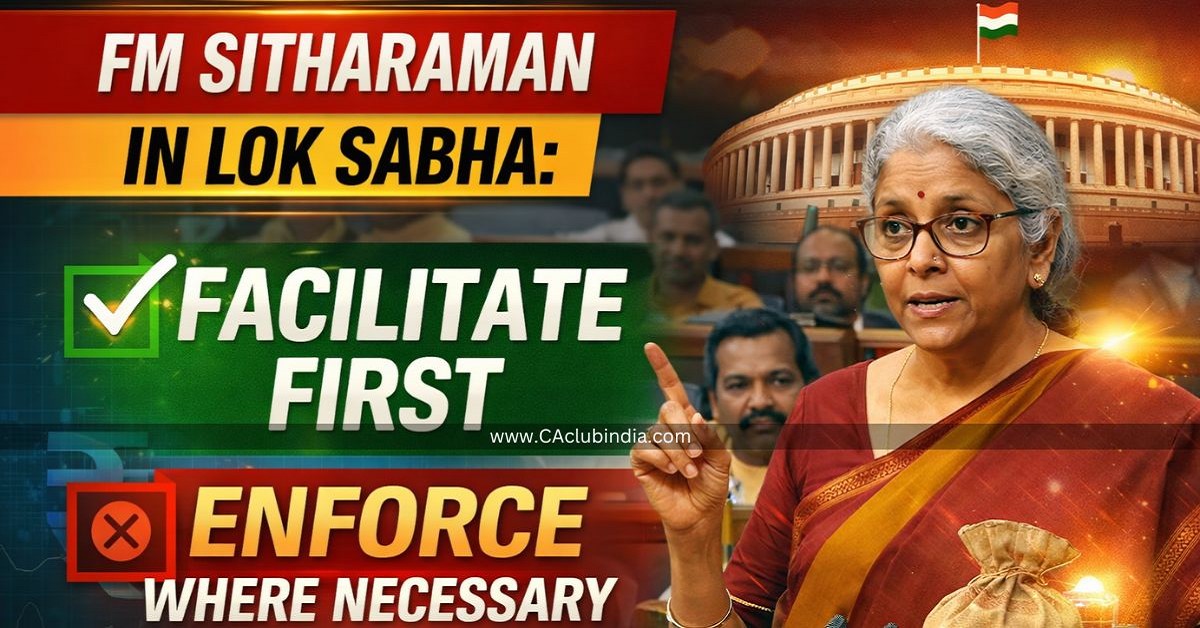
Presenting the government's policy direction in the Lok Sabha, Finance Minister Nirmala Sitharaman emphasised a clear shift in taxation philosophy, prioritising ease of doing business while maintaining necessary enforcement.
"This Budget advances a clear philosophy of 'facilitate first, enforce where necessary,'" she stated, highlighting reforms aimed at reducing compliance burdens and supporting key sectors like agriculture, cooperatives and fisheries.
Tax Relief Measures to Boost MSMEs and Rural Economy
The Budget introduces a series of tax reforms aimed at strengthening the backbone of India’s economy:
- Reduction in Tax Collected at Source (TCS) rates to ease cash flow pressures
- Decriminalisation of minor business offences to reduce litigation risks
- Automation of MSME tax relief mechanisms for faster benefits
- Expanded deductions for rural cooperatives
These measures are expected to improve compliance while encouraging growth in small businesses and rural enterprises.
Expanded Tax Benefits for Cooperative Societies
In a major boost to the cooperative sector, the government has widened the scope of tax deductions.
Previously, primary cooperative societies were eligible for deductions on supplies such as milk, fruits, and vegetables for federal cooperatives. The Budget now extends these benefits to include:
- Cattle feed supplies
- Cottonseed supplies
This move recognises the integrated nature of rural value chains, ensuring broader financial support for cooperative ecosystems.
Dividend Tax Relief to Strengthen Cooperative Federations
The Finance Minister also announced significant changes under the new tax regime:
- Dividend income received from other cooperative societies will now be tax-deductible, provided it is redistributed to members
- A three-year tax exemption on dividend income for notified national cooperative federations
These provisions aim to enhance capital flow within the cooperative structure and promote stronger federations.
Big Push for Fisheries Sector: Customs Duty Exemption
To improve global competitiveness and income for fishermen, the government has announced key incentives:
- Full customs duty exemption on fish caught by Indian vessels in:
- Exclusive Economic Zone (EEZ)
- High seas
- Landing fish at foreign ports will now be treated as exports
This reform is expected to improve price realisation for Indian fishermen and boost exports in the fisheries sector.
Conclusion
With its "facilitate first" approach, Budget 2026 signals a clear intent to simplify taxation, reduce compliance burden and strengthen critical sectors of the economy. From MSMEs to cooperatives and fisheries, the reforms aim to create a more inclusive and growth-oriented tax ecosystem.












 CAclubindia
