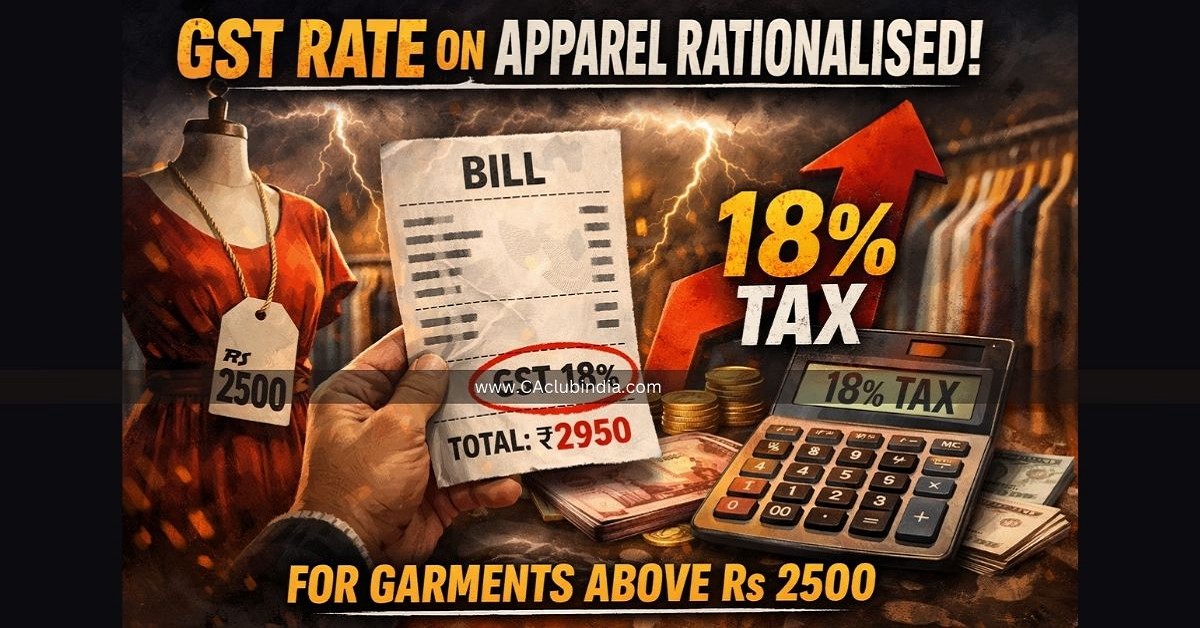
The Central Government has increased the GST rate on readymade garments and apparel priced above Rs 2,500 per piece from 12% to 18%, following recommendations of the GST Council, the Finance Ministry informed the Lok Sabha on Monday
The revised rate structure came into effect from September 22, 2025, as part of a broader GST rate rationalisation exercise aimed at simplifying slabs and boosting consumption in labour-intensive sectors like textiles.
Why the Rs 2,500 Threshold Was Chosen
In a written reply, Minister of State for Finance Shri Pankaj Chaudhary said the GST Council, in its 56th meeting, recommended removal of the 12% slab and adoption of a simplified two-rate structure for apparel.
Under the revised framework:
- Apparel and clothing accessories priced up to Rs 2,500 per piece attract 5% GST
- Apparel above Rs 2,500 per piece attract 18% GST
Earlier, the concessional 5% GST rate applied only up to Rs 1,000 per piece. The higher threshold of Rs 2,500 is expected to improve affordability for middle-class consumers and stimulate demand.
Impact on Demand, Employment and Revenue
The government stated that the rate rationalisation was undertaken after considering its impact on affordability, organised retail, and labour-intensive garment units. The textile and garment sector employs millions of workers, and increased consumption is expected to support employment generation.
Following the GST rate changes in September, gross GST collections for October 2025 stood at Rs 1,95,936 crore, registering a 4.6% year-on-year growth, the ministry said
Relief for MSMEs and Traditional Textile Units
To offset any adverse impact on small manufacturers and artisans, the government has also reduced GST on man-made fibres and yarns to 5%, from earlier rates of 12% and 18%. This move is aimed at improving the competitiveness of MSME textile manufacturers and exporters.
Additionally, several central schemes continue to support the sector, including:
- PM MITRA Parks Scheme for integrated textile infrastructure
- PLI Scheme for MMF fabrics, apparel and technical textiles
- National Technical Textiles Mission
- SAMARTH skilling programme
- Silk Samagra-2, National Handloom Development Programme, and Handicrafts Development Schemes
Export-oriented units also continue to receive benefits under RoSCTL and RoDTEP remission schemes.
Government's Stand
The Finance Ministry reiterated that GST rate rationalisation aims to balance revenue needs with affordability, employment protection and long-term growth of the domestic textile industry.
Official copy of the notification has been attached












 CAclubindia
