
Seeing red: How a lunar eclipse and volcanic ash created colourful phenomenon for moon-gazers
Sky watchers were treated to a lunar eclipse last night, and ash in the atmosphere from a Chilean volcano turned it blood red for some viewers.
Scientists said the specific phenomenon - known as a 'deep lunar eclipse' - often exudes a coppery colour. But the intensity of the colour depends on the amount of ash and dust in the atmosphere.
Luckily for moon-gazers, there was plenty of ash in the air so the moon appeared orange or red, especially in Asia.
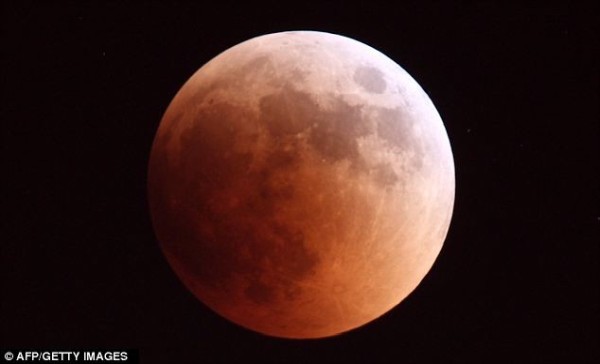
The moon, photographed by an observer in Tel Aviv, exudes a reddish colour during a deep lunar eclipse last night
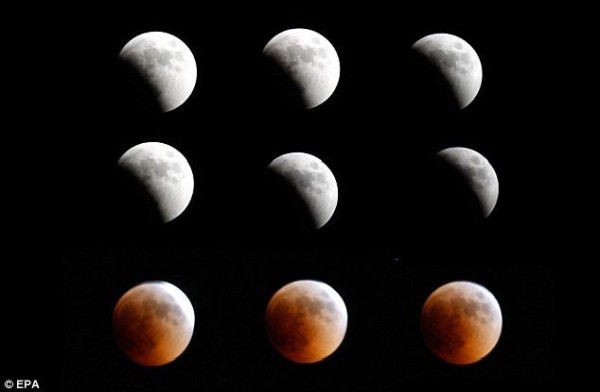
A composite picture showing the total lunar eclipse in the east of Beirut, Lebanon yesterday. People in the eastern half of Africa, the Middle East, central Asia and western Australia were able to enjoy the entire event
Air travellers haven't been so lucky: The ash has grounded hundreds of flights around the region.
The dramatic event, the longest total lunar eclipse since 2000, turned the moon blood red for 100 minutes during the period of totality.
But Europeans missed the early stages of the eclipse because they occurred before moonrise.
The eclipse began at 6.24pm and ended at midnight but sunset didn't occur in the UK until 9.19pm.
Scientists had reassured sky watchers that the eclipse could be safely observed with the naked eye.
People in the eastern half of Africa, the Middle East, central Asia and western Australia were able to enjoy the entire event.
However, those in the U.S. missed out as the eclipse occurred during daylight hours.
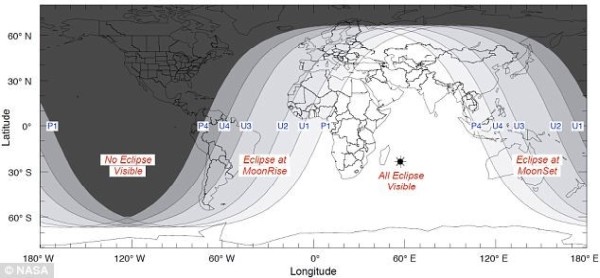
This graph shows when the total lunar eclipse was visible on Earth
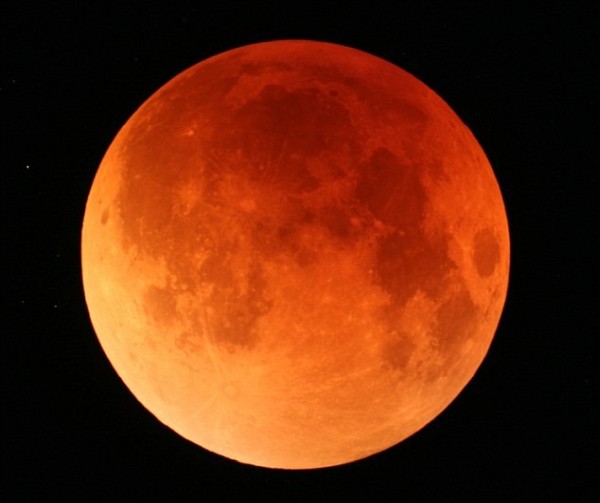
A total lunar eclipse in Japan, 2007: During totality light only reaches the moon through Earth's atmosphere, back-scattering blue light and making it appear red
The moon is normally illuminated by the sun. During a lunar eclipse the Earth, sun and moon are in line and the Earth’s shadow moves across the surface of the full moon.
Sunlight that has passed through the Earth’s atmosphere makes the moon appear red, brown or black.
The moon travels to a similar position every month, but the tilt of the lunar orbit means that it normally passes above or below the terrestrial shadow. This means a full moon is seen but no eclipse takes





 CAclubindia
