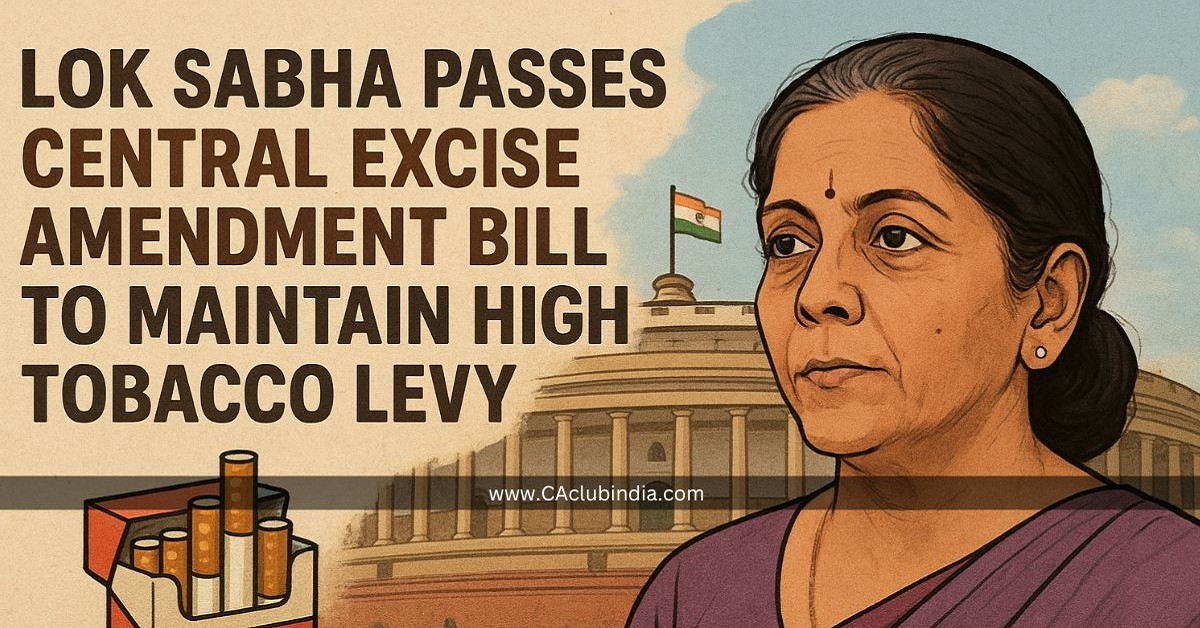
The Lok Sabha has successfully passed the Central Excise (Amendment) Bill, 2025, marking a pivotal moment in India's indirect tax structure for 'sin goods'. The legislation is a direct response to the planned expiry of the GST Compensation Cess on tobacco products, which, if allowed to lapse without replacement, would have led to a substantial reduction in the overall tax burden and price of cigarettes and related products.
The core objective of the bill is to reintroduce and significantly hike the Central Excise Duty on tobacco, thereby protecting the tax incidence and revenue streams that were previously maintained by the outgoing cess.
Why the Urgent Amendment Was Necessary
The necessity for this rapid legislative action stems from the mechanics of the GST framework:
- Compensation Cess Expiry: The GST Compensation Cess, levied on goods like tobacco since 2017 to bridge states' revenue losses, is set to cease. This is primarily because the Centre is on track to complete the repayment of the massive COVID-era loans taken to compensate the states.
- GST Rate Cap: The GST law stipulates a maximum rate of 40% on demerit goods. If the compensation cess were simply removed, the tax on tobacco would drop to this limit (or the standard 28% plus cess/slab), causing products to become significantly more affordable.
- Public Health Deterrent: A sudden drop in prices would directly undermine the government's long-standing public health policy, which relies on high taxes to discourage tobacco consumption.
In essence, the Central Excise Bill acts as a fiscal safeguard, restoring the Centre's ability to levy a specific duty on tobacco over and above the GST rate.
Major Rate Changes: Specific Duties Skyrocket
The Bill achieves its objective by substituting the tariff table in the Fourth Schedule of the Central Excise Act, 1944. The amendments detail a dramatic increase in specific duties for key tobacco categories:
| Product Category | Former Rate (Approx.) | New Proposed Central Excise Rate | Rationale |
| Unmanufactured Tobacco (Per kg) | 64% | 70% | To ensure high raw material cost for all downstream products. |
| Chewing Tobacco (Manufactured) | 25% | 100% | Steep hike to maintain current high consumer prices. |
| Filter Cigarettes (per 1,000 sticks) | Rs 200 - Rs 735 | Rs 2,700 - Rs 7,000 | Specific rates based on length to deter consumption of popular sizes. |
| Cigars/Cheroot (per 1,000 sticks) | 12.5% or Rs 4,006 | 25% or Rs 5,000 (Whichever is higher) | Targeting premium and high-end categories. |
| Smoking Mixtures (Pipe/Cigarettes) | 60% | 325% | Highest proportional increase, targeting specialised products. |
FM Sitharaman Reassures on State Revenue Share
During the parliamentary debate, Union Finance Minister Nirmala Sitharaman strongly refuted opposition claims that the Bill was an attempt to introduce an "additional tax" or that it would reduce the states' revenue share.
"This is not a new cess. This is excise duty. It existed before GST. It is coming back to the Centre to be collected as excise duty, which will go to the divisible pool," the Minister stated.
She confirmed that the revenue collected from this reinstated Central Excise Duty will be shared with the states under the 15th Finance Commission's recommendation, ensuring that 41% of the collections are devolved back to state governments.
The Two-Pronged Tax Strategy
It is essential to note that the government introduced this legislation alongside a second, distinct Bill: The Health Security Se National Security Cess Bill, 2025.
- Central Excise Amendment Bill: Focuses on tobacco and its products (cigarettes, cigars, chewing tobacco).
- Health Security Cess Bill: Focuses on pan masala manufacturing, levying a new capacity-based cess earmarked for funding public health and national security expenditure.
Together, these two bills create a permanent, robust tax architecture that secures high taxation on 'sin goods' for the long term, moving away from the temporary nature of the GST Compensation Cess.
Industry Concerns and Future Outlook
While the government cites public health and fiscal stability as the driving forces, industry analysts and opposition members have raised concerns. Critics argue that the steep and sudden duty hikes could:
- Harm Tobacco Farmers: Adversely affect the livelihoods of tobacco growers and bidi rollers, particularly in states where the crop is a major source of rural employment.
- Boost Illicit Trade: Push consumers toward cheaper, unregulated, and often more harmful smuggled or illicit tobacco products, ultimately defeating the public health objective.
The Bill, passed by the Lok Sabha via voice vote, now moves to the Upper House for final approval, cementing a new phase of high, stable taxation for tobacco in India.








 CAclubindia