Productivities of Lok Sabha and Rajya Sabha during Budget Session were approximately 118% and 119% respectively
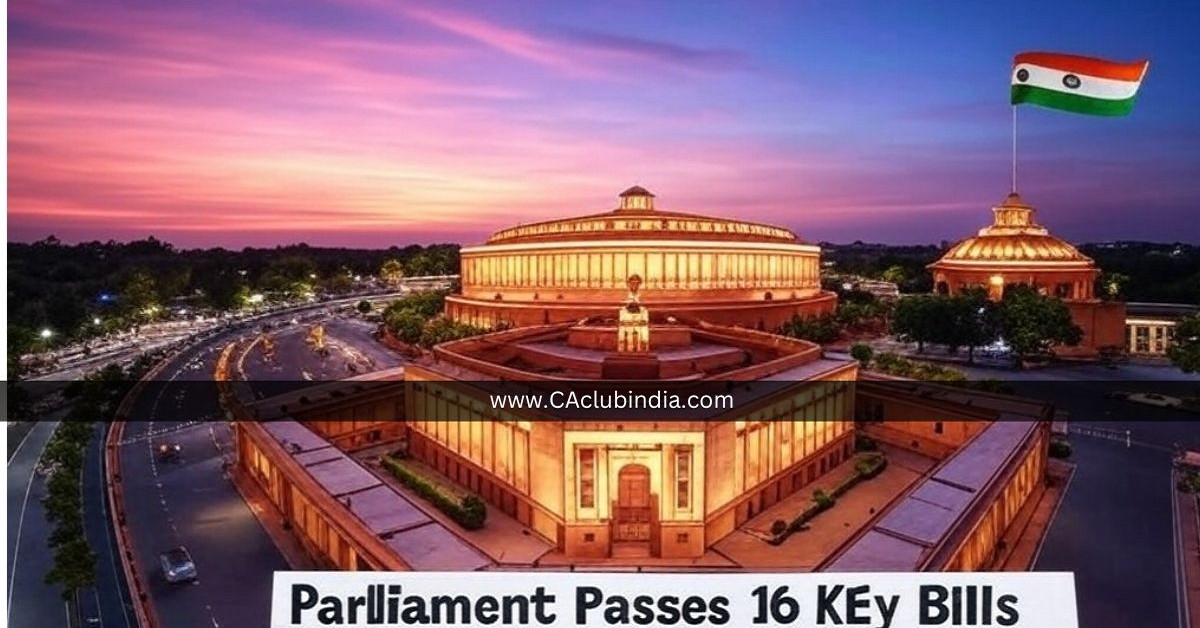
16 Bills passed by both Houses of Parliament
The Budget Session, 2025 of Parliament which commenced on Friday, the 31st of January, 2025, adjourned sine-die on Friday, the 4th of April, 2025. In between both Houses were adjourned for recess on Thursday, the 13th of February, 2025 to reassemble on Monday, the 10th of March, 2025 to enable Department related Standing Committees to examine and report on the Demands for Grants relating to various Ministries/Departments.
The Union Minister of Parliamentary Affairs and Minority Affairs Shri Kiren Rijiju held a press conference today after the end of the Budget Session, 2025 of Parliament. The Minister of State (Independent Charge) for Law and Justice & Minister of State for Parliamentary Affairs, Shri Arjun Ram Meghwal and the Minister of State for Information and Broadcasting and Parliamentary Affairs, Dr. L. Murugan were also present on the occasion. Union Minister Shri Kiren Rijiju informed that the first part of the Budget Session yielded a total of 9 sittings of Lok Sabha and Rajya Sabha. In the second part of the Session, there were 17 sittings of both Houses. During the entire Budget Session, in total, there were 26 sittings.
This being the first Session of the year, the President addressed both Houses of Parliament assembled together in terms of Article 87(1) of the Constitution, on 31st of January, 2025. Motion of Thanks on the President’s Address in Lok Sabha was moved by Shri Ramvir Singh Bidhuri and seconded by Shri Ravi Shankar Prasad. This item engaged the Lok Sabha for 17 Hours 23 minutes against allotted time of 12 Hours. 173 Members participated in the discussion. In Rajya Sabha it was moved by Smt. Kiran Choudhary and seconded by Shri Neeraj Shekhar. This item engaged the Rajya Sabha for 21 Hours 46 minutes against allotted time of 15 Hours. 73 Members participated in the debate. The Motions of Thanks on President’s Address were discussed and adopted after reply from the Prime Minister by the two Houses during the first part of the Session.
The Union Budget for 2025-26 was presented on Saturday, the 1st of February, 2025. General Discussion on the Union Budget was held in both Houses in the first part of the Session. This engaged the Lok Sabha for 16 Hours 13 minutes against allotted time of 12 Hours and 169 Members took part in the debate and Rajya Sabha for 17 Hours 56 minutes against allotted time of 15 Hours and 89 Members participated in the discussion.
During the second part of the Session, Demands for Grants of individual Ministries of Railways, Jal Shakti and Agriculture & Farmers Welfare were discussed and voted in Lok Sabha. In the end the Demands for Grants of the remaining Ministries/ Departments were put to the Vote of the House on Friday, the 21st of March, 2025. The related Appropriation Bill was also introduced, considered and passed by Lok Sabha on 21.03.2025 itself.
Appropriation Bills relating to Second and Final Batch of Supplementary Demands for Grants for the year 2024-25; Excess Demands for Grants for the year 2021-22 and Supplementary Demands for Grants of Manipur for the year 2024-25 and Demands for Grant on Account for the year 2025-26 in respect of the State of Manipur were also passed on 11.03.2025 in Lok Sabha.
The Finance Bill, 2025 was passed by Lok Sabha on 25.03.2025.
In the Rajya Sabha the working of the Ministries of Education, Railways, Health & Family Welfare and Home Affairs were discussed.
The Rajya Sabha returned the Appropriation Bills related to Second and Final Batch of Supplementary Demands for Grants for the year 2024-25; Excess Demands for Grants for the year 2021-22 and Supplementary Demands for Grants for Manipur for the year 2024-25 and Demands for Grant on Account for the year 2025-26 in respect of the State of Manipur on 18.03.2025.
The Appropriation Bill relating to the Demands for Grants for Union for the year 2025-26 and the Finance Bill, 2025 were also returned by Rajya Sabha on 27.03.2025.
As such the entire Financial Business was completed in the Houses of Parliament before 31st of March, 2025.
Statutory Resolution approving the proclamation issued by the President on 13th February, 2025 under Article 356(1) of the Constitution in relation to the State of Manipur was also adopted in both the Houses in their extended sittings on 3rd and 4th of April, 2025, respectively.
After the presentation of the report of the Joint Committee, the Waqf (Amendment) Bill, 2025 was passed, which seeks to focus on improving the management of waqf properties, empowerment of stakeholders relevant to management of waqf properties, improving the efficiency in survey, registration and case disposal process, and development of waqf properties. While the core purpose remains to manage waqf properties, the aim is to implement modern and scientific methods for better governance." The Mussalman Wakf Act, 1923 was also repealed.
The Disaster Management (Amendment) Bill, 2025, seeks to bring more clarity and convergence in the roles of different organizations working in the field of Disaster Management to strengthen the efficient working of the National Disaster Management Authority and the State Disaster Management Authorities, empower the National Disaster Management Authority and the State Disaster Management Authorities to prepare the disaster plan at national level and state level, provide for creation of disaster database at national and state level, make provision for constitution of "Urban Disaster Management Authority" for State Capital and large cities having Municipal Corporation and make provision for constitution of "State Disaster Response Force" by the State Government has also been passed.
The "Tribhuvan" Sahkari University Bill, 2025 relating to establishment of "Tribhuvan" Sahakri University to provide education, training, and capacity building in the cooperative sector and undertake research and development activities in related areas. It will offer degree programs, distance learning and e-learning courses, and develop centres of excellence in co-operative sector was also passed.
The Immigration and Foreigners Bill, 2025 has been passed to simplify the laws for requirement of passports or other travel documents in respect of persons entering into and exiting from India and for regulating matters related to foreigners including requirement of visa and registration.
The Banking Laws (Amendment) Bill, 2025 was also passed to improve governance standards, provide consistency in reporting by banks to the RBI, ensure better protection for depositors and investors, improve audit quality in public sector banks and bring customer convenience in respect of nominations etc.
During this Session a total of 11 Bills (10 in Lok Sabha and 1 in Rajya Sabha) were introduced. 16 Bills were passed by Lok Sabha and 14 Bills were passed/returned by Rajya Sabha. Total number of Bills passed by both Houses of Parliament is 16.
A list of Bills introduced in Lok Sabha, Bills passed by Lok Sabha, Bills passed/returned by Rajya Sabha, Bills passed by both Houses of Parliament is attached in Annexure.
The productivity of Lok Sabha during the Budget Session, 2025 was approx. 118% and that of Rajya Sabha was approx. 119%.
SS/ISA
Annexure
LEGISLATIVE BUSINESS TRANSACTED DURING THE 4th SESSION OF 18th LOK SABHA AND 276th SESSION OF RAJYA SABHA
(BUDGET SESSION, 2025)
1. Bills introduced in Lok Sabha
- The Finance Bill, 2025
- The Tribhuvan Sahkari University Bill, 2025
- The Income-Tax Bill, 2025
- The Immigration and Foreigners Bill, 2025
- The Appropriation Bill (No.2), 2025
- The Appropriation Bill, 2025;
- The Manipur Appropriation (Vote on Account) Bill, 2025
- The Manipur Appropriation Bill, 2025
- The Appropriation Bill (No.3), 2025
- The Indian Ports Bill, 2025.
2. Bill introduced in Rajya Sabha
1. The Protection of Interests in Aircraft Objects Bill, 2025
3. Bills Passed by Lok Sabha
- The Bills of Lading Bill, 2025
- The Appropriation (No.2) Bill, 2025
- The Appropriation Bill, 2025
- The Manipur Appropriation (Vote on Account) Bill, 2025
- The Manipur Appropriation Bill, 2025
- The Oilfields (Regulation and Development) Amendment Bill, 2025
- The Appropriation (No. 3) Bill, 2025
- The Finance Bill, 2025
- The Boilers Bill, 2025
- The "Tribhuvan" Sahkari University Bill, 2025
- The Immigration and Foreigners Bill, 2025
- The Carriage of Goods by Sea Bill, 2025.
- The Waqf (Amendment) Bill, 2025.
- The Mussalman Wakf (Repeal) Bill, 2025
- The Coastal Shipping Bill, 2025.
- The Protection of Interests in Aircraft Objects Bill, 2025.
4. Bills Passed/Returned by Rajya Sabha
- The Railways (Amendment) Bill, 2025
- The Appropriation (No.2) Bill, 2025
- The Appropriation Bill, 2025
- The Manipur Appropriation (Vote on Account) Bill, 2025
- The Manipur Appropriation Bill, 2025
- The Disaster Management (Amendment) Bill, 2025
- The Banking Laws (Amendment) Bill, 2025
- The Appropriation (No. 3) Bill, 2025
- The Finance Bill, 2025.
- The Protection of Interests in Aircraft Objects Bill, 2025
- The "Tribhuvan" Sahkari University Bill, 2025
- The Immigration and Foreigners Bill, 2025
- The Waqf (Amendment) Bill, 2025.
- The Mussalman Wakf (Repeal) Bill, 2025
5. Bills Passed by Both Houses
- The Railways (Amendment) Bill, 2025
- The Oilfields (Regulation and Development) Amendment Bill, 2025
- The Appropriation (No.2) Bill, 2025
- The Appropriation Bill, 2025
- The Manipur Appropriation (Vote on Account) Bill, 2025
- The Manipur Appropriation Bill, 2025
- The Disaster Management (Amendment) Bill, 2025
- The Boilers Bill, 2025
- The Banking Laws (Amendment) Bill, 2025
- The Appropriation Bill (3), 2025
- The Finance Bill, 2025.
- The "Tribhuvan" Sahkari University Bill, 2025
- The Immigration and Foreigners Bill, 2025
- The Waqf (Amendment) Bill, 2025.
- The Mussalman Wakf (Repeal) Bill, 2025
- The Protection of Interests in Aircraft Objects Bill, 2025.












 CAclubindia
