Happy Holi.. ....:)

others 9535 views 77 replies

History of Holi

History of Holi

Holi is one of the most ancient festivals in India and was originally named 'Holika’. Celebrated throughout the country with immense zeal and fervor, Holi is also one of the most popular Indian festivals abroad. The celebrations of Holi differ from region to region, however the zeal and gusto with which the festival is welcomed throughout the country remains the same. It is often said that the modern form of Holi was introduced in Mathura and Vridvana by Lord Krishna himself and that is why Holi holds a special significance in the eastern part of the country. Read on this article to explore the origin as well as the history of Holi in the country.


History of Holi


The exact origin of the festival can not be found, though several historians claim that the Holi celebration in the country was brought along with the Aryans. It is also quoted as a reason that Holi is still celebrated with great zeal in the more Aryan dominant Northern and Eastern India. There is also a detailed descriptttion of this festival in early religious works such as Jaimini's Purvamimamsa-Sutras and Kathaka-Grhya-Sutras. Several other religious and historical texts also discuss in detail about the festival.

It is said that Holi is celebrated in India, since an immemorial time, even in the period before Christ. However, the meaning of the festival is believed to have changed over the eras and phases. Long ago, Holi was a special rite performed by married women for the happiness, well-being and prosperity of their families and the full moon (Raka) was worshiped for bringing auspiciousness and pleasure. With time the way of celebration has changes. Also, the prominent legends related to the festival have changed with time.


Reference in Ancient Texts and Inscriptttions


Holi has a detailed descriptttion in the ancient Vedas and Puranas such as ‘Narad Purana’ and ‘Bhavishya Purana’. The festival of Holi also finds detailed descriptttions in the Jaimini Mimansa. During an excavation, a stone inscriptttion of 300 BC was found at Ramgarh and this stone inscriptttion has mention of ‘Holikotsav’ i.e. the ‘celebrations of Holi’ written on it. This gives logic to the theories of the historian who believe Holi to be a celebration even before the birth of Christ. Other ancient references like the mention of holikotsav in King Harsha’s Ratnavali written during 7th century and the descriptttion of holikotsav in the travelogues of Ulbaruni, support the fact that Holi is not a nascent celebration in the country.

Reference in Ancient Paintings and Murals


Apart from the reference in the religious and historical texts, Holi also finds a reference in the sculptures on walls of old temples. A 16th century temple at Hampi, the capital of Vijayanagar (now in Karnataka) has a panel sculpted with the joyous scene of Holi celebrations. This painting illustrates a Prince and his Princess standing amidst maids who are waiting with pichkaris to drench the couple in colored water. Another painting on the theme related to Holi, the Vasanta Ragini - spring song or music is found in Ahmednagar in Maharashta. This 16th century painting depicts a royal couple sitting on a huge swing, and several maidens surrounding them playing music and spraying colors with pichkaris.

There are several other illustrations and paintings belonging to medieval India that can be found in the temples and palaces of that era. An interesting painting of Mewar (circa 1755) illustrates the Maharana with his courtiers bestowing gifts and riches on his people while a merry dance is going on. Also, there is water tank filled with colored water in the center of his courtyard. Similarly, a Bundi miniature depicts a king seated on his tusker and some beautiful women showering Gulal (colored powders) on him. These are few of the examples which Holi has been an integral part of the country since ever. It existed here before Christ was born; it continued in the medieval era and is being celebrated in the country till now.



https://festivals.iloveindia.com/holi/holi-legends.html
Replies (77)

Rituals of Holi

Rituals of the ancient festival of Holi are religiously followed every year with care and enthusiasm.

Preparations


Days before the festival people start gathering wood for the lighting of the bonfire called Holika at the major crossroads of the city. This ensures that at the time of the actual celebration a huge pile of wood is collected.

Holika Dahan Celebrations


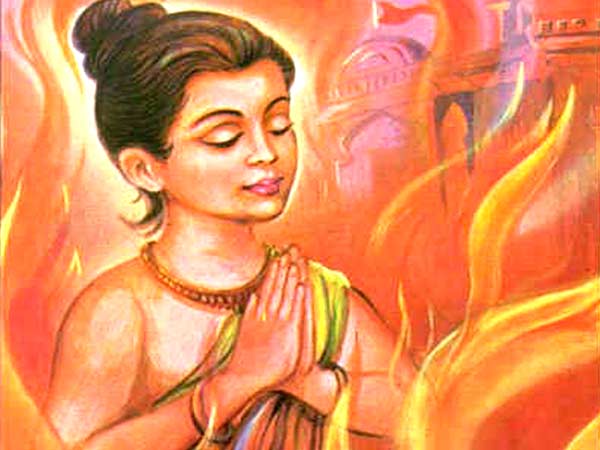
Then on the eve of Holi, Holika Dahan takes place. Effigy of Holika, the devil minded sister of demon King Hiranyakashyap is placed in the wood and burnt. For, Holika tried to kill Hiranyakashyap's son Prahlad, an ardent devotee of Lord Naarayana. The ritual symbolises the victory of good over evil and also the triumph of a true devotee.


Children also hurl abuses at Holika and pray pranks, as if they still try to chase away Dhundhi who once troubled little ones in the Kingdom of Prithu. Some people also take embers from the fire to their homes to rekindle their own domestic fires.


Play of Colors


Next day, is of course the main day of Holi celebrations. The day is called Dhuleti
and it is on this day that the actual play of colours take place. There is no tradition of holding puja and is meant for pure enjoyment.
The tradition of playing colours is particularly rampant in north India and even in that region, there can be no comparison to the Holi of Mathura and Vrindavan. In Maharashtra and Gujarat too Holi is celebrated with lot of enthusiasm and fun.


People take extreme delight in spraying colour water on each other with pichkaris or pouring buckets and buckets of it. Singing Bollywood Holi numbers and dancing on the beat of dholak is also a part of the tradition. Amidst all this activity people relish gujiya, mathri, malpuas and other traditional Holi delicacies with great joy.

Drinks, specially thandai laced with bhang is also an intrinsic part of the Holi festivity. Bhang helps to further enhance the spirit of the occasion but if taken in excess it might dampen it also. So caution should be taken while consuming it.


Holi Celebrations in South India


In south India, however, people follow the tradition of worshiping Kaamadeva, the love god of Indian mythology. People have faith in the legend which speak about the great sacrifice of Kaamadeva when he shot his love arrow on Lord Shiva to break his meditation and evoke his interest in worldly affairs.

After, an eventful and funfilled day people become a little sober in the evening and greet friends and relatives by visiting them and exchange sweets. Holi special get togethers are also organised by various cultural organisations to generate harmony and brotherhood in the society.


https://www.holifestival.org/eco-friendly-holi.html

Tradition of Holi

The colourful festival of Holi is celebrated by different names in this vast and culturally diverse country. The traditions followed for the festival varies a little and at times a lot as one moves from one state to other studying the various facets of the festival and getting behind the various colours of it.

Nowhere it is celebrated with so much charm and enthusiasm as in Mathura, Vrindavan, Barsana and Nandgaon - the places associated with the birth and childhood of Lord Krishna. At Barsana Holi assumes the name of Lathmaar Holi. Here, women of Barsana give a tough time to men of Nandgaon as they come to play Holi with them. Women drag the unlucky captives, beat them, dress them in a female attire - yet all is in the spirit of Holi.

Women of Haryana, specifically the bhabhis too get an upper hand on the day as they get a social sanction to beat their devars and take a sweet revenge for all the mischiefs they have played on them. This revengeful tradition is called the Dulandi Holi.

The most enjoyable tradition of Holi, of course, apart from the play of colours is the tradition of breaking the pot. It is celebrated with much fan fair in the states of Maharashtra and Gujarat. Here a pot of buttermilk is hung high on the streets. Men form a huge human pyramid and one on the top breaks the pot with his head. All this while women keep singing Holi folk songs and throwing buckets and buckets of water. The tradition has its roots in the mischievous nature of Lord Krishna who was so fond of butter milk that he used to steal it from every accessible house in the village. To hide the butter from young Krishna, womenfolk used to hang it high. All in vain!

Holi is celebrated in the most dignified manner in the state of Bengal. At Vishwa Bharti University, founded by Rabindranath Tagore founded the tradition of celebrating Holi as 'Basant Utsav' or 'Spring Festival'. Students decorate the campus with intricate rangolis and carry out prabhat pheris in the morning. Clad in a traditional attire young boys and girls sing songs composed by Gurudev and present an enchanting view to the onlookers who gather in large number here. In other parts of Bengal, Holi is celebrated as Dol Yatra where the idols of Radha and Krishna are placed on a decorated palanquin and taken out in a procession.


For Sikhs, Holi calls for the display of their physical strength and military prowess as they gather at Anandpur Sahib a day after Holi to celebrate Hola Mohalla. The tradition was started by the tenth and last guru of Sikh religion, Guru Gobind Singh ji and is being religiously carried forward.

In the north east, Manipuris celebrate the festival in a colourful manner for six continuous days. Here, the centuries old Yaosang Festival of Manipur amalgated with Holi with the introduction of Vaishnavism in the eighteenth century. The highlight of the festival here is a special Manipuri dance, called 'Thabal Chongba'.

Well, there are many-many more ways in which Holi is celebrated. Different states, different cities and different villages have come out with their unique and innovative styles of playing Holi. It may not be possible to describe all of them at one place. What is noteworthy though is the fact that the spirit of Holi remains the same throughout. It is the festival which generates the spirit of brotherhood and bring people close - and this is what matters most than anything else.

What enhances the spirit of Holi though is the tradition of consuming the intoxicating bhang. It is generally consumed with thandai or as pakoras. People go high on it and enjoy the festival to the hilt. Other Holi delicacies include gujiya, mathri, malpua, puranpoli, dahi badas, etc. After a frenzied play of colours people love to gorge them up.


https://www.holifestival.org/eco-friendly-holi.html

Celebrate an Eco Friendly Holi


Ideally, the joyous festival of Holi is meant to celebrate the arrival of Spring while the colors used in Holi are to reflect of the various hues of spring season. But unfortunately, in modern times Holi does not stand for all things beautiful. Like various other festivals, Holi too has become ruthlessly commercialized, boisterous and yet another source of environmental degradation. To de-pollute Holi and make it in sync with nature, as it is supposed to be, several social and environmental groups are proposing a return to more natural ways of celebrating Holi.

The aim of this articles is to generate awareness amongst people about the various harmful effects around Holi celebrations and encourage people to celebrate an eco friendly Holi!

Please read on to know about the three main environmental concerns around Holi -

  1. The use of toxic chemical colours.

  2. The use of wood for burning Holi fires.

  3. The wasteful use of water during Holi.

1. Harmful Effects of Chemical Colours


In earlier times when festival celebrations were not so much commercialized Holi colors were prepared from the flowers of trees that blossomed during spring, such as the Indian Coral Tree (parijat) and the Flame of the Forest (Kesu), both of which have bright red flowers. These and several other blossoms provided the raw material from which the brilliant shades of Holi colours were made. Most of these trees also had medicinal properties and Holi colors prepared from them were actually beneficial to the skin.

Over the years, with the disappearance of trees in urban areas and greater stress for higher profits these natural colours came to be replaced by industrial dyes manufactured through chemical processes.

Around 2001, two environmental groups called Toxics Link and Vatavaran, based in Delhi, did a study on all the three available categories of colours available in the market - pastes, dry colours and water colours. The study revealed that all of these three forms of chemical Holi colors are hazardous.

Harmful Chemicals in Holi Paste type colors
According to their researched fact sheet on Holi, the pastes contain very toxic chemicals that can have severe health effects. Please check the table below to know about the chemical used in various Holi colors and their harmful effects on human body.

Color

Chemical

Health Effects


Black

Lead oxide

Renal Failure

Green

Copper Sulphate

Eye Allergy, Puffiness and temporary blindness

Silver

Aluminium Bromide

Carcinogenic

Blue

Prussian Blue

Contract Dermatitis

Red

Mercury Sulphite

Highly toxic can cause skin cancer


(Source: Vatavaran)

Harmful Chemicals in Gulal
The dry colours, commonly known as gulals, have two components – a colourant that is toxic and a base which could be either asbestos or silica, both of which cause health problems. Heavy metals contained in the colourants can cause asthma, skin diseases and adversely affect the eyes.

Harms of Wet Holi Colors
Wet colours, mostly use Gentian violet as a colour concentrate which can cause skin dis-colouration and dermatitis.

These days, Holi colours are sold loosely, on the roads, by small traders who often do not know the source. Sometimes, the colours come in boxes that specifically say ‘For industrial use only’.

Click to read more on Holi Chemical colors

Action Taken by Environmental Groups
Following the publication of these studies several environmental groups took up the cause to encourage people to return to a more natural way of celebrating Holi. Amongst these,

  • Navdanya, Delhi published a book called Abir Gulal, which spoke of the biodiversity that was the source of natural colours.

  • Development Alternatives, Delhi and Kalpavriksh, Pune have developed educational tools to teach children simple ways of making their own natural Holi colours.

  • The CLEAN India campaign has been teaching children how to make beautiful natural colours.

Make your own Holi colours
Holi festival lovers will be thrilled to know that it is possible to make simple natural colors in one’s own kitchen. Here are some very simple recipes to make natural colours:

Color

Method of Preparation


Yellow

1) Mix turmeric (haldi) powder with chick pea flour (besan)
2) Boil Marigold or Tesu flowers in water

Yellow liquid color

Soak peels of pomegranate (Anar) overnight.

Deep Pink

Slice a beetroot and soak in water

Orange - red paste

Henna leaves (mehndi) can be dried, powdered and mixed with water.


For more information please read How to make Natural colours?

Purchase Natural Holi Colors
For those who do not have the time to make their own colours, there is the choice of buying natural Holi colours. Several groups are now producing and promoting such colours, although it is important to verify the ingredients of the colours and ensure you know enough about the source.

2. The Holi Bonfire


The burning of fuel wood to create the bonfire for Holika Dahan presents another serious environmental problem. According to a news article, studies done in the state of Gujarat reveal that each bonfire uses around 100 kg of wood, and considering that approximately 30,000 bonfires are lit in the state of Gujarat just for one season, this leads to a wastage of a staggering amount of wood.
Groups such as Sadvichar Parivar are now advocating one symbolic community fire, rather than several smaller bonfires across the city as a way to reduce wood consumption. Others are also suggesting that these fires be lit using waste material rather than wood.

3. A Dry Holi?


In the current situation, when most cities in India are facing acute water scarcity, the wasteful use of water during Holi, is also being questioned. It is common for people to douse each other with buckets of water during Holi, and children often resort to throwing water balloons at each other. The idea of a dry Holi seems alien at first, especially as the climate becomes warmer around Holi, and the water provides welcome relief from the heat. However, considering that in some urban areas, citizens can go without water for several days, it seems wasteful to use so much water simply for a celebration.

Environmental Consciousness Amongst People
It is a relief to notice that the awareness about the environmental impacts of celebrating Holi are being brought to light by various NGOs. And gradually, more and more Indians are choosing to turn to a more natural and less wasteful way of playing Holi.


https://www.holifestival.org/eco-friendly-holi.html

Holi Safety Tips

Here are a few tips and suggestion to make your holi safe and joyous.

  • Play safe. Don't get to boisterous and do not let others to be rude on you.

  • The best option would be to play with natural home made colours. Your skin and hair will feel tampered with the use of skin friendly natural products.

  • If natural colours are not possible, then ensure a better quality of colours. Buy colours from a reputed shop or vendor.

  • Use more of red or pink colours which looks good and can easily taken off. Gaudy purple, green, yellow, orange have more harmful chemicals in them and should be avoided.

  • Make sure that your face is well creamed before and after the play.

  • Apply thick coating of paint on your nails- both in fingers and toes so that they remain protected.

  • Oil your hair well, so that colour doesn't stick on your hair and can be washed off easily later.

  • Cover your hair. Make use of hat or caps to protect your hair from being coloured with hard-to-rinse dyes.

  • Make sure that powder or any other product does not get inside your eyes. Eyes are extremely vulnerable on Holi because of their strategic place in body and also because of the use of harmful chemicals in colors these days. Please ensure that your eyes remain protected at all times. Use a sunglass to protect your eyes from a misfire of colour filled darts or water jets.

  • Use dental caps to save your teeth from any unwanted stains.

  • Put on your worst clothes so that you won't have to take on the hassles of an immediate washing.

  • Rags like tattered denims and bright shades like black, blue, green, purple are highly recommended.

  • Try to save yourself off from all possible attacks on the face. In case your such attempts fail, keep your eyes and lips tightly shut if you are attacked on your face.

  • If possible avoid going outside your home, atleast for the peak hours of celebration. The premises of your home ensure that you are safe from pouncing hooligans, even friends who can be a little rough on the day.

  • When traveling keep the car windows thoroughly shut, even if you don't have an AC car. Do not bump into the frenzied group of mob if you take to streets. Better you cross the road to the sidewalk across. Or, simply stay at a safe distance.

  • Do not use permanent dyes. If someone has applied it on you, do not rub the face with soap immediately in order to get rid off it, especially when it is wet. Instead, use good quality cleansing milk for removal. It's better than using soap, which will dry up your skin.

  • Rotten eggs when thrown on your head, flying missiles from locality buildings…are still not too bad, will be smelly yet is a good conditioner for your hair. But tar, sh*t, Mobil, stones and all the rubbish that you can be hit with is not. Avoid being a prey to hooligans.

  • Remember you also have police on your side and if any untoward revelers misbehave, you can make your complaint. Mark out the locality, building and if possible the person.

  • Take a bath much later after the entire Holi celebration is over. Taking frequent baths, washing the face again and again, will ruin your skin. You will also lose hair, for too much soap/shampoo has a drying effect.

  • If you are prone to skin allergies, avoid playing with gulal altogether. Going to a dermatologist (skin specialist) serves no purpose, after the damage is done.

  • Avoid running on jumping on wet floors, so that you don't slip and injure yourself. Bones are specially vulnerable on this day.

  • Avoid over indulgence in bhang, drinks or food... so that you don't repent later.

  • Do not drive if you are high on alcohol or bhang.

  • Keep handy pain killers, anti-oxidants, anti-allergic tablets if all the above tips have been disregarded 


https://www.holifestival.org/holi-safety-tips.html

https://www.orkutpapa.com/scraps/holi.gif


https://makeupandbeauty.com/wp-content/uploads/2010/02/Happy-Holi.png


https://smsread.com/blog/wp-content/uploads/2011/03/holi-4.jpg

Oh my god what an information balu...........??

Really great.........

Thanks for sharing...........

HAPPY HOLI


holi animated scraps, graphics


H*A*P*P*Y* 

 H*O*L*I* 

TO

ALL

CCI 

FAMILY

WISHING YOU ALSO THE SAME...RANG BARSE BHEEGE CHUNAR WAALI RANG BARSE....

ENJOY SAFE HOLI

very nyc post sir...

Thnx 4 sharing

HAPPY HOLI!!! :)

“Happy & Safety Holy to All CCI Family…”

“Happy n Safety Holy to All CCI Family…”

Happy Holi to All the members, admin and moderators of CCI.

HAPPY HOLI TO ALL MY CCI FRIENDS!!!!!!!!!!


CCI Pro

Leave a Reply

Your are not logged in . Please login to post replies

Click here to Login / Register