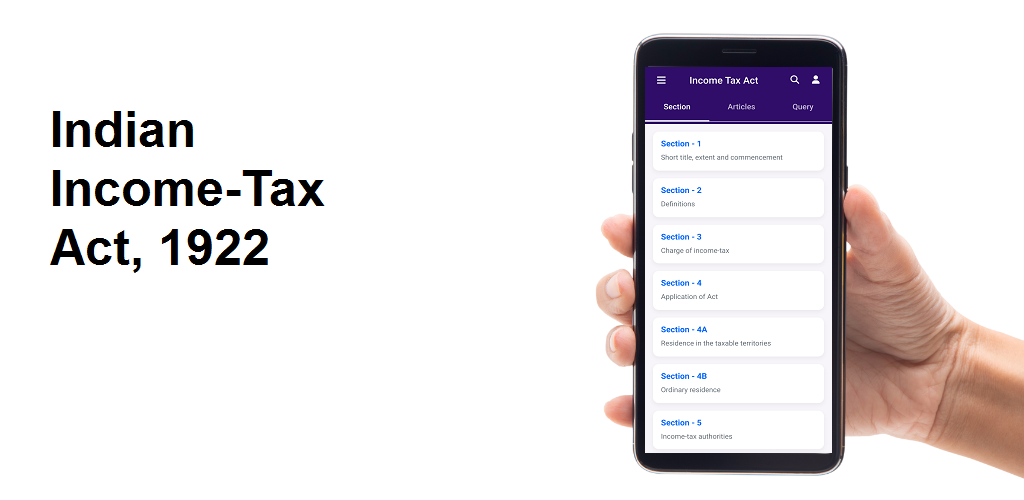
Indian Income-Tax Act, 1922
Section - 14 - Exemptions of a general nature
14. Exemptions of a general nature.—(1) The tax shall not be payable by an assessee in respect of any sum which he receives as a member of a Hindu undivided family [where such sum has been paid out of the income of the family] [or in the case of an impartible estate where such sum has been paid out of the income of the holder of the estate belonging to the family].[(2) The tax shall not be payable by an assessee—(a) if a partner of an unregistered firm, in respect of any portion of his share in the profits and gains of the firm computed in the manner laid down in clause (b) of sub-section (1) of section 16 on which the tax has already been paid by the firm; or[(aa) if a partner of a registered firm, in respect of that portion of his share in the profits or gains of the firm as is equal to the difference between his share in the total income of the firm and his share in such total income excluding the income-tax, if any, payable by the firm, the shares in either case being computed in the manner laid down in clause (b) of sub-section (1) of section 16:Provided that in relation to super-tax the provisions of this clause shall have effect as if for the words "excluding the income-tax, if any, payable by the firm" the words "excluding the income-tax, if any, payable by the firm, at the rate of income-tax applicable to its total income, on the amount of its profits or gains from all sources other than from any business carried on by it" had been substituted;](b) if a member of an association of persons other than a Hindu undivided family, a company or a firm, in respect of any portion of the amount which he is entitled to receive from the association on which the tax has already been paid by the association. *(c) * * *][[(3) The tax shall not be payable .... To read the full section download the app from Google Play store

ARTICLESHIP
18 September 2026
Industrial Trainee
Twenty Point Nine Five Ventures Private Limited
Noida
CA Inter
View Details
22 September 2026
Account Assistant
Chirag P Shah & Co. Chartered Accountant
Pune
B.Com
View Details
ARTICLESHIP
16 September 2026
Article Assistant
MANUJ SHARMA AND COMPANY
Noida
CA Inter
View Details
Featured
11 September 2026
Audit Executive
RBSM Corporate Advisors Private Limited
Pune
CA
View Details
ARTICLESHIP
30 September 2026
CA Article Assistant
CA Suraj Garg & Associates
New Delhi
CA Final
View Details CCI
Pro
CCI
Pro
 CAclubindia
