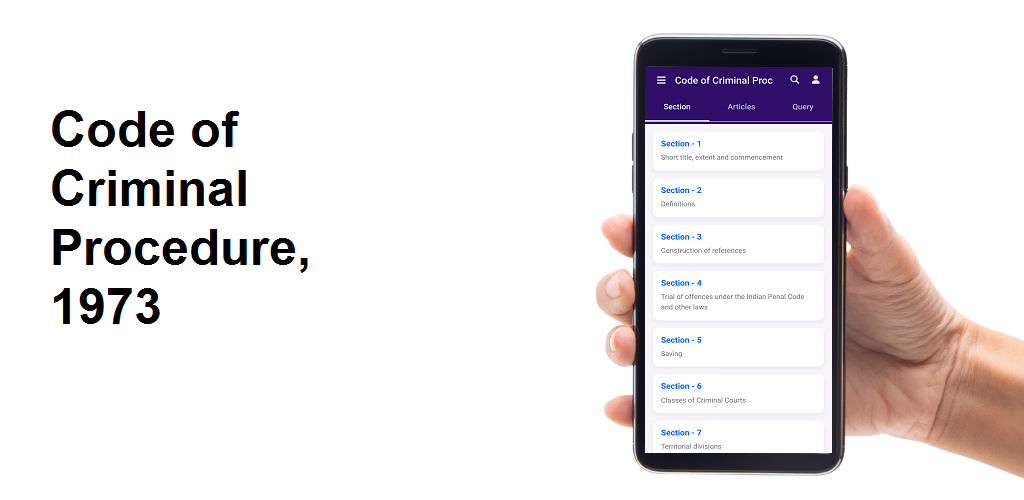
Code of Criminal Procedure, 1973
Section - 235 - Judgment of acquittal or conviction
Judgment of acquittal or conviction.
235. (1) After hearing arguments and points of law (if any), the Judge shall give a judgment in the case.
(2) If the accused is convicted, the Judge shall, unless he proceeds in accordance with the provisions of section 360, hear the accused on the question of sentence, and then pass sentence on him according to law.
COMMENTS
LAW COMMISSION REPORTS
The Law Commission merely observed (in a foot-note) that "the requirement about hearing the accused on the question of sentence before passing sentence has been added as a desirable provision". This provision has been made "because it may happen that the accused may have some grounds to urge for giving him consideration in regard to the sentence such as that he is the bread-winner of the family of which the court may not be made aware during the trial".
GENERAL
Supreme Court on true construction of section 235(2) - The Supreme Court has in Santa Singh v. State of Punjab AIR 1976 SC 2386 brought out "true construction" of section 235(2) of the new Code and held that it requires that in every trial before a Court of Session, there must first be a decision as to the guilt of the accused. The court must, in the first instance, deliver a judgment convicting or acquitting the accused. If the accused is acquitted, no further question arises. But if he is convicted, then the court has to "hear the accused on the question of sentence", and then pass sentence on him according to law. When a judgment is rendered convicting the accused, he is, at that stage to be given an opportunity to be heard in regard to the sentence and it is only after hearing him that the court can proceed to pass the sentence.
Hearing provision mandatory - The hearing as contemplated by section 235(2) is not confined merely to hearing oral submissions, but .... To read the full section download the app from Google Play store

ARTICLESHIP
18 September 2026
Industrial Trainee
Twenty Point Nine Five Ventures Private Limited
Noida
CA Inter
View Details
22 September 2026
Account Assistant
Chirag P Shah & Co. Chartered Accountant
Pune
B.Com
View Details
ARTICLESHIP
16 September 2026
Article Assistant
MANUJ SHARMA AND COMPANY
Noida
CA Inter
View Details
Featured
11 September 2026
Audit Executive
RBSM Corporate Advisors Private Limited
Pune
CA
View Details
ARTICLESHIP
30 September 2026
CA Article Assistant
CA Suraj Garg & Associates
New Delhi
CA Final
View Details CCI
Pro
CCI
Pro
 CAclubindia
